Did you know the average executive spends over 15 hours just researching and negotiating for a single luxury air travel trip? That time is now yours back.
Welcome to a new era where exclusive travel meets modern technology. The days of lengthy email chains and frustrating phone tag are over.
Innovative tools, like the real-time pricing portal by Monarch Air Group, have changed everything. Now, you can see costs and view aircraft options in seconds, from your device.
This guide is your friendly starting point to take control of your travel plans. We’ll show you how easy and empowering it is to get clear, immediate information. This way, you can move your plans forward with confidence.
Key Takeaways
- Modern technology has eliminated the long, old-fashioned process of booking luxury flights.
- You can now receive a preliminary price estimate for your trip in just seconds.
- Real-time pricing portals allow you to browse available aircraft options instantly.
- This new process puts you in control, saving you significant time and effort.
- Getting started with your exclusive travel plans is easier and more transparent than ever.
- The entire experience is designed to be straightforward and empowering from the very first click.
The New Standard: Instant Quotes in Private Aviation
The private aviation world has changed a lot. Now, you can get prices right away. Before, it took phone calls and emails to get an estimate. Today, you expect a private jet charter quote online to be quick and clear.

Companies like XO have made big changes. You can find and book a flight in seconds from your phone. They cover over 60,000 routes around the world. Now, you can easily compare and choose what’s best for you.
This change is real and important. It shows how service is now focused on your convenience. You don’t have to wait days to get a price. This lets you manage your travel budget and schedule better.
Let’s look at the old way versus the new:
| Aspect | The Old Way | The New Standard |
|---|---|---|
| Speed | Hours or days of waiting | Seconds or minutes for a quote |
| Transparency | Opaque, with hidden fees | Clear, all-inclusive pricing upfront |
| Access | Phone calls during business hours | 24/7 digital platforms & mobile apps |
| Convenience | Reliant on broker availability | Self-service from anywhere |
So, what’s in it for you? The benefits are clear:
- Faster Planning: You can check trip ideas and costs right away.
- Informed Choices: Comparing aircraft and prices is easy.
- Spontaneous Travel: You can plan last-minute trips or urgent business travel.
Getting an instant quote online has changed how we travel. It makes planning a trip simple and fast. This is the new standard in private aviation, and it’s here to stay.
What Does a “Private Jet Charter Quote Instant” Actually Provide?
The number you see is more than just a figure. It’s the result of advanced algorithms and real-time data. A private jet charter quote instant gives you a personalized estimate. It shows the current market and your travel needs.
This tool is your first step towards booking. It gives you the info you need to make quick decisions. The quote is your key to a smooth booking process.
The Data Powering Your Immediate Estimate
Systems like Monarch Air Group’s use smart algorithms. These engines process live data to give you an instant quote. They start with the basic details you provide.
The algorithm looks at three main things:
- Your Route: It checks the distance and airspace fees based on your airports.
- Passenger Count: It figures out the aircraft size and cabin class needed for your group.
- Date and Time: It considers your travel schedule and peak demand periods.
This info is matched against a huge database. The system checks aircraft availability, hourly rates, and repositioning costs. This gives you a calculated estimate, not a guess.

From Quote to Booking: The Seamless Path Forward
Getting your instant private jet quote is just the start. It leads to a personalized service process. Think of it as your ticket to expert help.
After you get your estimate, aviation experts take over. Companies like XO have 24/7 support. They refine your details and confirm the price.
They adjust the price for special requests like catering or ground transport. They handle all the complex stuff, from finding the right plane to getting flight permits.
The mix of digital tools and human help turns that first number into a confirmed booking.
This process is designed to be easy. You go from a self-service estimate to a fully managed trip. Your expert handles everything, making sure everything meets your expectations.
Preparing for Your Quote: Information You’ll Need to Provide
Getting an instant quote is like ordering a custom suit. The better your measurements, the better the fit. The details you provide are key to getting a precise private jet charter estimate.
This process has two parts: the essentials and the nice-to-have preferences. We’ll help you with both to get the most accurate quote on your first try.

Non-Negotiables: Dates, Routes, and Passenger Count
These three pieces of information are the core of every request. The instant quote calculator can’t work without them.
Your exact departure and destination airports are the first critical input. Be as specific as possible, using airport codes or city pairs like “Teterboro (TEB) to Miami-Opa Locka (OPF).” This defines the route distance, which is the primary driver of flight time and cost.
Your preferred travel dates and times come next. Flexibility here can save money, but for an initial quote, provide your ideal schedule. The system uses this to check aircraft availability and assess peak demand pricing.
The exact number of passengers is the final essential piece. This isn’t just a headcount; it determines which aircraft category—Light, Midsize, or Heavy jet—can legally and comfortably accommodate your group. Providing the correct passenger count prevents the system from suggesting an aircraft that’s too small or unnecessarily large.
Enhancing Your Quote: Preferences and Special Requests
Once the basics are locked in, you can refine your search. This is where you tailor the quote to your exact vision for the trip.
You might have a preference for a specific aircraft model, like a Gulfstream G650 for its ultra-long range or a Phenom 300 for its efficiency on shorter hops. Mentioning this helps brokers match you with that specific type if it’s available.
Most instant quote tools generate a base price. It’s important to know that this rate typically does not include additional trip-specific expenses. These are variables added afterward. Common enhancements include:
- In-flight amenities: Gourmet catering, specific beverages, or special dietary meals.
- Ground services: Luxury car transfers to and from the aircraft.
- Complex itineraries: Multi-leg trips with several destinations.
- Special requests: Onboard Wi-Fi requirements, pet travel, or unusual luggage.
While a basic calculator may not include these options upfront, noting your preferences early allows your charter broker to provide a more complete and realistic final price. Sharing your wishes from the start ensures no surprises later and helps you compare quotes that are truly like-for-like.
A Walkthrough of the Online Private Jet Charter Cost Estimator
Imagine you need a quote for a trip from Chicago to Dallas. Here’s how you’d use an online tool to get your numbers. A modern private jet charter cost estimator is easy to use and fast. It turns your travel ideas into a budget in just a few clicks.
This guide will show you the three-step process. You’ll learn what to expect and how to get an accurate estimate.

Step 1: Defining Your Journey
Every quote starts with your route. You’ll enter your departure and arrival airports. Be specific, like “New York” which could be Teterboro (TEB), Westchester (HPN), or John F. Kennedy (JFK).
Your choice affects the cost. A smaller airport like TEB or OPF in Miami might be cheaper than a big airport. The estimator uses this to figure out your flight time and ground costs.
The accuracy of your inputs affects your quote. It’s the difference between an estimate and a firm price.
Step 2: Configuring Your Flight
Next, you’ll make your flight details more specific. Your passenger count is key—it decides the aircraft type. For example, 3 people might need a Light jet, while 8 need a Midsize or Heavy jet.
You’ll also pick your departure date and time. The private jet rental cost calculator uses this info to give you a real-time quote. You’ll choose if you need a one-way or round-trip flight. Round-trips are often cheaper because the aircraft is already with you for the return.
This step makes your plan real by matching it with available jets and schedules.
Step 3: Receiving and Interpreting Your Initial Results
After clicking “calculate,” you’ll see a page with aircraft options and prices. This is your first estimate. You might see a range, like for a common route like Los Angeles (LAX) to New York (JFK).
| Aircraft Category | Example Model | Estimated One-Way Charter Cost |
|---|---|---|
| Light Jet | Cessna Citation CJ3 | $56,000 |
| Midsize Jet | Hawker 800XP | $78,000 |
| Heavy Jet | Gulfstream G450 | $102,000 |
This estimate includes the aircraft, crew, and fuel for the planned leg. It’s a good starting point. But remember, extra costs like international fees or special catering might be added later with your broker.
Use this output from the private jet charter cost estimator to compare aircraft and understand the basic price structure before moving forward.
The Anatomy of Private Jet Charter Pricing
Let’s break down the typical private jet charter pricing model. Your instant quote includes several clear costs. Knowing each part helps you understand the value and avoid surprises.
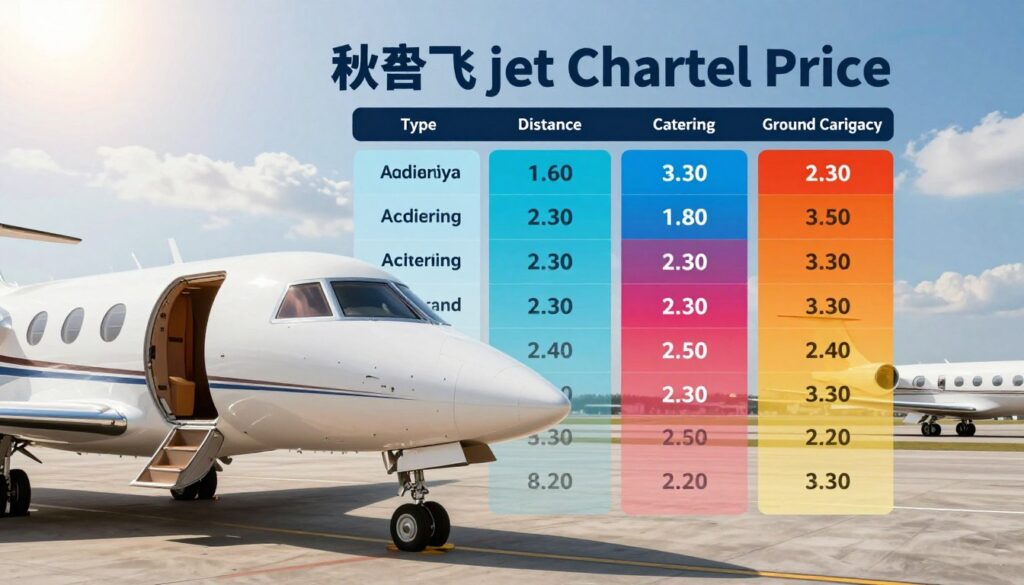
Think of it like building a house. You start with a foundation, then add walls, and finish with details. Each step adds to the cost.
Flight Hour Cost: The Foundation
The billable flight hour is the core of your quote. Operators charge a set rate for each hour the aircraft is running. This rate covers the basic use of the jet, its crew, and routine costs.
Your total trip cost starts with this hourly figure, multiplied by the estimated flight time. The rate varies significantly based on the aircraft’s size, capability, and luxury level.
Here’s a clear look at standard hourly ranges for common jet categories:
| Aircraft Category | Typical Seating | Hourly Rate Range |
|---|---|---|
| Light Jet | 6-8 passengers | $3,000 – $4,250 |
| Midsize Jet | 7-9 passengers | $3,500 – $4,500 |
| Heavy Jet | 10-16 passengers | $5,500 – $12,000 |
| Ultra-Long Range | 12-16 passengers | $8,000 – $13,000+ |
Remember, these are base rates. They form the foundational block upon which other fees are added. A shorter flight in a light jet will have a lower foundation cost than a long-haul trip in a heavy jet.
Operational Surcharges: Positioning, Landing, and Handling
This is where many first-time flyers encounter new terms. These are standard fees for real-world flight operations. They are not hidden costs, but they are separate from the flight hour rate.
Positioning Fees: If your chosen jet isn’t parked at your departure airport, it must fly there empty first. You pay for this “ferry” or “positioning” flight time. This fee ensures your aircraft is ready when you are.
Landing Fees: Airports charge for each takeoff and landing. The cost depends on the airport’s size and the aircraft’s weight. A busy international hub will cost more than a regional airfield.
Handling Fees: This covers ground services at the airport. Think of it as concierge service for your jet. It includes things like parking, baggage handling, and arranging for fuel. For international trips, handling fees are noticeably higher.
Industry standard rates typically do not include aircraft positioning flight time, international handling, or similar operational surcharges. These are always itemized.
These surcharges are unavoidable realities of air travel. A good quote will list them transparently.
Additional Variables: Fuel, Crew, and International Fees
Lastly, we have the variable costs that can adjust your final price. While sometimes bundled, it’s important to know what they are.
Fuel Surcharges: While fuel is often included in the hourly rate, drastic market price swings can trigger a separate fuel surcharge. This protects operators from volatile energy costs.
Crew Expenses: For multi-day trips, you cover the crew’s overnight accommodations, meals, and local transportation. This is standard for any trip requiring the crew to stay away from their home base.
International Fees: Crossing borders adds layers of cost and paperwork. Key items include:
- Customs & Immigration Fees: Charges for processing your flight through government agencies.
- APIS Filing Fees: Cost for submitting mandatory Advanced Passenger Information to authorities.
- Higher Handling Charges: As mentioned, international airports have more complex and expensive ground services.
Factors like fuel, crew pay, and ongoing maintenance all shape the final cost. Your broker will explain which of these variables apply to your specific journey. Knowing them empowers you to understand your quote from top to bottom.
Choosing Your Aircraft: From Light Jets to Ultra-Long Range
The world of private aviation has many aircraft, from light jets to heavy jets. Your quote will show options in these categories. Knowing the differences helps choose the right travel experience.

Finding the right jet is key. It depends on comfort, space, range, and cost. Let’s look at the main categories you’ll find.
Light Jets: Cessna Citation CJ3 and Phenom 300
Light jets are fast and agile. They’re great for short trips and small groups. The Cessna Citation CJ3 and Embraer Phenom 300 are known for their efficiency and comfort.
These jets can seat 4 to 8 people. They can fly up to 2,300 nautical miles without stopping. So, flying from New York to Dallas is easy.
Expect to pay between $3,000 and $4,250 an hour for a light jet. This is the most affordable option for private charter.
Midsize Jets: Hawker 800XP and Learjet 75
Midsize jets offer more space and distance. They have more room and can carry more bags. The Hawker 800XP and Learjet 75 are top choices in this category.
They can seat 6 to 8 people. Their range is 2,200 to 3,500 NM, perfect for coast-to-coast flights. For example, Los Angeles to New York without stopping.
Midsize jets balance cost and features. Hourly rates are between $3,500 and $4,500. They offer more without the high cost of heavy jets.
Heavy Jets: Gulfstream G450 and Bombardier Challenger 650
Heavy jets offer the most luxury, space, and range. They’re made for long trips and big groups. The Gulfstream G450 and Bombardier Challenger 650 are the best.
They have large cabins with separate areas. They can carry 9 to 19 people over 3,500 to 7,800 NM. This means direct flights across oceans, like from the U.S. to Europe or Asia.
A private jet hire price quote for a heavy jet shows their top service. Rates start at $5,550 to $7,500 an hour. They offer unmatched comfort and performance for international trips.
Dynamic Pricing and Market Forces in Real-Time
The quote you get isn’t fixed; it’s a snapshot of the private jet market at that moment. This system, called dynamic pricing, is behind every instant quote you get. It looks at a lot of real-time data, like how many planes are available and what fuel costs are.
Your flight plan is a big factor in the cost. Details like staying for more than one night also matter. The instant quote tool considers all these market forces to give you a clear, up-to-date estimate. Knowing how this works helps you make smarter, more affordable travel choices.
Peak Demand Periods: Holidays, Events, and Last-Minute Bookings
Just like hotels and airlines, private jet charter works on supply and demand. When demand goes up, planes get harder to find, and prices go up too. This is true during peak demand times.
Big holidays like Thanksgiving and Christmas make families and business people want to travel. Global events, like the Super Bowl or Cannes Film Festival, also make travel to one place more common. In these times, every plane is booked, making it a seller’s market.
Booking a plane at the last minute also means higher prices. Needing a plane in 48 or 72 hours limits your choices. Owners and operators can charge more for the urgency. Your instant quote will show this, helping you plan better.
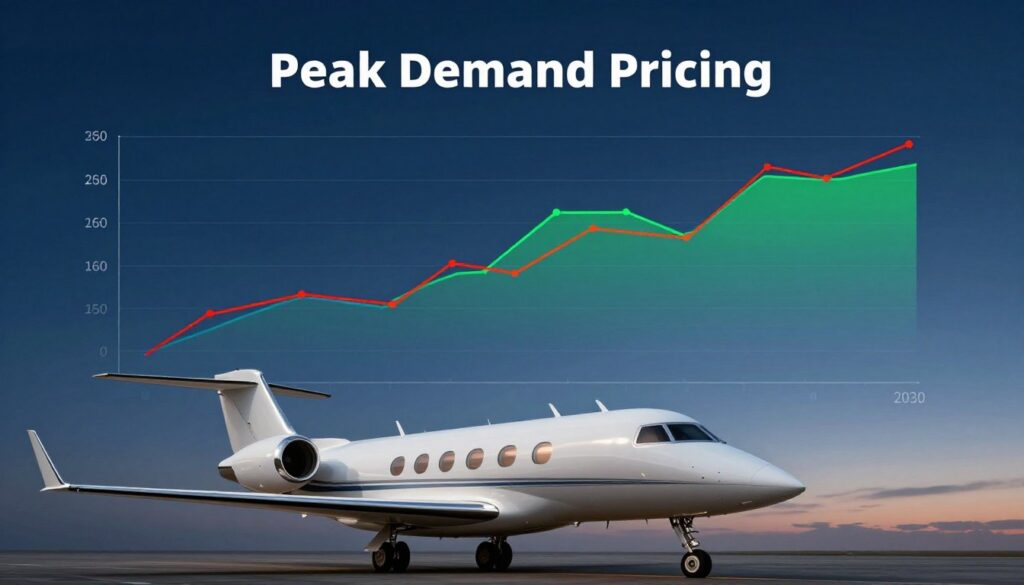
The Power of Flexibility: How Adjusting Dates Can Save Thousands
Flexibility can save you a lot of money. If your first quote is too high, try changing your travel date. Dynamic pricing changes with daily demand.
For example, flying from New York to Miami on a Friday afternoon is usually expensive. But flying on Thursday or Saturday morning might be cheaper. Shifting your travel by one day could save you thousands.
This trick works best during peak demand times. Flying the day before or after a big event can avoid high prices. The online quote tool makes it easy to compare prices.
Remember, your travel plans affect the price. Staying for more than one night might cost extra. Being open to different return dates or airports can also get you better rates. Use your instant quote to see how changing your plans can save you money.
Knowing about these real-time market forces makes you a better negotiator. You can ask, “What if we change the date?” and get a better deal on your private jet charter.
Deciphering Your Quote Line by Line
A private jet charter quote is more than just a total price. It’s a detailed breakdown of your journey’s costs. Learning to read it ensures you know exactly what you’re paying for. This clarity turns a simple number into a powerful tool for decision-making.
Think of your quote as a map. Each line item is a landmark showing where your money goes. A sophisticated private jet charter pricing calculator should generate this map with transparency. Let’s explore the two main formats you’ll encounter and the common fees listed.
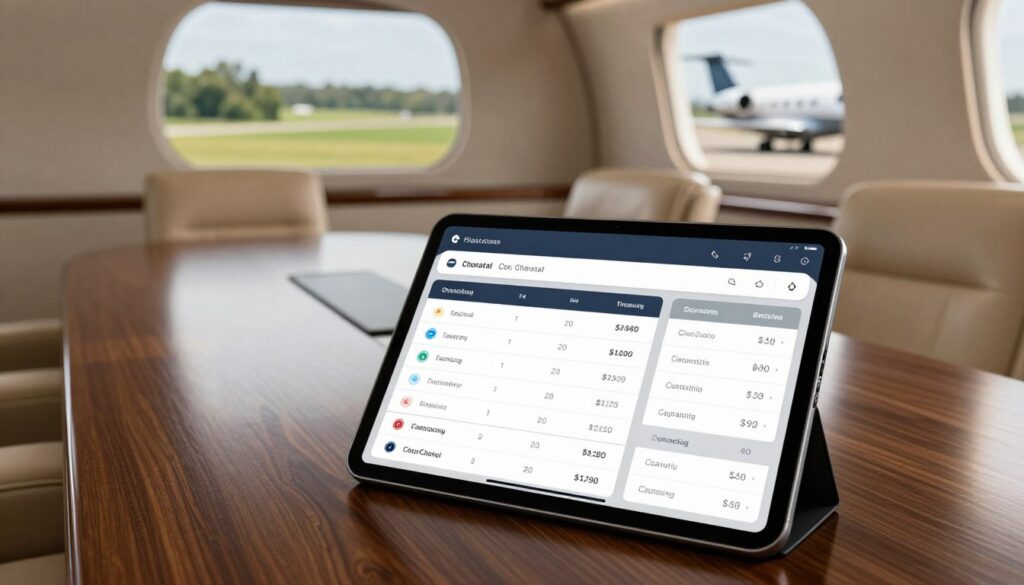
Understanding “All-Inclusive” vs. “Dry Lease” Quotes
Not all quotes are structured the same. The two primary types are “All-Inclusive” and “Dry Lease” (or itemized) quotes. Knowing the difference is your first step toward true cost understanding.
An All-Inclusive quote bundles the major operational costs into a single, straightforward price. According to industry standards, this typically covers the aircraft, crew, fuel, and standard in-flight amenities. It’s designed for simplicity and predictability.
In contrast, a Dry Lease or itemized quote breaks down every component separately. This format provides maximum transparency. You see the base aircraft cost, then additional lines for fuel, crew fees, landing charges, and more. A robust pricing calculator should be capable of displaying costs in both ways.
Here’s a quick comparison to illustrate the key distinctions:
| Cost Component | All-Inclusive Quote | Dry Lease / Itemized Quote |
|---|---|---|
| Aircraft & Crew | Bundled into the total | Listed as separate line items |
| Fuel Surcharge | Usually included | Often a variable add-on |
| Standard Catering | Typically included | May be an optional extra |
| Positioning Fees | Often included, but verify | Clearly itemized if applicable |
| Taxes & Handling | May be included or added | Detailed in the breakdown |
The “All-Inclusive” model offers peace of mind, while the “Dry Lease” style gives you control. Your choice depends on whether you prioritize simplicity or detailed oversight.
Itemized Fees: Catering, De-icing, and Ground Transportation
Beyond the core flight costs, your final quote may include several optional or situational fees. These itemized lines allow for customization but require your attention.
Premium Catering: While basic snacks and drinks might be included, gourmet meals or specific champagne requests are add-ons. These are detailed per passenger or per order.
De-icing Services: In cold climates, de-icing is a mandatory safety procedure. This fee is seasonal and airport-specific. It’s a perfect example of a necessary cost that appears as its own line item.
Ground Transportation: Many operators can arrange luxury car transfers or helicopter shuttles to your final destination. This convenience is billed separately, giving you the flexibility to accept or decline.
Other common itemized fees you might see include:
- International handling fees
- Overnight crew accommodations
- Special cleaning requests
- Wi-Fi or satellite phone usage
When you use a detailed private jet charter pricing calculator, look for the ability to toggle these options on and off. This lets you see how each preference affects your final price. Understanding these lines empowers you to tailor your service level to match your budget and needs perfectly.
Always ask for clarification on any line you don’t recognize. A reputable provider will be happy to explain each charge, ensuring your quote is as clear as your upcoming flight path.
Ensuring You’re Comparing Quotes Correctly
When you compare private jet charter quotes, make sure they’re apples to apples. Seeing different numbers can be confusing. Your goal is to find the best value for your needs.
Look beyond the price to match specifications and check for extra charges. This ensures you make a confident choice.
A correct private jet charter quote comparison protects you from surprises. It helps you choose with confidence. Let’s break down the two most important parts of this process.

Matching Aircraft Categories and Service Levels
Comparing a Light jet to a Midsize jet isn’t fair. They serve different purposes. A true comparison starts with ensuring the quotes are for equivalent aircraft categories.
Use the table below as a benchmark. It outlines standard specifications for the main jet categories. This data gives you a solid foundation for your review.
| Aircraft Category | Example Models | Typical Passenger Capacity | Average Range (NM) | Hourly Rate Bracket |
|---|---|---|---|---|
| Light Jet | Cessna Citation CJ3, Phenom 300 | 6-8 | 1,500 – 2,000 | $3,000 – $5,000 |
| Midsize Jet | Hawker 800XP, Learjet 75 | 7-9 | 2,000 – 3,000 | $5,000 – $8,000 |
| Heavy Jet | Gulfstream G450, Bombardier Challenger 650 | 10-16 | 4,000 – 6,000 | $8,000 – $12,000+ |
Once the aircraft category is matched, look at the service level. Does one quote include a dedicated flight attendant and gourmet catering? Is the other a basic, point-to-point transfer? These services have real value.
Ask if ground transportation is included. Check the catering policy. Confirm the crew details. Comparing these features is just as important as comparing the aircraft itself.
Identifying Hidden Costs and Fine Print
The initial estimate might not tell the whole story. Several operational costs are often calculated separately. Being proactive with a simple checklist helps you identify them early.
Here are key items to look for in the fine print or ask about directly:
- Fuel Surcharges: Is fuel included at a fixed rate, or is it a variable surcharge?
- Positioning Fees: If the jet needs to fly to your departure airport, who pays for that “empty leg”?
- International Fees: Flights across borders often incur handling, customs, and navigation fees.
- Crew Overnight Costs: For multi-day trips, clarify who covers hotel and meal expenses for the crew.
- Daily Minimums: Some operators charge for a minimum number of flight hours per day, even if you fly less.
- De-icing & Adverse Weather: Understand the policy and cost for de-icing operations in cold climates.
- Catering & Ground Transport: Are these presented as optional add-ons, or are they included in your all-inclusive price?
Arming yourself with these questions turns you into an informed buyer. A reputable operator will be transparent. If a quote seems surprisingly low, it may be because these common items are excluded.
Mastering this quote comparison process puts you in control. You can evaluate offers based on true, like-for-like value. This knowledge is your best tool for securing not just a flight, but the right flight for you.
The Indispensable Role of the Charter Broker
For trips that go beyond a simple point-to-point flight, a charter broker is key. They offer more than just a quote. They are your guide through the complex world of private aviation.
Complex Itineraries: Multiple Destinations and Group Travel
Planning a trip to multiple cities or a wedding with guests from everywhere? A broker is your go-to. They handle the details of complex itineraries.
They make sure flights are in the right order and planes are ready at each stop. For big groups, they arrange for planes to leave and arrive together. This needs a wide range of planes.

Big networks, like XO, give brokers access to over 2,000 planes worldwide. This big selection is key for smooth travel to many places. A broker turns a complicated plan into a smooth journey.
Vetting for Safety: Going Beyond the Price
The cheapest option isn’t always the safest. A broker’s main job is safety vetting. It’s more than just checking a list.
Good brokers do deep checks on every operator. They look at safety audits, the operator’s history, crew training, and plane maintenance. This ensures your safety.
This careful process means you get planes and crews that meet top standards. Your broker filters options to only the safest. This gives you peace of mind that’s worth more than any price.
| Aspect | Without a Professional Broker | With a Professional Broker |
|---|---|---|
| Logistics for Multi-City Trips | You manage all scheduling, positioning, and coordination between different operators. | They handle all complex routing, ensuring aircraft and crew are where they need to be, when they need to be there. |
| Aircraft & Operator Safety Checks | You must independently research and verify an operator’s safety certifications and history. | They provide only pre-vetted operators with verified safety audits (Wyvern, ARGUS) and maintenance records. |
| Negotiating Power & Cost Transparency | You negotiate directly with operators, with less leverage and market insight. | They use industry relationships and volume to secure better rates and ensure all fees are disclosed upfront. |
| Access to Aircraft Inventory | Limited to aircraft listed on public platforms or by operators you contact directly. | Access to a vast network (e.g., 2,000+ aircraft) for optimal aircraft selection and availability. |
A broker’s value is clear in every part of your journey. They handle the stress of planning and ensure your safety. They make your private jet charter a special and secure experience.
After the Quote: Steps to Secure Your Charter Flight
Getting your private jet flight from a digital quote to real life involves a few steps. Experts help make your plans perfect. You move from comparing options to confirming your flight, with guidance every step.
Reserving Your Aircraft and Reviewing the Contract
After you agree, your charter provider asks for a deposit to reserve your specific aircraft. It’s not just a model; it’s a specific tail number. This means that exact jet will be ready for you.
You’ll then get a formal contract to review. This document turns your estimate into a guaranteed price agreement. Experts say working with pros ensures the contract clearly outlines costs and services, avoiding surprise fees.
Take time to review important parts of the contract. Look at the cancellation policy, final payment schedule, and what’s included. Knowing these details helps you feel confident when reviewing your contract.

Pre-Flight Coordination and What to Expect
Before your flight, things get busy. A dedicated specialist handles all the prep work. They keep you updated on any changes.
You’ll get a series of confirmations:
- Final Itinerary: Get your exact departure and arrival times, plus any flight plans.
- Private Terminal (FBO) Details: Learn about the fixed-base operator where you’ll arrive and depart. This is your private airport lounge.
- Flight Crew Introduction: You might get bios of your pilot and cabin attendant before your flight, adding a personal touch.
- Special Request Fulfillment: Final checks on catering, ground transport, or any custom requests are made.
This detailed pre-flight coordination makes everything predictable. You can board your aircraft feeling calm and ready for a great journey.
Common Misconceptions About Instant Private Jet Quotes
Many people believe wrong things about instant private jet prices. These myths can make you miss out on great deals or confuse you about booking. Knowing the truth helps you use these tools better.
An instant quote is a good start for planning. But, it’s not the last word on cost or choices.
“The Price is Non-Negotiable” and Other Myths
The biggest myth is that the first price you see is set in stone. In fact, that instant quote is just an approximate price. It’s based on current prices and what planes are available. Think of it as a starting point for a conversation.
For a quote that really fits your needs and could save you money, talk to an aviation expert. They can find the best deals for you.
There’s room for negotiation. A good broker can often get you a better deal. This is true for round trips, off-peak travel, or if you can be flexible. Their knowledge and connections can turn an initial quote into a better offer.
Let’s clear up a few more myths:
- Myth: All instant quotes are the same. Truth: The quality of the data and algorithm varies.
- Myth: You don’t need a broker with an instant quote. Truth: The quote is just the start. A broker handles the details and safety checks.
- Myth: The price includes all fees. Truth: You need to check the details, as some fees might be estimated.
The Truth About “Empty Leg” Deals and Instant Quotes
Many hope to find a cheap “empty leg” flight through an instant quote. It sounds good, but it’s not that simple.
An empty leg is when a plane flies to pick up its next charter or back to base. These flights can be cheaper. But, they are very specific in timing and route.
Most instant quote tools are for dedicated charters—flights reserved just for you. They don’t usually look for empty leg deals. Your quote will likely be for a standard charter.
To find real empty leg deals, you need to talk to a charter broker. Brokers have access to these flights in real-time. They can let you know if a flight matches your needs.
Remember, empty leg deals can save a lot of money. But, they need flexibility. The instant quote tool gives you a starting point. For special deals, a human expert is your best bet.
Conclusion
Getting a private jet charter quote online changes how you plan your travel. It makes a complex process simple and quick. You get control and clear information right away.
You now know what affects the final cost. You understand the rates for flight hours, operational fees, and how different planes like the Gulfstream G450 or Bombardier Challenger 650 impact your price. You can compare offers well, seeing the difference between all-inclusive and dry lease quotes.
This knowledge gives you power. You see the value in using a broker for trips with many stops. You know saving money comes from being flexible with dates. The journey from searching to booking is now clear.
Your journey starts with one action. Use what you’ve learned to confidently ask for a private jet charter quote online. It’s your direct path to a smooth, luxurious flight experience made just for you.