Did you know over a third of all private jet flights last year were for people who don’t own one? The days when only billionaires and celebrities could fly private are gone.
A new era of affordable private flying has arrived. It’s for smart business leaders, ambitious entrepreneurs, and families who cherish their time and safety. The industry now welcomes a broader audience.
The post-pandemic world changed everything. It brought in new, cost-conscious clients. Now, you don’t need a lot of money to enjoy flying private.
This guide will reveal the options you can explore today. From on-demand charter flights to flexible jet cards, luxury travel is within reach for more people.
Key Takeaways
- The stereotype of private aviation being only for the ultra-wealthy is outdated.
- The industry has evolved to serve executives, entrepreneurs, and families.
- Post-pandemic changes have made these services more accessible to cost-conscious travelers.
- Multiple models, like on-demand charter and membership programs, exist.
- Exploring these options can make the luxury of private flight a realistic goal.
- You can access significant time savings and enhanced privacy without a billionaire’s bank account.
Yes, You Can Afford a Private Jet: Redefining “Budget” Luxury
Private flying is now within reach for more people than ever. The global pandemic made private jets appealing for those wanting privacy and control. New companies have entered, making prices more competitive.


Industry leaders like Air Charter Service saw a 25% increase in new clients in 2021. Many of these first-timers became regulars. This shows private flying is now a practical choice for more people.
Moving Beyond the Millionaire-Only Stereotype
The idea that private jets are only for the super rich is old news. Today, a budget private jet charter offers great value. It’s about saving time and enjoying privacy, not just showing off.
Now, private jets are for entrepreneurs, busy families, and professionals. They use it to visit many cities in a day or travel safely with kids. The real value is in saving your most valuable asset: time.
Budget-Conscious vs. Budget-Breaking: Setting Realistic Expectations
Being budget-conscious in private flying means finding the best value, not cheap commercial fares. Budget means getting a premium, door-to-door service.
A budget-breaking mindset looks for first-class commercial prices. A budget-conscious mindset aims to get the most out of each hour without surprise costs. Your goal is to find an affordable private jet that meets your needs without hidden fees.
Don’t expect a $500 flight across the country. But, you can find great value for business trips or family vacations. The secret is to see luxury as personalized convenience, not just extravagance.
First Step: Defining Your Personal Travel Needs and Budget
Forget about jets for a moment—your first task is to define your specific travel profile. Jumping straight to aircraft models is like shopping for a car without knowing if you need a sedan or a truck. A successful, budget-conscious private jet experience hinges on a clear self-assessment. This process turns vague luxury into a calculated value proposition, which is key for professionals where time saved is money earned.

Passenger Count, Luggage, and Typical Route Distance
These three factors are the pillars of your travel needs. Getting them right narrows your options instantly and prevents you from paying for space you don’t need.
Passenger count is more than just a headcount. Consider comfort. Are your trips with 2-3 colleagues for meetings, or a family of five on vacation? Every seat has a cost.
Luggage is often an afterthought. Standard roller bags are one thing, but specialized gear like golf clubs, ski equipment, or sample cases changes the equation. An aircraft’s baggage compartment size can be a limiting factor.
Your typical route distance is key. Frequent hops between nearby cities under 500 miles have different optimal aircraft than cross-country journeys. Shorter routes favor efficient, smaller jets, while longer legs may require more fuel capacity.
How Much Are You Really Willing to Spend Per Hour or Per Trip?
Now, translate those needs into numbers. The budget conversation isn’t about finding the cheapest option; it’s about understanding the value you receive.
Start by framing cost in two ways: a per-hour charter rate or a total per-trip cost. Hourly rates are useful for comparison, but trip quotes are what you’ll actually pay. Ask yourself: “What is this time worth to me?”
“For executives, a private jet isn’t an expense; it’s a tool for revenue generation. The ability to visit three clients in different states in one day is a powerful competitive edge.”
Set a realistic financial framework before you shop. If a commercial first-class ticket for your family costs $15,000, a budget private jet charter for a similar route at $20,000 might offer compelling value for the privacy, flexibility, and time saved.
Be honest about your ceiling. Knowing your maximum spend per trip empowers you to evaluate options clearly and avoid sticker shock later. This clarity is the foundation for exploring all the cost-effective methods in the following sections.
Breaking Down the Price Tag: What You’re Actually Paying For
A private jet charter quote is more than just an hourly number. It’s a detailed breakdown of several key components. Understanding this breakdown is your first step toward securing a truly economical private aircraft rental. Let’s dissect the typical costs so you know exactly what you’re paying for.
The Anatomy of an Hourly Charter Rate
The advertised hourly rate is a bundle. It combines the direct costs of operating the specific aircraft with the operator’s fixed overhead. Think of it as a base package before any trip-specific extras are added.
Aircraft Type is Your Biggest Cost Driver
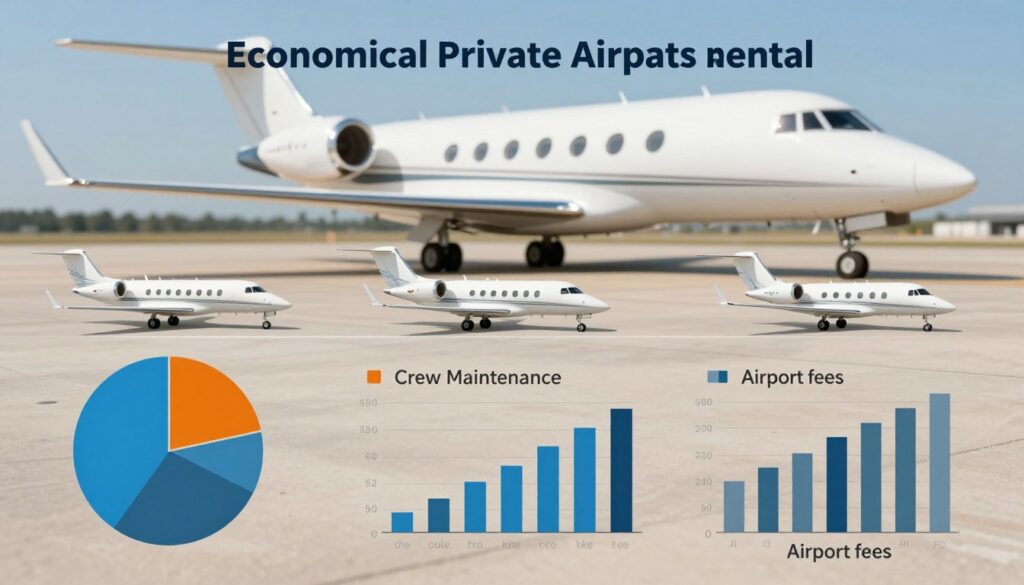
Your choice of aircraft category has the single largest impact on your bill. Charter hourly rates span from about $1,200 for a small turboprop to over $14,000 for a large cabin jet. Selecting the smallest, most efficient jet that comfortably fits your passenger and luggage needs is the cornerstone of an economical private aircraft rental strategy.
Fixed Fees: Crew, Insurance, and Positioning
These are costs the operator incurs regardless of your specific flight. They are often built into the hourly rate or listed as separate line items.
- Crew: Salaries for your pilots and any cabin attendants are a significant operational expense.
- Insurance: Operators carry annual liability and hull insurance, which can cost $15,000 to $30,000+ per aircraft.
- Positioning: If the jet isn’t at your departure airport, you may pay for its “ferry” flight to get to you. This is a key area where empty leg deals offer massive savings.
Variable Costs: Fuel Surcharges, Landing Fees, and Taxes
These fees change based on your itinerary. A savvy traveler can influence them.
Fuel is a major variable, often billed as a surcharge based on the trip’s duration and current fuel prices (typically $300-$700 per flight hour). Landing fees are charged by airports. Here’s a major tip: using smaller, private Fixed Base Operations (FBOs) at secondary airports instead of major commercial terminals can drastically reduce these fees.
Don’t forget local and federal taxes. These are unavoidable but should be transparent in your final quote.
International Trip Considerations: Customs and Handling
Flying across borders adds layers of cost and complexity. You’ll encounter international fees for customs processing, agricultural inspections, and ground handling by local agents. These fees are per flight and can add hundreds to your total. A good broker or operator will outline these clearly for an economical private aircraft rental across borders.
By understanding these fixed and variable components, you can ask smarter questions and compare quotes effectively. The goal is a transparent, all-inclusive “trip quote” that leaves no room for surprise fees, paving the way for your perfect economical private aircraft rental.
Exploring Your Core Budget Private Jet Charter Options
Private aviation is not just one luxury item. It’s a range of options for every budget. Your search for affordable private jet rentals begins by learning about the different aircraft classes. This knowledge helps you find the best value.
Choosing the wrong aircraft means paying for things you don’t need. Getting it right means enjoying luxury travel that’s also affordable.

The Tiered World of Private Aircraft
For those on a budget, three main tiers are available. Each offers a unique mix of cost, comfort, and features.
- Turboprops: These are the entry-level for affordable private jet rentals. They have the lowest rates and are best for short to mid-range flights.
- Very Light Jets (VLJs): The smallest jets. VLJs offer better speed and altitude than turboprops but are very affordable.
- Light Jets: The most popular and versatile choice. Light jets have more space, longer range, and better performance, yet are budget-friendly.
This hierarchy isn’t about good or bad. It’s about finding the right fit for your trip. A turboprop might be great for a short trip, while a light jet is better for longer ones.
Matching the Right Aircraft to Your Mission Saves Money
The key to an affordable private jet rental is “mission matching.” This means picking an aircraft that matches your trip’s needs perfectly.
Traveling alone for a short business trip? A VLJ is likely your best choice. Need to travel with family and lots of luggage for a week? A light jet’s bigger cabin and space for bags are essential.
Choosing a bigger plane for a short flight wastes money. On the other hand, picking a smaller plane for a long trip means fuel stops and extra hours, adding to the cost.
Your charter broker or booking platform can guide you. But knowing this principle gives you control. By defining your trip’s needs first, you can quickly find the right aircraft. This is how you find true value in affordable private jet rentals.
Very Light Jets (VLJs): Maximum Efficiency for Small Groups
Forget the image of a massive Gulfstream; the most significant savings in private jet charter often start with the smallest category: Very Light Jets, or VLJs. These aircraft are engineered for one primary mission: to transport a compact group of travelers on short to medium-length trips with outstanding fuel efficiency. This focus makes them the most budget-friendly jet options available.

If you’re flying with just a few companions and your destination is within a few hours’ reach, a VLJ is likely your perfect match. Their lower operating costs directly translate to more accessible hourly rates for you.
Cessna Citation Mustang: The Original Game-Changer
The Cessna Citation Mustang deserves a special mention. It was the pioneer that proved a very light jet could be both reliable and affordable. It opened the door for many to experience private travel for the first time.
Its straightforward design and proven performance record mean brokers and operators have plenty of them available. This widespread availability often leads to competitive pricing.
Perfect for Trips Under 3 Hours, 4 Passengers
Think of the Mustang as your agile city-hopper. It excels at routes like New York to Chicago or Los Angeles to San Francisco. With a comfortable cabin for up to four passengers, it handles those common short-haul business or weekend trips without the cost of a larger jet.
HondaJet HA-420: Innovative Design for Lower Costs
While the Mustang paved the way, the HondaJet HA-420 redefined what a VLJ could be. Honda applied its legendary engineering philosophy to aviation, focusing on innovation to reduce costs. The result is an aircraft that isn’t just economical to charter; it’s also remarkably quiet and comfortable.
Advantages of its Over-the-Wing Engine Mounts
The secret lies in its unique over-the-wing engine mount design. By placing the engines here instead of on the fuselage, Honda achieved two major benefits.
First, it significantly reduces aerodynamic drag, which improves fuel efficiency. Second, it minimizes cabin noise and vibration. You get a smoother, more pleasant ride while the aircraft itself costs less to operate—a win-win that keeps your charter bill in check.
Choosing between these two excellent options often comes down to specific route and personal preference. Both represent the smart, economical heart of the budget private jet market.
Light Jets: The Most Popular and Versatile Budget Category
Light jets are the most popular choice for private flying. They offer comfort, speed, and great value. They are the heart of private aviation, fitting between small VLJs and larger jets.
These jets can seat 6 to 8 people comfortably. They’re great for short and long trips. They’re perfect for small teams or families who want a good deal.

Embraer Phenom 300: Unmatched Performance in its Class
The Embraer Phenom 300 is the best-selling light jet. It’s fast and easy to handle. Its cabin is spacious, with lots of room for luggage.
This jet is reliable and cost-effective. It makes long trips quick and comfortable. You get more value for your money without losing quality.
Why it Often Provides the Best Cost-Per-Mile Value
The Phenom 300 is efficient. It flies faster than many, over 500 mph. This means you spend less time in the air.
It burns less fuel and is reliable. These savings are often passed to you. For trips between 1,000 and 2,000 miles, it’s often the cheapest option.
Cessna Citation CJ2/CJ3: Proven Reliability and Availability
The Cessna Citation CJ series is dependable. The CJ2 and CJ3 are known for their toughness and simplicity. There are many worldwide, making them easy to charter.
They’re trusted by operators. This means they’re often priced competitively. You get predictable performance and costs.
Wide Cabin Comfort on a Light Jet Budget
Inside a Citation CJ3, you might think it’s a bigger jet. Its cabin is wide, making long flights more comfortable. It’s designed for comfort, with easy access and plenty of room for bags.
The ride is quiet, and there’s lots of space. It offers a luxury experience without the high price of a midsize jet.
| Feature | Embraer Phenom 300 | Cessna Citation CJ3 |
|---|---|---|
| Typical Seating | 6-7 passengers | 6-8 passengers |
| Max Cruise Speed | 528 mph | 487 mph |
| Range (Full Payload) | 2,010 miles | 1,830 miles |
| Cabin Width | 5.1 ft | 5.0 ft |
| Key Value Proposition | Best speed & efficiency for cost-per-mile | Superb availability & wide-cabin comfort |
Choosing between these top light jets depends on your trip needs. Need speed? The Phenom 300 is your best bet. Want more space and flexibility? The Citation CJ series is your go-to.
Both models show that you don’t have to spend a lot to fly private. They make flying accessible and smart.
Turboprop Power: Where Savings and Capability Intersect
Think again if you believe flying on a budget means giving up on quality. Turboprop planes are the secret weapons for those who value efficiency over speed. They cost about 50% less per hour than light jets, making private flying more accessible.
Turboprops have unique benefits beyond just saving money. They can land at smaller airports with shorter runways, unlike jets. This means you can fly closer to your destination, saving time and money.

Pilatus PC-12: The Single-Engine Swiss Army Knife
The Pilatus PC-12 changes the game for single-engine planes. It’s known for its versatility and reliability. Its cabin is spacious, making it feel like a light jet but at a lower cost.
This plane is loved by operators worldwide for its efficiency and dependability. Its single engine means lower fuel and maintenance costs. It’s also built to last, ensuring your safety.
Ideal for Remote Strips, Family Trips, and Cargo
The PC-12 can land on short, rough runways. This opens up thousands of airfields to it, not jets. It’s great for reaching remote areas like fishing camps or mountain towns.
For family trips, its large cabin and baggage space handle lots of gear. Some models even have a utility door for big items. This makes long trips with family affordable.
King Air 350: The Twin-Engine Workhorse
For those needing twin-engine reliability and power, the Beechcraft King Air 350 is the top choice. It’s the most popular turboprop, known for its performance and availability. This often means better prices, even for used planes.
The King Air’s cabin is spacious, seating 6-8 passengers comfortably. Its two engines offer peace of mind for over-water flights or tough weather. But it’s always flown safely.
Superb for Heavier Loads and Longer Ranges
This plane excels with larger groups or long trips without needing to refuel. It can fly over 1,800 nautical miles, connecting cities like Chicago to Denver or New York to Miami.
The King Air 350 can carry more passengers while saving money over jets. It’s perfect for corporate travel, family trips, or sports team charters where budget is key but space and range are essential.
Choosing a turboprop like the PC-12 or King Air 350 is a smart move. It’s about using your travel budget for more flights, destinations, or passengers. When speed isn’t a must, their savings and capabilities are unbeatable.
The Empty Leg Goldmine: Booking a Jet’s Return Trip
Imagine flying private for up to 75% off by booking a jet’s return trip. This isn’t just a dream. It’s the real deal with empty leg flights, a key to low-cost private jet charters.
Operators have to move jets to their next job. This costs them money. But, selling that seat to you turns their loss into your big win.
Understanding Repositioning Flights and Their Deep Discounts
A repositioning flight happens when a jet finishes one trip and heads to another. The operator already has the crew and plane ready. Filling those seats is pure profit for them.
This situation leads to huge discounts, from 30% to 75% off. You get the same luxury, crew, and service. The only catch is the flight’s timing and route are set by the operator, not you.
This is a win-win situation. You get luxury travel at a low cost. The operator avoids a loss. Empty legs are the goldmine for smart travelers.
Pro Tips for Finding and Securing the Best Empty Leg Deals
Your success depends on being flexible. Being open to different dates, times, and airports is key. These deals are often last-minute, appearing 1 to 14 days before.
You need to act fast when the perfect flight comes up. Signing up for alerts from trusted sources is essential.
Using Broker Networks and Specialized Search Tools
Don’t search for these deals alone. Charter brokers have access to a wide network of empty legs. A good broker can find flights that match your flexible plans.
Apps and platforms like XO, Jettly, and specialized search tools also list these one-way flights. Set up alerts for your preferred routes and check often.
Using a broker’s insider knowledge with tech platforms’ broad visibility increases your chances of finding low-cost private jet charters. Remember, the best deals go fast, so act quickly when you find a match.
Pre-Paid Models: Jet Cards and Membership Programs Explained
There are more than just one-off charters in the industry. You can find programs that give you guaranteed access and protect you from price hikes. These options make private flying a regular, affordable part of your travel routine.
How Jet Cards Lock in Rates and Offer Peace of Mind
A jet card is like a debit card for flight hours. You buy a set amount of time, like 25 or 50 hours, at a fixed rate. This rate keeps you safe from price changes.
When fuel prices go up or demand is high, your rate stays the same. This is a great way to get competitive private jet pricing over time.
Getting billed is easy. Your rate usually includes everything. You also get a promise that an aircraft will be ready when you need it, often with just a few days’ notice.

Comparing Membership Models: Wheels Up, NetJets, and Flexjet
Not all programs are the same. The market has everything from simple jet cards to complex membership models. Knowing the differences is key to finding the right one for you.
Many operators offer traditional jet cards. Brands like Wheels Up and XO introduced the membership model, which includes an initiation fee and deposited funds.
NetJets and Flexjet offer a more like fractional ownership lite. They ask for a bigger commitment but provide a more integrated service. The table below shows the main differences.
| Feature | Traditional Jet Card | Wheels Up Membership | NetJets / Flexjet Membership |
|---|---|---|---|
| Primary Model | Pre-paid flight hours | Initiation fee + fund deposit | Long-term lease or points-based program |
| Commitment Level | Low (one-time purchase) | Medium (annual fee) | High (multi-year contract) |
| Best For | Predictable budgeting, 25-50 hours/year | Flexible access to a shared fleet, last-minute trips | Heavy, scheduled use; utmost consistency |
| Pricing Certainty | Fixed hourly rate for card term | Dynamic & fixed rates within network | Managed cost per flight hour or point |
Which Program is Best for Spontaneous vs. Planned Travel?
Your travel style determines the best choice. For last-minute trips, a jet card or a Wheels Up membership is perfect. They offer quick access without a long-term contract.
For trips planned months ahead, like regular business trips or family vacations, NetJets or Flexjet is better. You pay for the predictability and seamless service with a higher commitment.
In short, pre-paid models make planning your private flights easier. They turn complex pricing into something predictable, giving you both value and convenience.
Tech-Driven Booking: Apps and Instant Quote Platforms
Looking for a cheap luxury jet hire? Now, it’s easier than ever thanks to tech. You can find deals online with clear prices and book quickly from your device.

XO, VistaJet, and Jettly: The Uber-ization of Charter?
Platforms like XO, Jettly, and JetASAP are changing the game. They let you book flights in minutes, just like a ride-share. XO gives you access to thousands of aircraft. Jettly offers instant quotes from many sources for easy comparison.
This new model is called the “Uber-ization” of charter. It focuses on being fast and easy. You get clear prices right away, a big change from the old broker calls. VistaJet and others offer app control over their fleets, making travel easier for today’s traveler.
The Pros and Cons of Booking Directly via an App
App-based booking is a big step forward, but it has its downsides. This self-service model gives you control but also more responsibility.
| Pros | Cons |
|---|---|
| Instant, Transparent Quotes: See prices immediately without negotiation. | Less Personalized Service: You miss the tailored advice of a broker who knows your preferences. |
| 24/7 Convenience: Book or change plans anytime, anywhere. | Self-Vetting Required: You must research the operator’s safety ratings and reputation yourself. |
| Easy Comparison: Quickly compare aircraft types and prices across providers. | Potentially Limited Options: Apps may only show inventory from their partner network. |
| Streamlined Process: Digital contracts and payments simplify logistics. | Less Negotiation Power: Fixed, algorithm-driven prices may offer less room for deal-making. |
These platforms are great for simple trips where you want speed and clear prices. But for complex plans or if you’re unsure about safety, expert advice might be better. Tech is a great tool, but knowing when to use it is important.
The Human Touch: Working with a Charter Broker
Apps offer quick quotes, but a charter broker brings personal service and market access. They act as your advocate, using their connections and real-time info to find great deals. This is key for complex trips or when planes are hard to find.
How a Good Broker Finds Deals You Can’t See Online
A top broker has a wide network of operators. They know about small fleets and special deals not listed online. They find hidden gems like last-minute flights or repositioning trips at low prices.
They also know how to negotiate. A broker can get better rates than you can, thanks to their big business and strong relationships. As one expert said:
“The best deals in private aviation are rarely posted. They’re communicated through trusted channels between brokers and operators who have established a history of reliable business.”
Companies like Air Charter Service, the world’s largest broker, show this reach. They can find affordable budget private jet charter options you might miss on your own.

Their Role in Safety Verification and Contract Handling
A broker’s main job is safety verification. They check every operator’s safety, using third-party audits and pilot experience. This is something most people can’t do well.
They also handle all the paperwork and scheduling. This includes talking to FBOs and caterers. They make sure the quote is complete and handle any last-minute changes.
The table below shows the main differences between using a broker and booking yourself:
| Factor | Broker-Assisted Charter | DIY App/Platform Booking |
|---|---|---|
| Aircraft Access | Wide network, including unlisted fleets and empty legs. | Limited to aircraft on the platform’s roster. |
| Price Negotiation | Broker negotiates on your behalf using industry leverage. | You pay the listed rate; little room for negotiation. |
| Safety Vetting | Broker pre-vets operators using professional safety audits. | You must research operator safety credentials yourself. |
| Contract & Logistics | Broker handles all paperwork, coordination, and is your single point of contact. | You manage all details directly with the operator. |
In the end, a skilled charter broker gives you peace of mind. They make a complex process easy, ensuring your private jet charter is affordable, secure, and well-managed.
Savvy Travel Strategies to Slash Your Charter Bill
Getting cost-effective private jet flights is not magic. It’s about using smart strategies. Think like a traveler, not just a passenger. These tips can cut your bill a lot.

Flexibility is King: How Date/Time Shifts Save Big
Being flexible is your biggest way to save. Flying when it’s less busy, like mid-week, can get you better rates. Avoiding holidays is also smart.
Changing your flight time can also help. Flying in the afternoon instead of morning can save you money. This is because planes and crews need to keep moving.
Fly into Secondary Airports (FBOs vs. Major Terminals)
Think about flying into a smaller airport instead of a big one. These airports, like those served by Fixed Base Operators (FBOs), have lower fees.
These savings go straight to you. Plus, you get a better experience. You’ll have quicker access to your car and avoid the crowds.
Group Charter: Organizing Friends or Colleagues to Share Costs
Traveling with a group makes charters very cost-effective. When you split the bill, it’s much cheaper.
Getting friends or family to join you makes a light jet affordable. It’s cheaper than first-class on a commercial flight but offers a better experience.
Public Charters and “Semi-Private” Services Like JSX
For certain routes, a mix of public and private is great. Airlines like JSX sell seats on bigger jets. You get a private terminal experience without the long lines.
Seats start at $249. It’s a way to get a premium service at a lower cost. It’s perfect for those who want to fly point-to-point without breaking the bank.
Learning these strategies makes flying private more accessible. It shows that smart planning is the key to cost-effective private jet flights.
Navigating the Fine Print and Avoiding Sticker Shock
Getting a charter rate is just the start. Knowing what’s not included is key to saving money. The final bill for your private jet charter might have extra charges not in the first quote. We’ll show you how to spot these to avoid surprises.
Common Hidden Fees: De-Icing, Overnight Charges, Peak Surcharges
Operators often quote an hourly rate, but the real cost adds up. Costs like navigation fees and fuel surcharges are usual. But, other fees pop up in certain situations.
Longer flights mean more fuel costs. But, other factors also increase the total cost.
Here’s a breakdown of common charges to watch for:
| Fee Type | What It Covers | Typical Trigger |
|---|---|---|
| De-icing | Fluid applied to wings & fuselage for safe winter operation. | Cold weather departures; often billed per application. |
| Crew Overnight | Hotel and meal costs for crew if trip requires an overnight stay. | Multi-day itineraries or late-night returns. |
| Peak/Holiday Surcharge | Premium for flying on high-demand days. | Major holidays, peak summer weekends, or last-minute holiday bookings. |
| Extended Tarmac Fees | Charges for keeping the aircraft waiting beyond a set time. | Longer-than-planned passenger delays at pickup or drop-off. |
| International Fees | Handling, customs, and additional insurance for cross-border flights. | Any flight departing or arriving outside your home country. |

The Critical Importance of an All-Inclusive, “Trip Quote”
To dodge sticker shock, the all-inclusive trip quote is your best friend. This estimate includes all costs for your flight. It covers flight hours, crew, fuel, landing fees, taxes, and any extra charges.
Never book based on an hourly rate alone. Always ask for a detailed, all-inclusive trip quote. It’s your financial guide for the trip.
If a provider won’t give you a full trip quote, it’s a warning sign. A clear operator will happily provide this breakdown.
Asking the Right Questions Before You Book
Prepare with specific questions before signing any contract. This research keeps your private jet charter budget in check.
- “Can you provide a final, all-inclusive trip quote with no hidden fees?”
- “Are de-icing, crew overnight, and peak day surcharges included in this quote? If not, what are the possible costs?”
- “What is the tarmac wait time included, and what is the hourly charge after that?”
- “Does this quote include all federal and international taxes and fees?”
- “What are the payment terms, and are there any cancellation or change penalties?”
Getting clear answers to these questions makes you a smart buyer. It shields you from unexpected fees and makes your flight smooth and enjoyable.
Safety First: Ensuring Your Budget Choice is Also a Safe Choice
Finding a great deal on a private jet is exciting. But, your safety should never be part of the discount. The most affordable option is only a true value if it meets the highest operational standards. This is critical when exploring cheap private jet leasing. Your diligence here is non-negotiable.
The industry has clear, third-party benchmarks. These separate reputable operators from the rest. Your job is to verify them before booking.
Non-Negotiables: Checking ARGUS, Wyvern, or IS-BAO Ratings
Never book a charter without confirming the operator’s safety audit rating. These are rigorous evaluations conducted by independent firms. They go far beyond basic FAA requirements.
ARGUS and Wyvern are the two most recognized safety audit programs in North America. They assess an operator’s safety management systems, pilot training, maintenance procedures, and operational history. An operator with a ARGUS Gold or Wyvern Wingman rating has passed a meticulous review.
For an even higher global standard, look for IS-BAO (International Standard for Business Aircraft Operations) certification. Think of these ratings as your independent safety seal of approval. A legitimate operator will proudly display their current rating.

Why Aircraft Age and Maintenance Programs Matter
It’s natural to assume a newer jet is automatically safer. While newer technology offers advantages, a well-maintained older aircraft can be just as secure. The real key is the operator’s commitment to maintenance.
Ask about the specific maintenance program the aircraft follows. Top programs, like those from manufacturers such as Cessna or Embraer, require strict, scheduled inspections and part replacements regardless of apparent wear.
A ten-year-old jet on a rigorous, documented maintenance schedule is often a safer bet than a three-year-old jet without one. Don’t just ask for the aircraft’s year; ask for details on its maintenance history and program compliance.
By insisting on verified audit ratings and understanding the importance of maintenance, you ensure your pursuit of an affordable flight never compromises on what matters most. This knowledge empowers you to make a truly smart choice for your travel needs.
When Does a Budget Private Jet Charter Actually Pay Off?
Affordable executive jet options shine when time, convenience, and experience matter most. It’s not just about the cost. It’s about the value you get. Chartering can be a smart choice in many situations.
The Multi-City Business Trip: Time is Money
For business leaders, flying on commercial airlines for a multi-city trip is a big hassle. A private jet makes those hours count. Two-thirds of passengers say they’re more productive in the air.
You skip the airport lines, layovers, and hotel checks. Flying directly to smaller airports means you meet clients sooner. This saves time, which can mean more money or a strategic edge. It’s a high ROI that justifies the cost.
In these cases, the right affordable executive jet options are an investment in your most valuable asset: time.
Family Vacations: Comparing to Multiple First-Class Tickets
Imagine your next family vacation in style. Add up the cost of four or five first-class tickets. Chartering a light jet or turboprop looks more appealing.
The cost is often similar. But the benefits are huge. You get door-to-door service, no baggage carousels, and a stress-free trip for kids and pets.
Chartering offers flexibility and privacy that commercial travel can’t. For families wanting comfort and efficiency, these affordable executive jet options offer great value.
The Special Occasion: Creating Unforgettable Memories
Some moments are priceless. A milestone anniversary, a surprise proposal, or a family reunion deserves a special journey.
A private charter turns travel into the highlight of your celebration. The privacy, customization, and sense of occasion make unforgettable memories.
The financial return is emotional. But the investment in a seamless, extraordinary experience is worth every penny. Exploring affordable executive jet options makes this luxury accessible for those special moments.
Ultimately, a budget charter pays off when you look at the total value. It’s about spending wisely on time, productivity, comfort, and unforgettable experiences.
Conclusion
The world of private aviation is changing fast. It’s now more open and affordable than before. Getting a budget private jet is not just a dream. It’s a real choice with smart planning.
You’ve seen the ways to make it happen. Choosing the right jets, like the Cessna Citation Mustang or Embraer Phenom 300, fits your budget. Using empty legs for return trips can save a lot of money.
You know the tools to find deals. Sites like XO, VistaJet, and Jettly give quick quotes. Working with a good charter broker can find you great deals and ensure safety. Jet cards from Wheels Up or NetJets also offer fixed rates.
Smart travel tips can lower your costs. Being flexible with dates and using smaller airports can save money. Traveling with friends makes private flying a fun group activity.
This new era gives you control. It’s about getting your time back, enjoying comfort, and experiencing true freedom. The choices for your next trip are clear and within reach.
Start looking for affordable flights today. Compare prices and ask the right questions. Dive into a more efficient and personal way to travel.
FAQ
Is private jet travel really affordable for someone who isn’t a billionaire?
How do I figure out what kind of private jet I need and what my budget should be?
What exactly am I paying for when I see an hourly charter rate?
What are the most common types of budget-friendly private jets?
What is an “empty leg” flight and how can I find one?
Are jet cards or memberships a good way to save money?
Is it better to book through an app or use a traditional charter broker?
What are some practical strategies to reduce the cost of my charter?
What hidden fees should I watch out for when booking?
How can I ensure a budget-friendly jet is also a safe one?
When does chartering a private jet on a budget actually make financial sense?
