
Did you know that renting an aircraft can range from $2,000 to over $14,000 for just one flight hour? This striking fact highlights the complexity of private air travel costs, especially for those based in the United States. As more travelers seek the convenience and luxury of flying on their own schedule, understanding the pricing landscape becomes essential.
Welcome to your ultimate guide on navigating the costs associated with renting an aircraft. Here, we will break down everything from base rates to hidden fees in a friendly and approachable way. With hourly rates starting as low as $2,000 for turboprop options, flying privately has never been more accessible.
In this guide, you’ll learn why grasping the cost structure is crucial before booking your flight. We will explore how pricing is based on the entire aircraft rather than individual passengers, making it a cost-effective choice for small groups. You’ll also gain insights into different aircraft categories and their unique pricing.
Get ready to become an informed customer who can confidently compare quotes and choose the best aircraft for your travel needs.
Key Takeaways
- Private aircraft rental costs can vary significantly based on the type and size of the aircraft.
- Understanding the pricing structure helps avoid unexpected expenses.
- Rental prices are based on the entire aircraft, not individual seats.
- Different aircraft categories cater to various travel needs and budgets.
- Flexibility in scheduling can lead to substantial savings on rental costs.
Understanding the Basics of Small Private Jet Charter Costs
Understanding the pricing of renting an aircraft is essential for savvy travelers. Knowing what defines a small private jet helps potential customers make informed choices. Typically, these jets fall into three categories: turboprop, very light jets, and light jets. They accommodate four to nine passengers, making them ideal for regional and domestic travel within the United States.
What Defines a Small Private Jet?
A small private jet is characterized by its seating capacity and operational range. Turboprop aircraft, like the King Air 100, offer an economical entry point, with costs ranging from $2,000 to $2,300 for short flights under two hours. These aircraft are perfect for reaching smaller airports quickly.
Very light jets, such as the Cessna Citation M2 and Embraer Phenom 100, seat four to seven passengers. Their hourly rates typically range from $2,500 to $3,500, making them suitable for agile regional trips. Light jets, including the Embraer Phenom 300 and Bombardier Learjet 75, accommodate six to nine passengers, with prices between $3,200 and $5,500 for enhanced comfort on medium-haul flights.
Who Benefits from Chartering Small Jets?
Various groups find significant advantages in chartering small jets. Business professionals, small corporate teams, families, and leisure travelers often prioritize time savings and airport flexibility over commercial flying. For instance, a family of six pays the same base rate as a solo traveler on the same aircraft, making private travel a viable option for groups.
Additionally, small jets can access thousands of regional and executive airports across the U.S. This capability allows travelers to bypass crowded hubs, saving hours of ground time. Understanding these benefits is crucial for those considering private aviation.
User Intent: Why Knowing Cost Per Hour Matters
Knowing the cost per hour is essential for U.S. flyers looking to compare quotes accurately and budget for trips. Prospective customers often engage in research before booking, indicating a commercial search intent. This understanding empowers travelers to evaluate their options effectively.
Ultimately, grasping the basics of small jet pricing allows travelers to match their mission profile—passenger count, luggage, and distance—to the right aircraft at the right price.
| Aircraft Type | Seating Capacity | Hourly Rate | Best For |
|---|---|---|---|
| Turboprop | 4-9 | $2,000 – $2,300 | Short regional flights |
| Very Light Jet | 4-7 | $2,500 – $3,500 | Agile regional trips |
| Light Jet | 6-9 | $3,200 – $5,500 | Medium-haul flights |


How Small Private Jet Charter Cost Per Hour is Calculated
Deciphering the pricing structure for aircraft rentals is essential for making savvy travel choices. Understanding how rates are established helps you navigate the complexities of private aviation. The cost of renting an aircraft is influenced by several factors, including the type of aircraft, flight duration, and distance.
Base Hourly Rates by Aircraft Type
Base hourly rates are primarily determined by the aircraft type and category. For example, turboprop aircraft typically start around $2,000 per hour. In contrast, light jets generally range from $2,750 to $3,500 per hour. This pricing reflects the operational capabilities and comfort levels of each aircraft.
Flight Time vs. Billable Flight Time
It’s crucial to understand the difference between actual flight time and billable flight time. The latter is calculated on a “wheels up to wheels down” basis. This includes airborne time and necessary positioning ferry legs. While taxi time is not counted, a standard 0.1 hour (or six minutes) is added for ground operations, which covers engine start, taxi, and pre-flight checks.
Impact of Flight Distance and Route on Costs
Flight distance significantly impacts overall costs. Longer routes consume more fuel and may require larger aircraft with higher hourly rates. Additionally, route-specific factors like airport landing fees, air traffic control charges, and international overflight permits can greatly affect the total price of a jet charter.
Another important aspect is aircraft positioning. This refers to ferry flights needed to reposition an empty jet to your departure airport, which adds billable time to your final cost. Newer aircraft models equipped with advanced avionics and fuel-efficient engines often command premium rates, sometimes $100 to $1,000 more per hour than older models.
Understanding how these costs are calculated allows U.S. flyers to read quotes intelligently. This knowledge helps avoid sticker shock when the final invoice arrives. Keep in mind that daily minimums typically apply, usually two hours for light and midsize jets. This means even a brief 45-minute flight may be billed at the minimum to cover operator overhead.
Rest assured, reputable charter brokers provide transparent, all-inclusive quotes that clearly break down these calculations before booking.

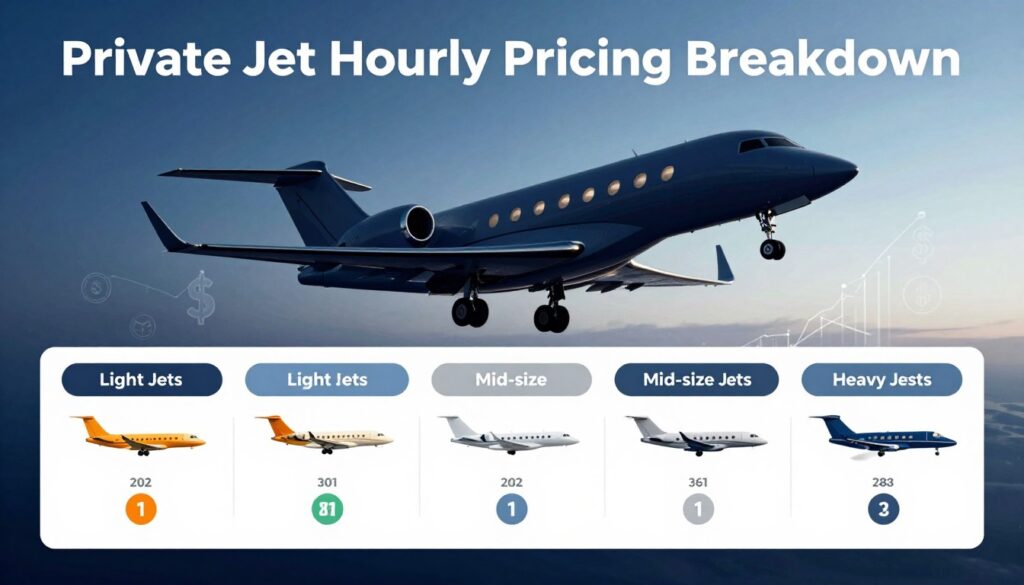
Hourly Pricing Breakdown by Aircraft Category
Understanding the hourly rates for different aircraft categories can help you make informed decisions. Each category offers unique benefits and pricing structures that cater to various travel needs.
Turboprop Aircraft Rates and Best Uses
Turboprop aircraft, such as the King Air 100, typically charge between $2,000 and $2,300 per hour. These planes are ideal for short regional flights, often taking you to smaller airports with shorter runways. Their efficiency makes them a popular choice for quick trips.
Very Light and Light Jets: Typical Hourly Costs
For those needing a bit more speed and comfort, very light jets like the Cessna Citation M2 and HondaJet HA-420 come into play. Their hourly rates range from $2,500 to $3,500, making them perfect for two-to-three-hour regional trips with four to seven passengers.
Light jets, including the Embraer Phenom 300 and Bombardier Learjet 75, typically charge between $3,500 and $5,500 per hour. These jets offer enhanced range and cabin comfort, accommodating six to nine travelers comfortably.
Midsize and Super Midsize Jets Pricing Insights
Midsize jets, such as the Learjet 45 and Citation Excel, have rates ranging from $4,000 to $4,750 per hour. They are designed for mid-range domestic travel, featuring stand-up cabins and more luggage space.
Super midsize jets, like the Bombardier Challenger 300 and Gulfstream G280, offer pricing between $5,100 and $7,500 per hour. These aircraft are ideal for nonstop coast-to-coast flights, providing exceptional comfort and range.
Each aircraft category serves a distinct mission profile. Matching the right jet to your trip distance and passenger count optimizes both comfort and cost. Remember, turboprops can access thousands more airports than jets due to their ability to operate from shorter, unpaved, or remote runways across the United States.
Very light and light jets strike a balance between speed, range, and hourly pricing, making them excellent choices for most U.S. regional business and leisure trips. Meanwhile, super midsize jets provide transcontinental range without the premium price tag of larger aircraft.
As you consider your options, keep in mind that a faster jet may complete the flight in fewer hours, potentially offsetting a higher hourly rate.
| Aircraft Type | Hourly Rate | Best For |
|---|---|---|
| Turboprop | $2,000 – $2,300 | Short regional flights |
| Very Light Jet | $2,500 – $3,500 | Two-to-three-hour trips |
| Light Jet | $3,500 – $5,500 | Medium-haul flights |
| Midsize Jet | $4,000 – $4,750 | Mid-range domestic travel |
| Super Midsize Jet | $5,100 – $7,500 | Nonstop coast-to-coast flights |
Estimated Rental Costs for Popular US Routes
Exploring the estimated rental prices for popular routes across the U.S. can provide valuable insights for potential travelers. Understanding these costs helps you plan your journey more effectively.
Let’s take a look at some well-known routes and their associated prices:
Examples: New York to Miami and Los Angeles
The New York to Miami route is a favorite among travelers. Expect to pay between $15,000 and $19,000 for a light jet. For a midsize jet, the cost typically ranges from $17,000 to $21,000. This flight generally takes about three hours.
For those flying from New York to Los Angeles, the expenses increase significantly. A light jet rental will cost around $34,000 to $38,000, while a midsize jet will set you back approximately $39,000 to $45,000. This trip usually lasts five to six hours.
Short Distance Regional Flights Pricing
Shorter flights, like the hop from Los Angeles to Las Vegas, also come with their own pricing structure. Expect to pay between $10,000 and $13,000 for a light jet, and $12,000 to $16,000 for a midsize jet. These prices reflect the operational costs associated with even brief trips.
It’s important to note that these estimates include the base charter fee, crew, fuel, and insurance. However, additional charges like the 7.5% Federal Excise Tax and landing fees can increase the final total.
Pricing can vary based on aircraft availability, seasonal demand, and how far in advance you book. Last-minute charters may command premium rates.
Additionally, choosing smaller regional airports, such as Teterboro instead of JFK or Van Nuys instead of LAX, can reduce landing fees and minimize ground delays.
For flights under one hour, be aware that short-leg fees or daily minimums may apply, which can make the effective rate higher than the quoted base price.
These examples of popular U.S. routes help you benchmark costs and understand the value compared to first-class commercial tickets for groups. Remember, repositioning fees may apply if the aircraft is not based at your departure airport, potentially adding to your total trip cost.
Always request all-inclusive quotes from charter brokers that factor in route-specific variables for accurate budgeting.
Mandatory Taxes and Government Fees Affecting Cost
When planning a private flight, it’s crucial to be aware of the various taxes and fees that can influence your total expenses. These mandatory charges can significantly impact the overall pricing of your journey. Understanding these costs helps you budget more effectively and avoid surprises.
US Federal Excise Tax and Segment Fees Explained
The US Federal Excise Tax (FET) is a mandatory charge of 7.5% applied to all domestic flight segments within the United States. This tax can add a considerable amount to your total private jet charter cost.
In addition to the FET, there is a US Domestic Segment Fee of $5.30 per passenger, per leg for 2026. This fee can accumulate quickly, especially on multi-leg itineraries with larger groups.
International Passenger Taxes and Other Levies
For international flights, travelers must also account for the US International Head Tax, which is $23.40 per passenger. This fee applies to any international flight that begins or ends in the United States, covering customs and border processing.
Additionally, if your flight involves Alaska or Hawaii, there is a special tax of $11.70 per passenger, which is half the international rate.
Special Regional Taxes: Alaska, Hawaii, and Europe
Travelers heading to Europe should be aware of various international passenger taxes. For instance, the UK Air Passenger Duty for long-haul flights can reach £1,141 per passenger. Similarly, the French Solidarity Tax can vary, with charges ranging from €420 for intra-European turbojet flights to €2,100 for long-haul routes.
In Italy, the Italian Luxury Tax applies, charging €100 for distances under 1,500 km and €200 for longer flights.
These government taxes and fees are non-negotiable pass-through costs. Reputable charter brokers include them transparently in their quotes. It’s also important to note that international trips may incur additional costs for landing permits, overflight permits, customs, and immigration fees, which can add $500 to $5,000 or more to the total.
US flyers should factor these mandatory charges into their budget from the outset, as they can represent 10-20% or more of the base charter price depending on the route.

Operational and Logistical Expenses Impacting Total Cost
Operational costs can significantly influence the total expenses associated with renting an aircraft. Understanding these charges is essential for budgeting effectively. Beyond the base hourly rate, several fees can arise, affecting the final price of your flight.
One significant expense is the crew overnight and per diem fees. When the aircraft stays at your destination, these fees typically range from $200 to $600 per crew member, per night. This covers necessary accommodations, meals, and transportation for pilots, ensuring they are rested and compliant with regulations.
Crew Overnight and Per Diem Fees
These fees ensure that pilots are well taken care of during layovers. A well-rested crew is crucial for safety and compliance. Therefore, factoring in these costs is essential when budgeting for your trip.
Airport Landing, Ramp, and Handling Charges
Airport landing fees can vary widely, typically ranging from $150 to over $2,000 per visit. These fees depend on the aircraft’s weight and the airport’s popularity. Busy hubs like Teterboro or Miami International may charge higher fees.
In addition to landing fees, ramp and handling charges are imposed by fixed-base operators. These fees cover parking, fueling, and ground services, usually between $100 and $500 per visit. Sometimes, these charges can be waived if minimum fuel purchase requirements are met.
Fuel Surcharges and Market Volatility Considerations
Fuel surcharges are another important factor. As of March 2026, jet fuel averages $3.99 per gallon. A recent spike of 60% has led to variable adjustments of 10-15% on top of base rates. Reputable brokers often apply a zero-markup policy on these surcharges, ensuring fair pricing.
Daily minimums also apply, typically requiring a minimum of two flight hours per day for light and midsize jets. This helps cover maintenance, insurance, and aircraft availability costs. For flights under 60 minutes, short-leg fees may apply, recovering the high maintenance costs associated with engine cycles during takeoff and landing.
These operational expenses are standard across the aviation industry. They should be expected on every charter invoice and not treated as hidden fees. Choosing smaller, less congested executive airports can significantly reduce landing and handling charges compared to major international hubs.
It’s advisable to discuss these logistical costs with your charter broker upfront. This ensures you receive an all-inclusive quote that minimizes surprises, allowing you to budget effectively for your travel needs.
Incidental and Variable Charges Beyond the Base Price
When renting an aircraft, it’s important to be aware of the additional fees that can affect your total expenses. These incidental and variable charges can significantly impact your budget, especially if you’re not prepared for them. Understanding these costs will enhance your overall travel experience.
De-icing and Hangar Fees
During winter months, de-icing becomes a crucial safety procedure. The charges for de-icing can range from $1,500 to $12,000 or more, depending on the aircraft size and the severity of ice accumulation. To avoid these high costs, many travelers opt for hangar storage.
Renting a heated hangar can cost between $500 and $1,500 per day. This strategy can prevent ice buildup overnight, potentially eliminating the need for costly morning de-icing services.
Cleaning, Pet, and Wi-Fi Charges
Cleaning fees typically start at $250 and increase based on the level of cleaning required after a trip. If you bring pets along, be prepared for additional cleaning charges ranging from $250 to $500 for deep cleaning or carpet shampooing to remove dander and odors.
In-flight Wi-Fi is another area where costs can vary. Charges may range from $3.00 to $8.50 per megabyte on older systems. However, newer aircraft equipped with Starlink Aviation or Ka-band offer flat-fee unlimited data packages, making connectivity easier and more predictable.
It’s essential to note that these incidental charges are typically billed as incurred. This means they may not appear on the initial quote but are standard across the aviation industry. Hangar fees are most common during winter months in cold climates, protecting the aircraft from snow and frost.
Many charter brokers prioritize sourcing aircraft with modern connectivity options to minimize or eliminate variable Wi-Fi charges for their clients. If you’re traveling with pets, confirm the pet policies with the charter operator in advance. Most operators allow animals but may require prior notice and acceptance of cleaning fee responsibility.
While these variable charges exist, reputable operators transparently itemize them on final invoices, ensuring no hidden surprises. Being informed about these costs allows you to budget effectively and enjoy your journey.

Optional Enhancements and Luxury Add-Ons
Luxury add-ons can transform your private flight into a truly unforgettable journey. These enhancements provide travelers with unique opportunities to customize their experience, making every trip memorable.
Custom In-Flight Catering Options
Explore custom in-flight catering options that elevate your private jet experience. Premium hot meals for four passengers typically range from $600 to $2,000 per leg. Meanwhile, standard snacks and beverages remain complimentary on most charters.
Ground Transportation and Concierge Services
Ground transportation services are also available. Chauffeur-driven ramp transfers directly to and from the aircraft cost between $100 and over $1,000, depending on the vehicle type. Options range from luxury sedans to executive SUVs.
Additionally, extended concierge services go beyond the flight itself. These include hotel reservations, spa bookings, restaurant arrangements, and event coordination at your destination, enhancing your overall travel experience.
Carbon Footprint Offsetting for Sustainable Travel
For environmentally conscious travelers, carbon footprint offsetting is a sustainable travel option. This allows flyers to neutralize their flight emissions through verified programs like Terrapass. The cost is approximately 0.6% to 0.8% of the total rental price. For example, around $793 to offset a $100,000 intercontinental mission.
These optional enhancements allow travelers to customize every aspect of their journey, from gourmet dining at 40,000 feet to seamless ground connections upon landing. Catering orders can accommodate dietary restrictions and preferences with advance notice, turning a simple flight into a memorable dining experience.
With ramp-side vehicle transfers, travelers enjoy true door-to-door convenience. This eliminates terminal walks and rental car shuttles, making travel more efficient.
Carbon offset programs are increasingly popular among corporate clients seeking ESG compliance and individuals wanting to enjoy private aviation responsibly. Remember, all optional services are quoted and approved in advance, so there are no surprise charges—you only pay for the enhancements you choose.

How Flight Demand and Seasonality Affect Pricing
The demand for private flights can greatly influence rental prices, especially during peak seasons. Understanding these dynamics can help travelers make informed decisions about their travel plans.
Peak travel periods, including major holidays like Thanksgiving, Christmas, and New Year, often see a surge in demand. Events such as the Super Bowl and Art Basel also contribute to increased interest in private flights. During these times, hourly rates can rise significantly due to limited fleet availability.
Peak Travel Periods and Holiday Price Fluctuations
Travelers should consider flexible travel dates. Shifting your departure by even one or two days can help avoid peak pricing and secure better aircraft availability. Seasonal demand patterns also vary by region. For instance, winter holidays spike demand for warm-weather destinations like Florida and the Caribbean, while summer sees increased traffic to the Northeast and Europe.
Aircraft Age and Model Year Premiums
Another factor influencing pricing is the age of the aircraft. Jets manufactured within the last zero to five years command a premium of $100 to $1,000 or more per hour. This is due to their advanced avionics, modern cabin management systems, and improved fuel efficiency.
Newer aircraft are increasingly preferred by corporate clients for their lower CO2 emissions per seat-mile. While older jets may offer lower hourly rates, they often lack modern amenities and can face more maintenance-related disruptions.
Major international events like the Olympics or the World Cup can create regional demand surges that ripple through the entire private aviation market. Therefore, booking as far in advance as possible during peak periods is advisable. Last-minute availability on popular aircraft types becomes extremely limited and expensive.
A knowledgeable charter broker can help navigate these seasonal pricing dynamics. They can assist in finding the best value for your specific travel window, ensuring a smoother booking experience.
| Factors Affecting Pricing | Description |
|---|---|
| Peak Travel Periods | High demand during holidays and major events leads to increased rates. |
| Flexible Travel Dates | Shifting dates can help avoid peak pricing and improve availability. |
| Aircraft Age | Newer models command higher rates due to advanced features and efficiency. |
| Seasonal Demand Patterns | Varies by region, affecting pricing based on destination popularity. |

Cost-Saving Strategies When Chartering Small Private Jets
Budget-conscious flyers can take advantage of several cost-saving strategies when renting an aircraft. Understanding these options can help you enjoy the luxury of private travel without overspending.
Empty Leg Flights: Benefits and Availability
One of the most effective ways to save is by booking empty leg flights. These flights occur when a private jet is scheduled for a one-way trip and needs to return to its home base or reposition for its next charter. This creates an opportunity for travelers to book these flights at significant discounts—sometimes 25-75% off standard rates.
However, keep in mind that the availability of empty leg flights depends on other customers’ travel plans. Therefore, flexibility with both your departure times and destinations is essential.
Flexible Scheduling to Lower Costs
Another great strategy is to be flexible with your travel dates. Shifting your trip by just one or two days can help you avoid peak demand periods and secure better rates. For instance, flying midweek rather than on busy weekends often yields better pricing and wider aircraft availability.
Additionally, consider flying into smaller regional or executive airports. This can reduce landing fees and help you avoid congestion surcharges at major hubs, enhancing your overall travel convenience.
Sharing the cost with fellow passengers is also a smart option. Since private jet rental is priced per aircraft, not per person, filling all seats can dramatically reduce the effective cost per passenger.
Building a relationship with a trusted charter broker can be invaluable. They can proactively alert you to empty leg opportunities and negotiate favorable rates on your behalf. Booking round-trip charters with the same operator may also unlock package pricing or reduced repositioning fees compared to separate one-way bookings.
By combining multiple cost-saving strategies—like empty legs, flexible dates, and alternative airports—you can make private jet travel surprisingly accessible for budget-conscious U.S. flyers.

Choosing the Right Small Private Jet for Your Needs
Selecting the right aircraft is crucial for a successful travel experience. Various factors come into play when deciding which jet best suits your needs. From passenger count to cabin comfort, understanding these elements can enhance your journey.
First, consider how many passengers will be traveling. Very light jets, like the Cessna Citation M2, accommodate four to seven people. On the other hand, light jets, such as the Embraer Phenom 300, can seat six to nine passengers. This distinction helps you right-size the aircraft for your group.
Passenger Count and Cabin Comfort Considerations
Cabin comfort is another important factor. Very light jets typically offer less spacious interiors than light jets. If your flight is longer, a light jet with stand-up headroom and enclosed lavatories will enhance your experience. These amenities make a significant difference during extended flights.
Range and Speed Factors in Aircraft Selection
Next, consider the range of the aircraft. Very light jets can cover 1,200 to 1,550 nautical miles nonstop. Light jets extend that range to 1,900 to 2,040 nautical miles. For coast-to-coast travel, midsize jets offer ranges of 2,700 to 3,400 nautical miles. Matching the aircraft’s range to your mission is vital, as fuel stops can add time and costs to your trip.
Speed is another critical aspect. Faster jets can complete trips in fewer billable hours. For instance, a light jet cruising at 450 knots covers more ground per hour than a turboprop at 300 knots. This efficiency can offset higher hourly rates.
Lastly, don’t overlook luggage capacity. Smaller jets often have limited baggage compartments, which may not accommodate larger items like golf clubs or ski equipment for all passengers. Communicate your luggage needs to your charter broker to ensure the chosen aircraft meets these requirements.
When booking, share your full itinerary and passenger manifest with your charter broker. They can recommend the optimal aircraft category and specific model for your trip. For groups of eight or more, consider stepping up to a super midsize jet like the Challenger 300 for added comfort, even on shorter journeys.
In conclusion, the right aircraft selection balances cost, comfort, and capability. There is no one-size-fits-all answer, but informed travelers make better charter decisions. By considering these factors, you can ensure a pleasant and efficient travel experience.
| Aircraft Type | Passenger Capacity | Range (Nautical Miles) |
|---|---|---|
| Very Light Jet | 4-7 | 1,200 – 1,550 |
| Light Jet | 6-9 | 1,900 – 2,040 |
| Midsize Jet | 7-9 | 2,700 – 3,400 |

Conclusion
Gaining insights into aircraft rental pricing is essential for making the most of your travel plans. This guide has taken you through the intricacies of costs associated with renting an aircraft, from understanding aircraft categories to navigating various fees and taxes.
Remember, private jet travel is priced per aircraft, not per passenger. This makes it a practical option for families and small groups who value time and convenience. Total charter expenses include mandatory government taxes, segment fees, and other costs, all transparently itemized by reputable brokers.
Consider the money-saving potential of empty leg flights and flexible scheduling, which can reduce expenses significantly. It’s also crucial to match the right aircraft to your needs, balancing passenger count and comfort for optimal value.
Take the next step by reaching out to a trusted charter broker for personalized quotes tailored to your travel needs. The world of private aviation is more accessible than ever, offering you the freedom and flexibility to enjoy your journey.