
Some US charter flights reach $23,000 for a single flight hour. That figure may sound surprising, yet 2026 market data shows a wide range. Turboprops begin near $2,300, while VIP airliners can reach the top of the scale.
For 2025, typical rental rates range from $2,000 to $14,000 for each flight hour. A live August 2026 database from Paramount Business Jets tracks 120 aircraft across nine categories. This data gives you a clearer starting point for planning.
This guide explains the question behind the Villiers price search while setting realistic expectations for US travelers. You will see why an hourly quote is only a starting figure. The final amount may include the 7.5% Federal Excise Tax, repositioning charges, landing fees, and other trip expenses.
Route examples from New York to Miami and Miami to Nassau will help you compare options with confidence.
Key Takeaways
- 2026 rates range from $2,300 to $23,000.
- Aircraft size strongly shapes the quote.
- An hourly rate may not include every fee.
- Taxes and repositioning can raise the final total.
- Route examples make planning easier.
What the Villiers Private Jet Cost Per Hour Includes
Your quoted amount usually starts with the aircraft and the core services needed for a safe trip. Still, the first figure does not always show the full charter total. Review each line before you approve the itinerary.

Aircraft, Crew, Fuel, and Insurance
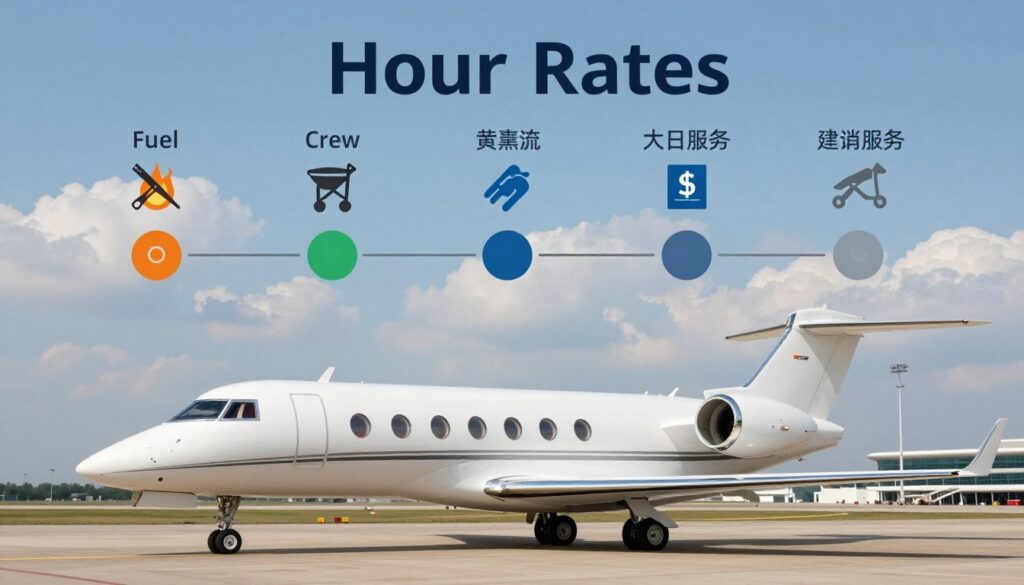
Standard hourly rates generally include the aircraft, trained crew, fuel, standard fuel surcharges, and insurance. These inclusions make it easier to compare aircraft rates across operators. A reliable jet charter provider should explain what the base figure covers.
- Aircraft use and standard onboard services
- Qualified flight crew and routine operating support
- Fuel, normal fuel surcharges, and insurance
Why the Hourly Quote Is Only a Starting Point
Domestic charter pricing adds a 7.5% Federal Excise Tax and a $5.30 segment fee for each passenger. For example, a $50,000 cross-country booking adds $3,750 in tax before other charges.
Positioning, landing fees, ramp handling, and crew overnight stays may increase your final costs. Availability and logistics can also change daily. Request an itemized quote so you can see every charge before confirming your trip.
Villiers Private Jet Cost Per Hour by Aircraft Category
Aircraft choice shapes your trip more than any single quote. Compare cabin space, passenger comfort, and range before selecting a category. Paramount’s 2026 figures show how quickly rates rise as aircraft size and onboard features increase.
Turboprops and Very Light Jets
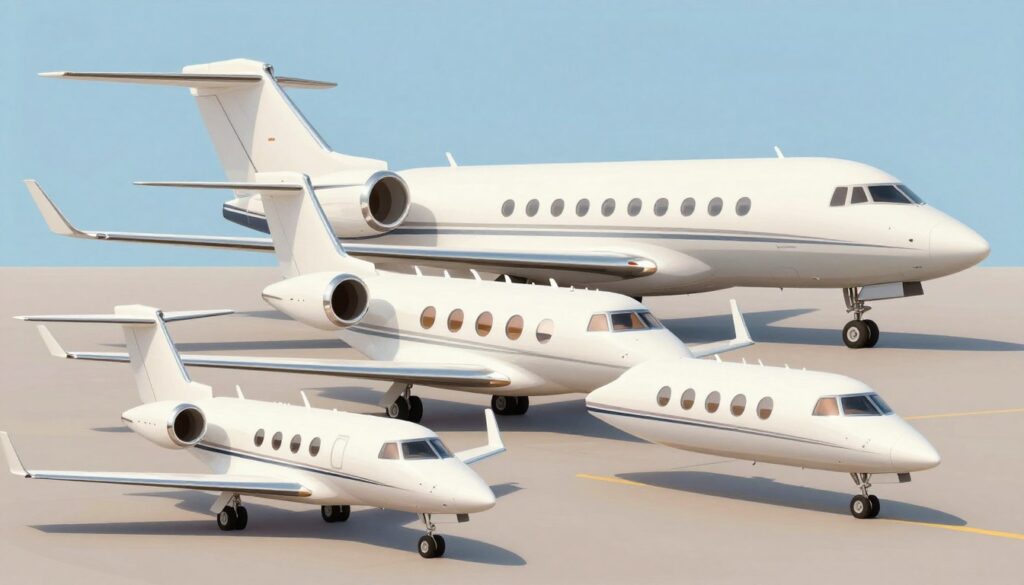
Turboprops run from $2,300 to $3,500 hourly. They suit short US routes, carry about 4–8 passengers, and offer 1,100–1,974 nautical miles of range. Very light jets run from $2,900 to $3,400, seat 3–4 passengers, and reach 1,125–1,550 nautical miles.
Light and Midsize Jets
Light jets range from $3,750 to $4,200 and usually seat 5–7 passengers. Midsize jets rise to $4,700–$5,500, with room for 7–9 passengers and a range of 1,858–2,818 nautical miles. A larger cabin can improve comfort on longer flights.
Super Midsize, Heavy, and Ultra-Long-Range Jets
Super midsize jets run $6,200–$7,500. Large jets reach $8,500–$10,000, while ultra-long-range jets command $12,000–$17,000. VIP airliners may reach $23,000 and carry 18–19 passengers comfortably, or up to 50 in a custom layout. New aircraft, including models with Starlink, may add $100–$1,000 or more.
How Aircraft Size Changes Your Charter Price
The cabin you choose can shape the entire travel experience, from boarding ease to arrival range. Aircraft size also affects passenger capacity, baggage room, speed, and overall value.
Passenger Capacity, Cabin Comfort, and Range
Very light aircraft often have a 4.1–4.9-foot cabin height. They work well for short regional trips with four passengers and limited luggage. Their smaller size may offer good value when your route is brief.
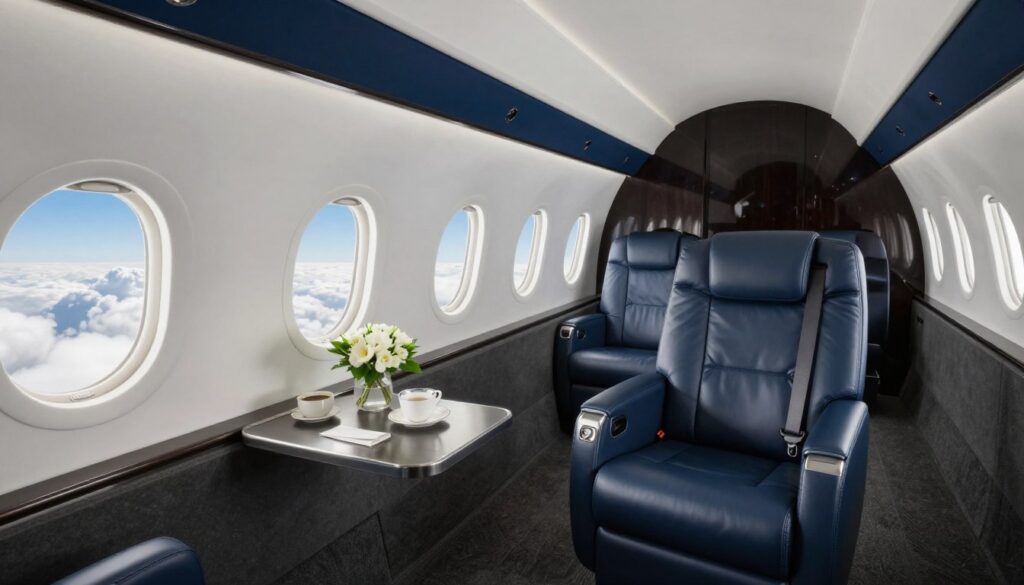
Midsize cabins stand about 5.6–6.0 feet high, while super midsize models reach 5.7–6.3 feet. A group of eight may gain more comfort, space, and baggage room in one aircraft than by splitting into smaller cabins.
VIP airliners provide 6.6–7.3 feet of headroom. A Gulfstream G650 or Global 7500 adds long range, wider seating areas, and premium amenities. Still, the largest size is not always the best value for a short trip.
- Match cabin height and comfort to your passengers.
- Check luggage needs before selecting size.
- Choose longer range only when your route requires it.
| Aircraft category | Cabin height | Best value for |
|---|---|---|
| Very light | 4.1–4.9 feet | Short trips and small groups |
| Midsize | 5.6–6.0 feet | Six to eight travelers |
| Super midsize | 5.7–6.3 feet | Extra comfort and luggage |
| VIP airliner | 6.6–7.3 feet | Long range and premium travel |
Typical US Private Jet Hourly Rates in the Current Market
Current US charter data gives you a wider view than one advertised quote. In 2026, pricing begins near $2,300 for turboprops and can reach $23,000 for VIP airliners. This spread shows why aircraft class matters.
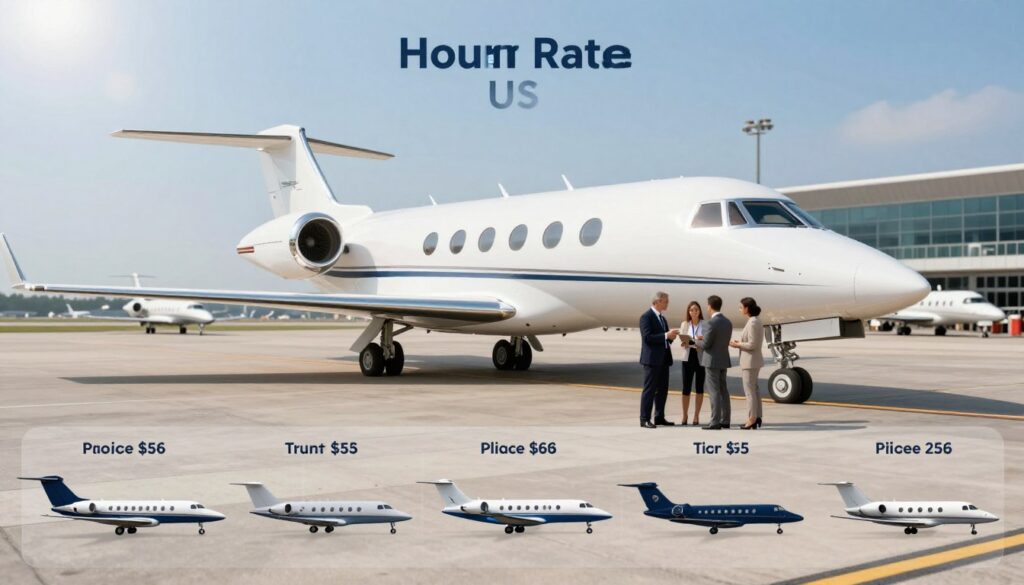
The Paramount Business Jets database tracks 120 aircraft. Its figures offer a useful market benchmark for planning. A light aircraft hourly rate often falls between $3,750 and $4,200. Midsize models show an hourly rate of $4,700 to $5,500.
For more cabin space, a super midsize hourly rate ranges from $6,200 to $7,500. Large aircraft show a rate of $8,500 to $10,000. Your final hourly rate may change with aircraft age, cabin layout, operator standards, and real-time availability.
- Use market ranges to build a practical budget.
- Check whether the rate includes repositioning and onboard services.
- Request an itinerary-specific quote before booking.
These figures guide your search, but they do not replace a tailored proposal. Flexible dates may also reveal a better rate.
| Aircraft category | Typical range | Planning note |
|---|---|---|
| Turboprop | $2,300+ | Short regional trips |
| Light | $3,750–$4,200 | Small groups |
| Midsize | $4,700–$5,500 | More cabin room |
| Super midsize | $6,200–$7,500 | Longer routes and added comfort |
Popular US Routes and Estimated Private Jet Costs
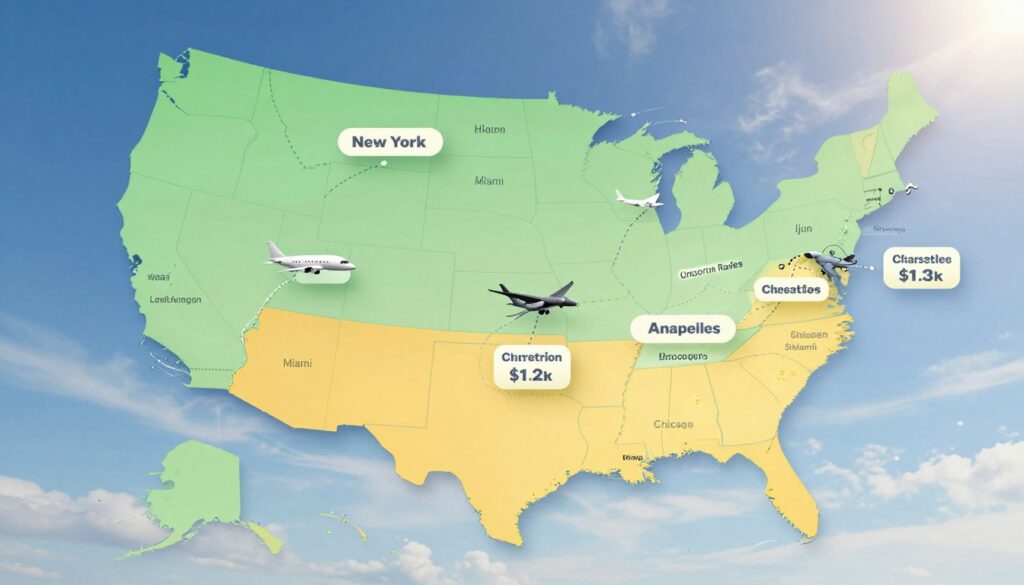
Route distance, aircraft location, and passenger needs can shift the total for common US flights. These examples show realistic one-way budgets, not simple hourly figures. Use them as planning ranges before requesting a tailored quote.
New York to Miami and Los Angeles
A New York–Miami trip may range from $17,000 in a light aircraft to $23,000 in a midsize model. A super light option may reach about $20,000. These flights often depend on aircraft availability at the departure airports.
New York–Los Angeles flights cover much more distance. Expect about $40,000 in a super midsize aircraft and up to $62,000 in an ultra-long-range model. Passenger numbers and cabin choice can change the estimate.
Miami to Las Vegas and Nassau
Miami–Las Vegas flights range from $36,000 to $60,000. Miami–Nassau trips are shorter, with estimates from $6,000 for a turboprop to $10,000 for a light aircraft. Other useful comparisons include Los Angeles–Las Vegas at $7,500–$11,000 and Dallas–Houston at $8,500–$12,000.
| Route | Aircraft range | Estimated one-way total |
|---|---|---|
| New York–Miami | Light to midsize | $17,000–$23,000 |
| New York–Los Angeles | Super midsize to ultra-long-range | $40,000–$62,000 |
| Miami–Las Vegas | Super midsize to ultra-long-range | $36,000–$60,000 |
| Shorter regional routes | Turboprop to light | $6,000–$12,000 |
Billable Flight Time and Aircraft Positioning Explained
Your travel time and billable time may not match. Operators usually measure flight time from wheels up to wheels down. Taxi time stays outside that figure, but ground operations can add 0.1 hour, or six minutes, for each segment.
Wheels-Up Time, Ground Operations, and Daily Minimums
Short leg flights can still meet a daily minimum. Light and midsize aircraft often require about 2.0 hours, even when the trip lasts less in the air. Large aircraft may require 2.5 to 3.0 hours. This rule can affect short leg flights and connecting leg flights.
“The aircraft’s location can matter as much as the distance you fly.”
When Ferry Flights Raise Your Total
If your chosen aircraft sits in another city, the operator may need a ferry flight before your trip begins. Positioning charges often range from $2,000 to $8,000. Distance, aircraft location, and scheduling shape the final amount.
Ask for wheels-up time, ground additions, daily minimums, and positioning details in writing. This simple check helps you compare quotes and avoid surprises.
Taxes and Fees Added to Your Private Jet Quote
Taxes can change the final figure after you select an aircraft and route. A clear quote should separate government charges from operator fees. Review each line before you approve the itinerary.

Federal Excise Tax and Domestic Segment Fees
For US domestic segments, the Federal Excise Tax is 7.5% of the taxable fare. The 2026 domestic segment fee is $5.30 for each passenger and leg. A $50,000 fare, for example, adds $3,750 in federal tax before other fees.
International arrivals or departures may use a different rule. The US international head tax is $23.40 for each passenger. Flights involving Alaska or Hawaii may also add an $11.30 passenger tax.
International Head Taxes and State-Specific Charges
International itineraries can carry higher local fees. The UK raised Air Passenger Duty by 50% in April 2026. Band B now reaches £1,097, while Band C reaches £1,141 for each passenger.
France applies a solidarity tax of €420 for intra-European turbojet travel and €2,100 for long-haul turbojet travel. Ask your broker to list every tax, fee, and passenger charge separately. This makes comparisons far easier.
Airport, Crew, Fuel, and Other Operational Costs
The aircraft quote is only one part of your travel budget. Airport services, crew logistics, winter needs, and onboard options can add charges before departure. An itemized proposal helps you see which services are included.
Landing, Ramp, and FBO Handling Fees
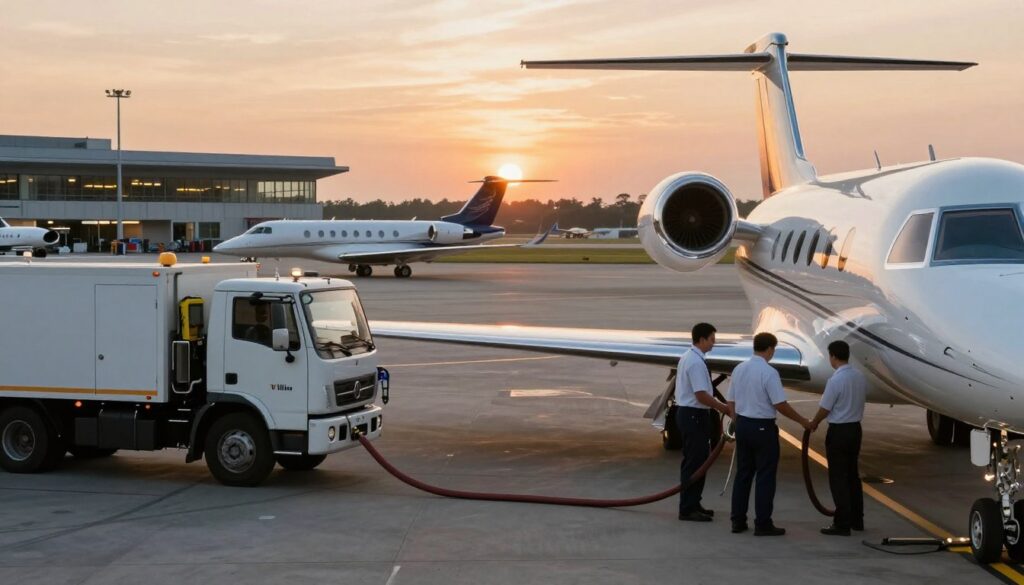
Airport authority charges, ramp support, and FBO handling usually range from $150 at smaller facilities to $2,000 or more at busy airports. Landing fees may appear separately, especially at major hubs. Ask whether parking, baggage support, catering, and ground transportation are included.
Crew Overnights, Fuel Surcharges, and De-Icing
If the crew stays overnight, lodging and meals may add $200–$600 for each crew member nightly. Winter aviation can bring de-icing charges from $1,500 for light aircraft to $12,000 or more for larger models. Heated hangar storage often adds $500–$1,500 daily.
Fuel surcharges can shift with market prices. Sustainable Aviation Fuel may carry a 50–100% premium while cutting lifecycle emissions by up to 80%. ReFuelEU Aviation requires a 2% SAF blend in 2026. Wi-Fi, catering, and environmental services may also appear as optional or as-incurred charges.
How Travel Demand Affects Private Jet Charter Pricing
Calendar pressure can reshape your flight quote before you choose an aircraft. During peak periods, charter rates may rise by 20% to 50%. Limited supply around major events can push increases to 50%–100%.
Holiday, Event, and Peak-Season Premiums
Thanksgiving week, summer weekends, and December 20 through January 5 often bring strong demand. The 2025 Super Bowl in Las Vegas showed the effect clearly. Reported light-aircraft rates climbed from $4,000 to $7,000 an hour.
The 2026 FIFA World Cup across North America and the G20 Summit in Miami may also tighten heavy-aircraft availability. Book four to six weeks ahead for major events to improve aircraft choice and reduce last-minute handling pressure.
“Flexible dates can protect both your schedule and your budget.”
- Try Tuesday through Thursday travel.
- Compare alternate airports near event sites.
- Ask about demand-based surcharges in writing.
| High-demand period | Likely effect | Planning move |
|---|---|---|
| Thanksgiving week | 20%–50% increase | Reserve early |
| December 20–January 5 | Strong seasonal demand | Use flexible dates |
| Major events | Up to 50%–100% increase | Book four to six weeks ahead |
Ways to Reduce Your Private Jet Cost Per Hour
Smart planning can lower your charter bill without giving up comfort. Start by reviewing aircraft availability, airport choices, and travel dates together. These details often create more savings than simply choosing a smaller cabin.
Empty Leg Flights and Flexible Scheduling
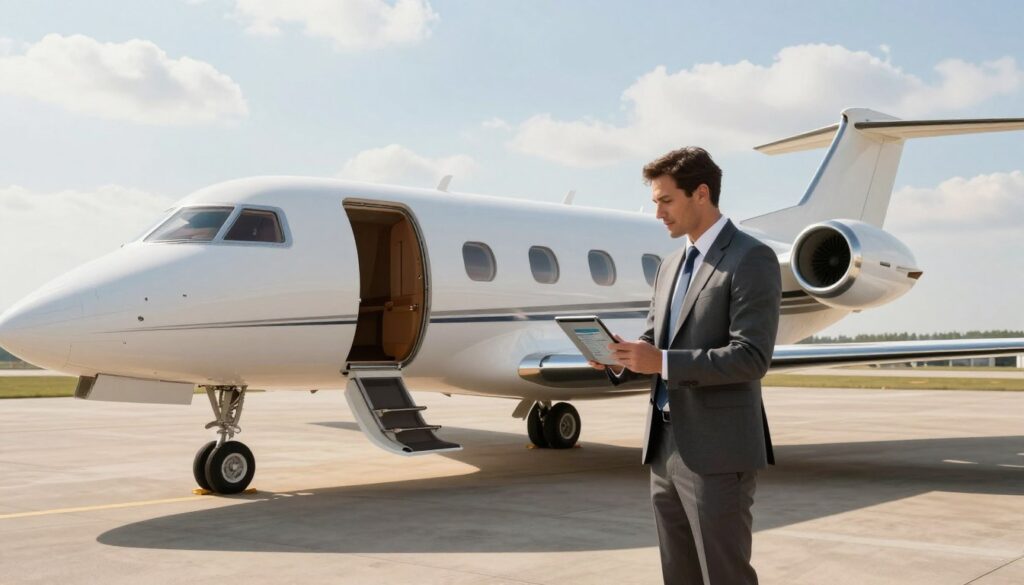
Empty leg flights may save 25% to 75% compared with standard charter pricing. An empty leg occurs when an aircraft must return to its base or reposition for another trip. Each empty leg follows a fixed schedule, so you may need flexibility within a seven-to-14-day booking window.
Last-minute changes can prove difficult. Confirm the departure time, cancellation rules, and baggage limits before you book. An empty leg works best when your plans can move.
Choosing Secondary Airports and the Right Aircraft
Secondary airports may reduce landing, handling, parking, and positioning charges. A turboprop or light aircraft can also suit a short regional trip better than a large model.
- Compare empty leg flights with regular options.
- Check nearby airports for lower ground fees.
- Match aircraft range and cabin space to your group.
- Review the full quote, not just the advertised rate.
Several options help you balance comfort, timing, and value.
How to Compare Villiers Charter Quotes With Confidence
A clear quote lets you compare service, safety, and total trip value. Start with the aircraft type, estimated billable time, and included services. Then check taxes, airport charges, crew logistics, and positioning assumptions.
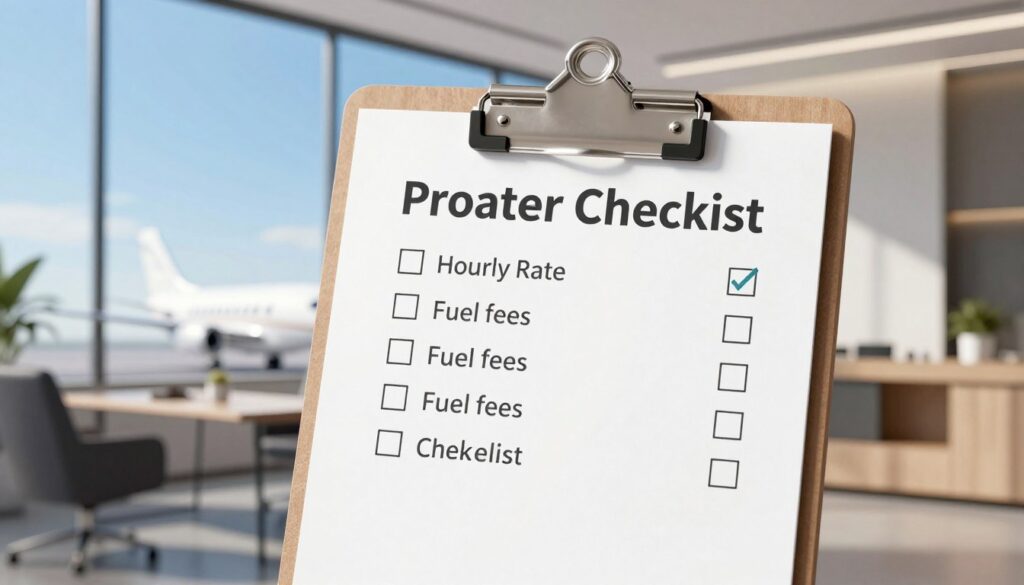
Fuel and standard fuel surcharges should appear in writing. Confirm daily minimums, crew overnights, international handling, de-icing, and possible post-flight charges. These details help you avoid an unexpected balance.
Safety deserves equal attention. Ask whether the operator meets ARGUS, Wyvern, or IS-BAO standards. You may also request an ARGUS TripCHEQ or Wyvern PASS review, plus details about crew training, certification, and maintenance.
- Compare the full quote, not only the listed rate.
- Request every tax and airport fee separately.
- Confirm cancellation and post-flight billing terms.
“A transparent quote supports a confident booking decision.”
Paramount Business Jets has operated since 2005 under founder and CEO Richard Zaher. Its August 2026 database reviews 120 aircraft across nine categories, giving you a useful market reference.
| Check | What to confirm | Why it matters |
|---|---|---|
| Aircraft | Type and cabin | Matches your group |
| Billing | Time and minimums | Shows the true total |
| Safety | ARGUS, Wyvern, or IS-BAO | Supports informed selection |
Conclusion
Planning a private jet charter begins with the full trip picture, not a headline number. Your final cost reflects aircraft class, billable flight time, group size, positioning, taxes, airport charges, and crew logistics.
US rates now start near $2,300 an hour for turboprops and may reach $23,000 for VIP airliners. A New York–Miami flight shows the spread: roughly $17,000 in a light jet and $23,000 in a midsize model.
Ask for an itemized quote before you book. It should show included services and separate taxes, fees, repositioning, and as-incurred items.
Flexible dates, empty-leg options, nearby airports, and a right-sized aircraft can improve value. Compare proposals from vetted operators, then confirm safety credentials and billing terms. This simple step helps your travel plan match your budget and comfort goals.