
Imagine flying in a private jet without breaking the bank. It’s not just a dream. Smart travelers are finding luxury flights for up to 75% less by using a secret tip.
This amazing deal is thanks to empty leg charter deals. When a jet moves for its next flight, it offers these one-way trips at special prices. It’s a win for everyone: the jet gets used, and you get luxury travel at a big discount.
It’s like a secret trick for smart travelers. You get the same top-notch planes and service but pay much less. Want to know how to get into this world of luxury travel?
Key Takeaways
- Empty leg flights are repositioning journeys offered by operators at deeply discounted rates.
- Savings can be extraordinary, often reaching 50-75% off standard private charter costs.
- This is a legitimate way to experience luxury air travel without the typical expense.
- Flexibility with your travel dates and destinations is key to finding the best opportunities.
- These exclusive private jet offers are typically last-minute but provide immense value.
- Working with a reputable broker can simplify the process of finding and booking these deals.
So, What Exactly Is an “Empty Leg” Flight?
An empty leg flight is a smart way to use what would be wasted. Imagine a private jet flying a client one way. Then, it needs to get back home or to another city for its next trip.
This journey is called an “empty leg.” It’s when a jet moves without passengers. As one source explains, these are “private jet flights that occur when an aircraft needs to reposition itself to another location without any passengers on board.”
Instead of flying with no one on board, operators offer these trips at lower prices. This is great for everyone. You get to fly in luxury for less, and the operator saves on costs.

This isn’t a secret or a lower service. It’s just smart business. These affordable empty leg flights make flying private more accessible to more people.
The Simple Economics of Repositioning Jets
Let’s look at the money side. Flying an empty plane costs a charter operator money. Fuel, crew time, and landing fees add up with no income.
By selling these seats at a discount, they turn a loss into a gain. It’s better to make some money than none. This is why these deals exist.
Here’s how both sides benefit:
- For the Operator: They cover a big part of their costs. It also helps build client relationships and fills gaps in their schedule.
- For You, the Traveler: You get to fly in a private jet for less. This is the secret to finding affordable empty leg flights.
The system is simple and works well. A client’s one-way trip starts it all. The operator then tries to fill the empty leg. Everyone benefits, making luxury travel more possible.
Why Empty Leg Private Jet Charter Deals Are a Game-Changer
Imagine flying private without the high cost. Empty leg charters make this dream a reality. They offer luxury travel at a fraction of the usual price. For those who travel smart, private flying becomes an affordable adventure.

Dramatic Cost Savings: The Biggest Draw
Empty leg charters are a huge money-saver. They offer seats on flights that must run, at lower rates. Savings can be up to 50% off traditional charters.
This is all about getting more value for less money. You get the same top-notch service without paying top dollar.
Comparing Empty Leg Rates vs. Traditional Charter
Let’s look at the numbers. A regular charter costs a lot. But an empty leg on the same route is much cheaper. It’s like getting a great deal on a nearly new car.
Access to Luxury on a Fraction of the Budget
Empty leg flights offer the full private jet experience. You get luxury travel that’s as good as first class, but better. It’s all about comfort and privacy.
Expect plush seats, custom meals, and skipping the crowds. These luxury private jet travel deals prove you don’t need to be rich to fly private.
Spontaneity Meets Opportunity: The Last-Minute Advantage
Flexible travelers love empty legs. They pop up on short notice, perfect for last-minute trips. It’s great for spontaneous getaways or business meetings.
Being flexible can lead to even bigger savings. You can find amazing deals by flying out of a different airport. It’s a thrilling way to travel, turning chance into adventure.
The Hidden Engine: How Empty Legs Are Created
Scoring a discounted private jet flight is all about knowing how empty legs work. They’re not just luck. They come from the everyday needs of the private jet world.

Once you understand how it works, you’ll see savings everywhere. It’s all about matching supply with demand smartly.
One-Way Client Journeys: The Primary Source
Most empty leg flights start with a one-way charter. Think of a client flying from New York to Miami for a meeting. The jet then sits in Florida, waiting to return to New York for its next flight.
This return trip, with no passengers, is an empty leg. An industry expert says, “This happens when a private jet has been chartered for a one-way trip, and after dropping off its passengers… the aircraft needs to fly back.” This need is your chance to save.
These one-way trips are the core of the empty leg market. They crisscross the country every day.
Maintenance, Relocation, and Seasonal Demand
While one-way charters are key, other moves also create empty seats. These less obvious scenarios can lead to great deals.
- Maintenance Moves: Jets need regular checks at special facilities. An operator might fly a plane empty to a maintenance hub, creating a one-way availability.
- Fleet Relocation: Operators move jets to where demand is high. For example, moving a jet from Chicago to Las Vegas before a big convention creates an empty leg.
- Seasonal Shifts: Jets move with the seasons. After Aspen’s snow melts, jets go to Palm Springs or the Hamptons. These relocation flights offer discounts.
Each move costs the operator. Selling those empty seats helps recover some of that cost.
The Role of Operators and Brokers in Filling Seats
Two key players help fill those empty seats: operators and brokers. Knowing their roles helps you shop smarter.
Charter Operators own or manage the aircraft. Their goal is to use it as much as possible. An empty leg means lost revenue. They list these flights on their own sites and through networks to fill them.
Brokers and Marketplaces are matchmakers. They gather empty leg listings from various operators into one place. Your favorite empty leg app or website is likely powered by a broker network. They find flights that match your route and dates.
This system efficiently connects supply (empty seats) with demand (your travel plans). It’s a win-win that drives the empty leg charter market.
Unbeatable Savings: Just How Much Can You Really Save?
Wondering how much you can save with an empty leg deal? This travel model can make luxury affordable. Let’s look at the numbers to help you understand the savings.
Typical Discount Ranges: From 25% to 75% Off
Private jet charters usually have a fixed price. But empty leg flights are cheaper, often 20% to 50% off. For the right traveler, savings can reach 75%.
The discount depends on the perfect match of need and opportunity. Last-minute flights on less common routes can offer the biggest savings. Your flexibility means more savings for you.
Case Study: New York to Miami on a Light Jet
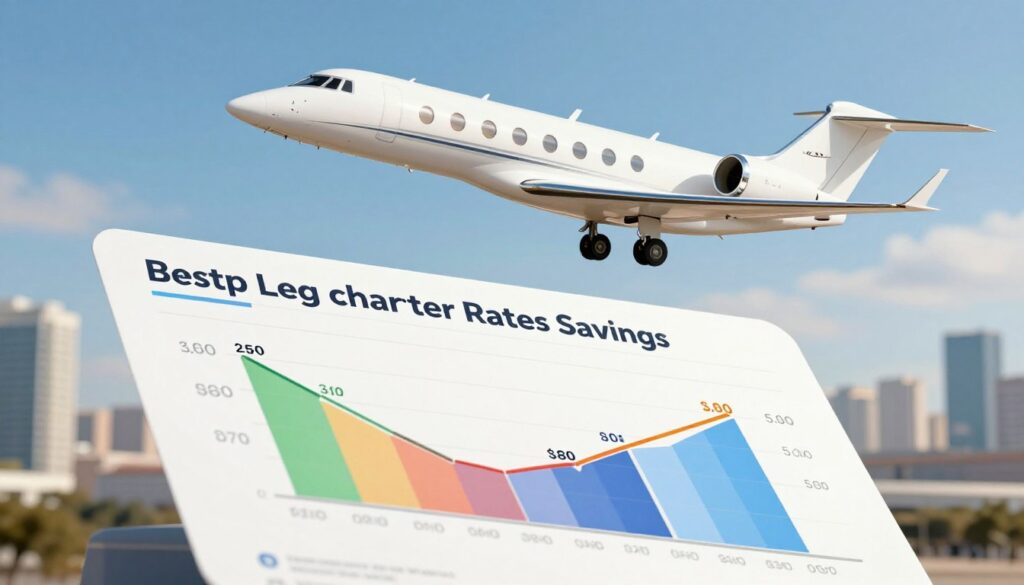
Imagine flying from New York to Miami. A standard charter for a light jet costs about $18,000. But an empty leg for the same route and aircraft could be $9,000 to $12,000.
This is a savings of $6,000 to $9,000. That’s 33% to 50% off the same luxury experience. This is real savings you can get.
Factors That Influence the Final Price
Not all empty leg deals are the same. Several factors affect the price. Knowing these helps you understand why some deals are better than others.
-
Aircraft Type and Size
A bigger jet like a Gulfstream G550 costs more than a smaller one like a Phenom 300. Even at a discount, the bigger jet is pricier. But the percentage discount is similar for both.
-
Route Popularity and Distance
Popular routes like Los Angeles to New York have more empty leg deals. This leads to better prices. Short, less common routes might have steeper discounts to fill the flight.
-
How Far in Advance You Book
Booking early or last-minute can affect the price. Booking a week or two in advance is often the best value. Last-minute deals can offer huge discounts, but there’s a risk of the flight being canceled.
By considering aircraft, route, and timing, you can find the best deals. This makes you a smart buyer ready to save on your next trip.
Your Guide to Finding the Best Empty Leg Private Jet Charter Deals
Finding a top empty leg jet deal is about tech, connections, and timing. You have three main ways to go. Each offers different benefits like convenience, choice, and savings.
Knowing which method fits your trip is key. This guide will help you choose.
Specialized Online Marketplaces and Apps
These are like travel aggregators for private jets. They offer a digital space where many operators list their empty leg flights.
You can search by date, route, aircraft, and price. It’s the quickest way to see what’s available. Many operators, like NovaJet, list their empty legs on these platforms.
Leading Platforms: Victor, XO, JetASAP, Air Partner
Platforms like Victor and XO have great apps and up-to-date listings. JetASAP connects you with brokers and operators through a quote request. Air Partner combines old-school charter expertise with a modern interface.
These services make finding flights easy by showing you clear options.

Working Directly with Charter Operators
Talking directly to charter companies is another good way. Many manage their own fleet and sell empty legs directly.
The big plus is personalized service. You might get to know a flight coordinator. This is great for regular travelers.
But, you’re limited to one operator’s fleet and schedule. You’ll need to visit each operator’s website. For example, NovaJet only lists its own aircraft.
This method is best if you prefer one operator or are flexible to find deals on several sites.
The Power of a Knowledgeable Broker
A good broker is your best friend. They don’t own planes but have access to many operators’ fleets.
They use their network and knowledge to find deals. A broker often knows about empty legs before they’re public.
They save you time and handle all the details. For first-timers or complex trips, a broker is invaluable. They can also negotiate for you.
Using a broker is like having a personal shopper for private aviation. They find the hidden gems you might miss on your own.
Setting Up Alerts for Your Preferred Routes
The smartest travelers don’t just search; they get alerts. Most big platforms offer alert functions.
Set up alerts for your preferred routes, departure city, destination, and dates. When a matching empty leg is listed, you get an email or app notification.
This is the best way for flexible travelers. It turns searching into a waiting game where the best deals come to you. Add a broker who knows your preferences, and you’re set for top empty leg jet deals.
Your strategy might use all three methods. Start with a marketplace to see what’s out there. Then, talk to a broker for expert advice. And always have those alerts ready for your dream routes.
Top US Routes for Discounted Empty Leg Flights
Looking for an empty leg charter? Knowing where to search is key. Some US routes offer more chances than others. This is due to business, luxury, and logistics patterns.
Targeting these areas boosts your chances of finding great deals. They fall into three main categories:
- Coast-to-Coast Corridors between major economic and cultural hubs.
- Sunbelt and Seasonal Favorites tied to vacation cycles.
- Major Hub Connections that keep the national network flowing.
Focus on these areas to make flying private affordable.
Coast-to-Coast Corridors: LAX to JFK, SFO to MIA
Transcontinental routes are top sources for empty leg flights. Business travel between New York (JFK) and Los Angeles (LAX) is constant. This creates a steady flow of jets needing to reposition.
Flights from San Francisco (SFO) to Miami (MIA) also offer great opportunities. They combine tech industry travel with luxury leisure demand. This heavy traffic means jets are always moving.
This means you might find a last-minute seat on a sleek jet from LA to New York. Or get a truly spectacular deal to Miami after a Silicon Valley business trip.

Sunbelt and Seasonal Favorites: Aspen, Palm Springs, The Hamptons
One-way leisure travel is key for empty leg charters. Vacation spots like Aspen (ASE) are prime hunting grounds for deals. A family’s ski week in Aspen means the jet must return.
That return flight is your chance. The same goes for Palm Springs (PSP) in spring or the Hamptons (HTO/FRG) in summer. After big holidays or weekends, jets empty out of these spots.
If your dates are flexible, you can get luxury for less. Imagine ending up in Las Vegas or finding a sunny retreat.
Major Hub Connections: Chicago, Atlanta, Dallas
Don’t miss the country’s central hubs. Chicago (ORD/MDW), Atlanta (ATL), and Dallas (DFW/DAL) are key for charter operators.
Jets from these cities fly nationwide. They often return empty or need to move to another hub. This creates a web of short and medium-haul empty leg possibilities.
A flight from Chicago to Atlanta or Dallas to Chicago is common. For those with open calendars or families, these flights are efficient and affordable.
Understanding these patterns helps tailor your search. The right route knowledge makes flying private more reliable.
Aircraft You Can Fly: From Light Jets to Heavy Cabins
Private aviation offers a wide range of aircraft, from light jets to heavy cabins. The type of plane you choose greatly affects your luxury travel experience. Knowing the different types helps you find the perfect jet for your needs.
Each aircraft class has its own unique features. You can pick the one that best fits your journey.
Light Jets for Efficiency: Cessna Citation CJ2, Phenom 300
Light jets are like the sports cars of the skies. They’re great for short trips and small groups. You’ll often find Cessna Citation CJ2 and Embraer Phenom 300 on empty leg flights.
These jets seat 4 to 6 people in a cozy cabin. They’re perfect for quick flights. You get a direct, private ride without the size of a bigger plane.
They’re ideal for fast business trips or weekend getaways. The experience is both intimate and quick.
Midsize Comfort: Hawker 800, Learjet 60
For longer trips and more space, midsize jets are the answer. The Hawker 800 and Learjet 60 offer more comfort.
They can carry 6 to 8 people on long flights. The cabin is roomier. You’ll find a private lavatory and more space for luggage.
This category offers a great balance. It provides plenty of room without the cost of the largest jets.
Heavy Jets for Long-Haul Luxury: Gulfstream G550, Bombardier Global 6000
Heavy jets are the ultimate in private travel. They can fly long distances non-stop. The Gulfstream G550 and Bombardier Global 6000 are the top choices.
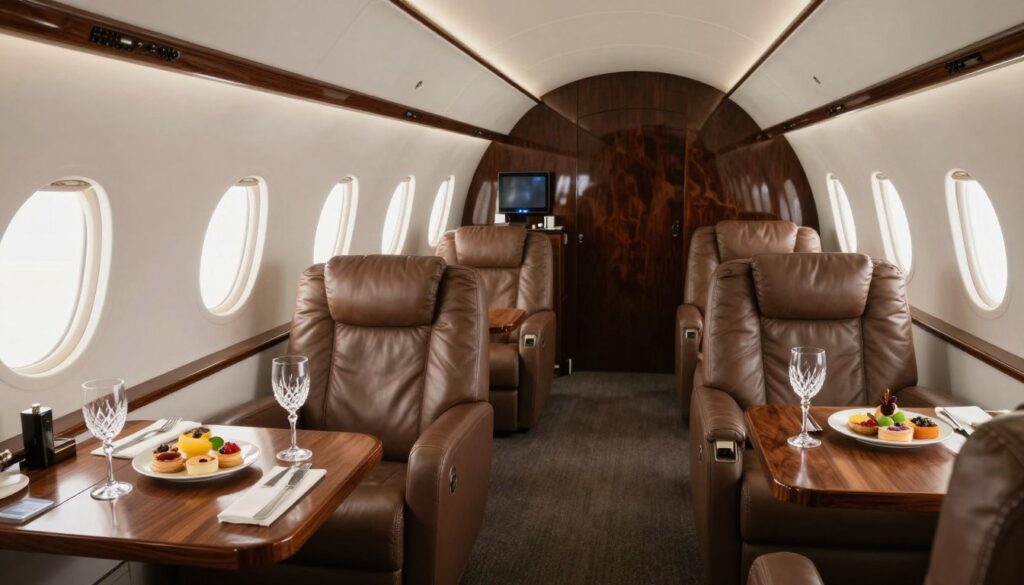
Their cabins are like flying lounges. You can stand up, walk around, and enjoy separate areas. They often have master suites, showers, and entertainment systems.
Flying on an empty leg of one of these jets is a special treat. It offers comfort and capability usually for the rich and famous.
Understanding Cabin Configurations and Amenities
The interior of your jet is where the magic is. Cabin layouts are designed for both work and relaxation. Club seating is common, allowing for easy conversation.
Many jets have sofas that turn into beds for long flights. This flexibility is key for comfort.
The amenities make travel time special. You can expect:
- High-speed satellite Wi-Fi for seamless connectivity
- Large HD monitors for presentations or movies
- A fully stocked galley for fresh meals and drinks
- Advanced climate and lighting control for your comfort
This is where personalized service really shines. The crew can tailor the experience to your liking. The spacious cabins become your own private retreat in the sky.
The Booking Process: Your Step-by-Step Path to the Tarmac
Booking a discounted private jet seat is easy. It’s different from booking a commercial ticket but follows a clear path. Follow these five steps to make your travel dreams come true.

Step 1: Define Your Flexibility (Dates, Times, Airports)
Your greatest leverage in getting a great deal is being flexible. Before you start, think about your travel dates and times. Can you leave a day early or late? Are you set on one airport, or could you use a smaller one nearby?
Being truly flexible with dates, times, and airports opens up more flight options. This is key to a successful empty leg booking.
Step 2: Search and Compare Available Listings
Now, use the tools we talked about. Go to online marketplaces or broker sites. Enter your flexible details. You’ll see flights that match your route and time.
Use filters to compare important details:
- Departure and arrival airports
- Date and time windows
- Aircraft type and cabin size
- The all-inclusive price
This step is important for finding the best deal in your private jet charter search.
Step 3: Review the Operator and Aircraft Details
If a listing looks good, dig deeper. Find out who operates the aircraft. Good brokers will tell you. Check their safety certifications, like Wyvern or ARGUS.
Also, examine the aircraft model. Make sure it has the Wi-Fi, refreshments, and legroom you want. This ensures your flight is as luxurious as you expect.
Step 4: Understand the Contract and Terms
This is a critical step you can’t skip. Read the contract or terms of service carefully. Look closely at the cancellation policy for both you and the operator.
Know any change fees if your plans change. Clarify what’s included in the price—are all taxes, fees, and catering covered? Knowing this avoids surprises later.
Step 5: Secure Your Booking with a Deposit
When you’re ready to book, pay a deposit. This is usually a percentage of the total fare. It’s needed to secure the flight. Payment is usually by wire transfer or secure online portal.
After the deposit, you’ll get a formal confirmation and contract. Congratulations, your empty leg booking is complete! Now, just pack and get ready for your luxurious flight.
Timing Is Everything: When to Book for the Best Rates
Getting a great empty leg deal is all about when you book. Unlike regular travel, where prices go up as the trip gets closer, empty legs work differently. Being flexible is key, but knowing the right time to book can save you a lot.

Booking too early or too late can miss the mark. The perfect time is when you can find a good balance of availability, price, and certainty.
The “Sweet Spot”: 7 to 14 Days in Advance
The best time to book is usually 1 to 2 weeks before you leave. This is when charter operators have their schedules set and start listing empty legs. It’s a time when prices are good, but not yet too high.
Booking then gives you more options and time to plan without stress. You can find big discounts, often 50% off, but you get more peace of mind.
“The savvy empty leg traveler watches the 10-day forecast. That’s when the best combination of confirmed flights and great prices hits the market.”
Last-Minute Steals (Within 72 Hours)
If you’re up for a spontaneous trip, book within three days. Operators are eager to fill seats, even at low prices, to cover costs. You can find discounts up to 75% off.
These deals are great for:
- Impulsive weekend getaways
- Responding to unexpected business opportunities
- Joining friends on a trip you just heard about
Keep in mind, you need to be ready to go quickly. Your choices might be limited, and you’ll have to pack light. But for the flexible traveler, it’s a chance for luxury at a low price.
Planning Ahead for Peak Seasons and Events
For big events or peak travel times, book early. Demand for private flights goes up a lot during these times. Aim to book 2-3 weeks in advance to save and secure your spot.
While there are fewer empty legs, booking early ensures you get a flight. You’ll save a lot compared to regular charters and avoid the rush.
Your booking strategy should match your travel style. Plan ahead for peace of mind and good options. Be spontaneous for the best prices. And book early for big events.
Reading the Fine Print: Key Terms and Conditions
Your empty leg adventure starts with understanding the booking agreement. This contract is your guide for the whole experience. It tells you what you’re paying for and what happens if plans change.
Source 3 advises: “Think about your travel needs and flexibility before booking an empty leg flight.” Taking time to review the details helps avoid surprises and boosts your confidence.

Cancellation Policies and Your Protections
Cancellation rules for empty leg flights are much stricter than regular private charters. Operators offer a discounted seat on a flight they must take, so they can’t be very flexible.
Most contracts require a non-refundable deposit, often 50% or more if you cancel. Some might offer a partial credit for future travel, while others might keep the whole payment. Knowing this policy before you book is key.
Ask directly: “What’s the cancellation window, and what are the financial penalties?” Knowing this helps you understand your risk.
Change Fees and Flexibility for Schedule Shifts
What if you need to change your flight by a few hours or a day? Change fees are common. The operator’s plane has a set schedule, so changes cost money.
Fees can be from a few hundred to several thousand dollars, based on the change. Some operators are more flexible than others. Your negotiating power is highest before you sign. Talk about possible changes and see if a flat fee or grace period can be agreed upon.
What’s Included (and What Might Be Extra)
The price for your empty leg flight usually covers basic services. But luxury amenities and ground services are often extra. It’s important to know what’s included for your budget.
Typically included in your base fare:
- Flight crew (pilots)
- Standard aircraft catering (bottled water, soft drinks, basic snacks)
- Airport landing fees for the primary itinerary
- Standard aircraft insurance
Common extras that may incur additional fees:
Catering, Ground Transport, De-icing Fees
- Gourmet Catering: Upgraded meals, specific wines, or special dietary requests.
- Ground Transportation: Arranged limousine or SUV service to/from the FBO (Fixed Base Operator).
- De-icing Fees: In colder climates, de-icing fluid is a necessary and sometimes costly extra.
- International handling fees, additional fuel surcharges, or in-flight WiFi access.
Always ask for a final, itemized quote. This document should list every included service and any extra costs. It makes the fine print useful for a smooth, luxurious trip.
Safety and Peace of Mind: How Empty Legs Are Just as Secure
The user requests SEO-optimized HTML content for section 12 of an article about empty leg private jet charters. The section focuses on safety and peace of mind, addressing concerns that discounted flights might be less secure. The user provides detailed instructions, including specific headings, keywords, and formatting requirements.
First, I need to analyze the requirements. The current section details include H2: “Safety and Peace of Mind: How Empty Legs Are Just as Secure” and three H3 subheadings. The user emphasizes addressing common safety concerns, explaining that empty legs are as secure as regular charters, covering operator standards, pilot qualifications, maintenance, and verifying safety ratings like Wyvern and ARGUS. The tone should be friendly and reassuring, using second-person point of view.
The user provides enhanced guidelines: ensure continuity without repetition from previous sections, cover 100% of current section details, align with brand voice (though not specified), and follow SEO best practices. Content engineering requires TF-IDF optimization, coherence between paragraphs, and readability scores (Flesch Reading Ease 60-70, 8th-9th grade level). Quality control involves keyword distribution limits, Hemingway Editor principles, and using real names/brands. Optimization includes LSI keywords and cultural localization for the US.
HTML structural requirements: start with H2, use H3 for subheadings, include paragraphs, and optionally use strong, em, blockquote, ol/ul lists, and an img tag with the provided link. The image should be centered with alt text related to the section. The user also requests a keyword placement matrix and Flesch score verification.
Now, I’ll plan the content. First, create five variations of the first sentence, ensuring uniqueness from previous sections. I’ll assume I need to create original openings. I’ll choose the most unique one that introduces the safety topic engagingly.
Variation 1: “When considering an empty leg private jet charter, it’s natural to wonder if the lower price comes with compromises on safety.” (Directly addresses concern)
Variation 2: “Safety is the non-negotiable foundation of all private aviation, and empty leg flights are no exception.” (Asserts safety as priority)
Variation 3: “The thought of a deeply discounted private flight might raise questions about its security and operational standards.” (Highlights discount-safety link)
Variation 4: “Rest assured, the exceptional value of an empty leg deal does not mean cutting corners on safety protocols.” (Reassuring tone)
Variation 5: “Understanding the rigorous safety framework behind every empty leg flight is key to booking with complete confidence.” (Educational approach)
I’ll choose Variation 4 because it immediately reassures the reader, aligns with the friendly tone, and emphasizes that value doesn’t compromise safety. It’s unique and directly addresses the core concern.
Next, I’ll structure the section according to the current section details. Start with an H2 heading, then a brief introductory paragraph before the first H3. Cover each H3 in order: operator standards, pilot qualifications/maintenance, verifying safety ratings. I’ll incorporate information from the Data source about aviation professionals upholding safety standards. Use a reassuring tone throughout.
For HTML formatting: Use H2 for the main title, H3 for subheadings, p for paragraphs. I’ll include the img tag after the introductory paragraph for visual appeal and relevance. Use strong tags to emphasize key points like “same aircraft, same crew, same regulations.” I’ll consider a blockquote for the data source quote, but it’s not a direct quote, so I’ll integrate it naturally. Lists might not be necessary here, but I can use them if discussing safety verification steps.
Keyword optimization: The SEO relevant keywords aren’t specified, but from the context, likely include “empty leg safety,” “private jet security,” “operator standards,” “pilot qualifications,” “Wyvern,” “ARGUS.” I’ll ensure keyword density is under 2%, with no more than two repetitions per 100 words. The total word count for this section should be around 300-400 words based on typical blog sections.
Readability: Keep paragraphs short (2-3 sentences each), use simple language, active voice, and ensure Flesch score between 60-70. I’ll avoid passive voice over 20% and section references.
Cultural localization: Use American English spelling and references familiar to US audiences (e.g., FAA regulations).
Now, I’ll draft the content step by step:
1. H2: Safety and Peace of Mind: How Empty Legs Are Just as Secure
2. Introductory paragraph: Start with chosen first sentence, then explain that empty legs use the same aircraft and crew as full-price charters.
3. Insert img tag with alt=”empty leg private jet safety” centered.
4. H3: The Same Rigorous Operator Standards Apply – Discuss how operators must adhere to strict regulations (FAA Part 135), and the flight is part of their normal schedule.
5. H3: Pilot Qualifications and Aircraft Maintenance – Detail pilot training requirements (minimum hours, recurrent training) and maintenance schedules (adherence to manufacturer and regulatory standards).
6. H3: Verifying an Operator’s Safety Ratings (Wyvern, ARGUS) – Explain third-party audit programs, how they evaluate safety, and how readers can check these ratings before booking.
7. Conclude with reassurance, perhaps referencing the data source about aviation professionals dedicated to safety.
I’ll ensure each H3 has a preceding paragraph if needed, but the user says “avoid placing H3 headings immediately after H2; instead, insert a brief introductory passage.” So I’ll have an intro before the first H3.
For keyword placement matrix: I’ll track keywords like “empty leg,” “safety,” “operator,” “pilot,” “maintenance,” “Wyvern,” “ARGUS.” Calculate density based on total words.
Flesch score: I’ll aim for around 65 by using shorter sentences and common words.
Lastly, output in tags with the matrix and Flesch score noted.
The user has provided a detailed task to write section 12 of an article about empty leg private jet charters, focusing on safety. I need to analyze the requirements and create content according to them.
Key points from the user:
1. Write SEO-optimized HTML content for section 12.
2. Enclose the result in tags.
3. Ensure content is unique and doesn’t duplicate previous sections.
4. Follow SEO best practices and align with the existing article structure.
5. Use appropriate HTML tags and incorporate keywords naturally.
6. Include meta tags if applicable (though not specified here).
7. Address the specific details in : H2 “Safety and Peace of Mind: How Empty Legs Are Just as Secure” with three H3 subheadings.
8. Use a friendly tone and second-person point of view.
9. Target audience is in the United States.
10. Follow enhanced guidelines: context analysis, content engineering, quality control, optimization techniques, and HTML structural requirements.
The user also asks for a planning process in
Pro Tips for Maximizing Your Empty Leg Experience
Getting a great empty leg deal is just the start. The real magic happens when you make the trip your own. With a few insider tips, you can turn a good deal into an amazing journey.
Think of it this way: you’re not just a passenger. You’re a guest on a private plane. A little communication and planning can make a big difference.
Communicating Your Preferences Clearly
One of the best things about private jet travel is making it personal. Don’t be shy about telling your broker or flight coordinator what you want before the flight.
Be specific. Instead of “some snacks,” say if you’d like a fruit platter, gourmet sandwiches, or a charcuterie board. Talk about the cabin temperature and any special occasions you’re celebrating.
- Catering: Mention any dietary needs (vegetarian, gluten-free) or favorite drinks.
- Cabin Setup: Ask for magazines, specific music playlists, or a certain seating arrangement if you’re with a group.
- Special Requests: Need a last-minute gift or flowers at your destination? Ask. These services are often available.
The best empty leg experiences come when you see the operator as a partner, not just a service. A quick, clear conversation sets the tone for a perfect trip.

Being Flexible with Departure and Arrival Airports
Your flexibility is your biggest advantage. While big hubs like LAX or Teterboro are common, smaller airports nearby can offer unique opportunities.
Many private flights use Fixed Base Operators (FBOs) at secondary airports. A trip to Westchester County Airport (HPN) instead of JFK, or Long Island MacArthur (ISP) instead of LaGuardia, might find you the perfect flight.
When searching or talking to your broker, give a range of airports you’re open to. This simple step can increase your chances of a great deal and might even cut down your travel time.
Packing Considerations for Private Jet Travel
Packing for an empty leg experience is different from a commercial flight. You’re trading crowded terminals for a peaceful lounge, which changes everything.
First, luggage space is different from an airliner’s hold. Soft-sided luggage fits better in cabin compartments. You’ll have your bags with you, so pack essentials in a smaller case.
Attire is about “comfortable elegance.” You’re in a refined space. Think smart casual. Also, you’ll skip long security lines, so you can carry more liquids and gels in your carry-on, but always check with your operator for specific policies.
Don’t forget the essentials for enjoying the flight: a good book, your device chargers, and a light layer for the cabin. The goal is to feel ready, relaxed, and excited to enjoy every moment of your smart travel choice.
Potential Drawbacks and Smart Strategies to Navigate Them
Traveling on an empty leg journey has its trade-offs. You save a lot of money but face different challenges than regular private jet charter travel. Knowing these ahead of time helps you plan better and enjoy a luxurious trip.
The Uncertainty of Fixed Schedules
Your flight’s schedule is set by the aircraft’s needs, not yours. This means you have to stick to their plan. You’re fitting into a schedule that’s not yours.
Flights might not be at the best times for you. They could be early in the morning or late at night. This is the main trade-off for cheaper flights. It requires you to be flexible.
Limited Choice in Aircraft on a Specific Route
You can’t pick any jet you want. The discounted flights are for specific jets moving from one place to another. If a Gulfstream is moving, that’s your choice. If a Learjet is available, that’s what you’ll fly.
This means you have to accept what’s available. You might not get the exact jet you want. The choice is more about the route and timing than the jet itself.

The Possibility of Cancellation by the Operator
Though rare, the operator can cancel the flight. This could happen if the main client changes their plans. Or if there are maintenance issues.
This is different from a regular charter. Your trip depends on another flight not needing the plane. This is why these flights are so cheap.
Strategies to Mitigate These Risks
Smart planning can help you enjoy the luxury without the hassle. Your goal is to make the most of the experience.
Embrace Maximum Flexibility: See the empty leg as a great opportunity, not a strict plan. Have backup plans ready. Being flexible with your travel dates and airports can open up more options.
Use a Reputable Broker: A good broker can help a lot. They keep an eye on the market and can warn you about changes. They handle the hard stuff for you.
Consider Travel Insurance: Look for a policy that covers “change of carrier” or “trip cancellation.” This can protect your money if your flight is canceled.
Communicate Clearly and Confirm: Keep in touch with your broker or operator before your flight. Confirm all the details 24-48 hours before. Being proactive keeps you informed and ready for any changes.
By using these travel strategies, you become a more empowered traveler. You get great value while dealing with the unique challenges of empty leg charter travel.
Is an Empty Leg Flight Right for You? Perfect Passenger Profiles
Empty leg deals aren’t for everyone, but they’re perfect for certain flyers. Knowing which profile you fit into is key. It’s not about being exclusive; it’s about finding the right match for your travel style.

The Flexible Leisure Traveler
This is the classic empty leg adventurer. You love experiences over strict plans. If you’re open to a weekend getaway, this is for you. Your strength is being spontaneous.
You’re all about finding great deals. You’re okay with letting the flight plan some of your trip. This way, you get luxury travel at a lower cost.
- Spontaneous Spirit: You’re ready to book when a great deal pops up.
- Date Flexibility: You can travel on short notice or within a range of dates.
- Experience-Driven: The journey on a private jet is part of the vacation itself.
Small Groups and Families
Traveling with three or more people? Empty leg charters can save you money. When you split the cost, it’s often cheaper than first-class commercial tickets.
You also get a private cabin. This means more space for everyone, no middle seats, and no airport hassle.
- Cost-Sharing Advantage: Dividing the charter cost makes luxury accessible.
- Superior Cabin Space: More room for luggage, kids, and comfort compared to airline cabins.
- Direct Routing: Fly closer to your final destination, perfect for remote vacation spots.
Business Travelers with Open Calendars
Not all corporate travel is set in stone. If you can adjust meeting dates, you’re a great candidate. The productivity gains are huge.
You avoid airport lines, connect calls in the air, and arrive refreshed. Empty leg flights can also impress clients by giving them a discounted seat.
- Flexible Scheduling: You can adjust meeting dates to align with flight availability.
- Last-Minute Trip Efficiency: Secure fast, direct transport when urgent needs arise.
- High-Value Client Transport: Use the savings to provide an exceptional experience for business partners.
Luxury Seekers on a Smarter Budget
You love fine things and premium service but value your money. You want the private jet experience without the high price.
Empty leg charters are your ticket. They let you fly on luxury jets like a Gulfstream or Global Express, with all the perks, for a good price.
- Access to Elite Aircraft: Fly on heavy jets typically reserved for billionaires.
- Full-Service Experience: Enjoy the same premium service as a full-fare charter.
- Intelligent Luxury Spending: Allocate your travel budget to the experience, not just the seat.
Do you see yourself in one of these profiles? If so, the world of discounted flights is waiting for you. By matching your travel personality with these opportunities, you unlock a smarter, more luxurious way to fly. Start looking for those affordable empty leg flights that fit your life.
Your Confidence Checklist for Making the First Booking
You’ve found a great empty leg deal. The excitement is real. Now, a bit of smart preparation turns that excitement into a completely smooth experience.
This checklist is your final tool. It ensures you ask the right questions, have your documents sorted, and walk onto the tarmac with total confidence. Let’s lock down those exclusive private jet offers.
Essential Questions to Ask Before You Commit
Don’t be shy. Getting clear answers upfront prevents surprises. Here are the must-ask questions for your broker or operator.
- What is the exact cancellation policy? Know your financial exposure if your plans change or if the operator cancels.
- Are there any change fees? Understand the cost and process for altering your flight time, even by an hour.
- What is included in the quoted price? Get a clear breakdown of catering, ground transportation, and landing fees.
- Can you provide the operator’s safety audit details? Ask for Wyvern or ARGUS certification to verify their standards.
- What is the backup plan if this specific empty leg cancels? A good broker will have alternatives ready.
Documents You Should Have Ready
Speed up your booking by having these items on hand. It makes the process swift and professional.
- Passenger Identification: A government-issued photo ID for every traveler. Passports are best for international trips.
- Primary Payment Method: Have your credit card details ready. Most bookings require a deposit to secure the jet.
- Complete Contact Information: Your phone number and email for confirmations and last-minute updates.
- Special Request Notes: Any dietary needs or accessibility requirements in writing.
Your Pre-Flight To-Do List
The 24 to 48 hours before your flight are critical. These simple steps guarantee a seamless departure.
- Re-confirm all details. Contact your broker to verify the departure time, airport (FBO), and tail number.
- Pack smart for private travel. Remember, you can bring liquids. But check specific luggage limits for your jet model.
- Arrange your ground transportation. Know how you’re getting to the private terminal (FBO), not the main commercial airport.
- Charge your devices. While many jets have outlets, ensure your laptop and phone are ready for work or entertainment.
- Check the weather. A quick look helps you pack appropriately and sets expectations for possible slight schedule adjustments.
Following this list transforms you from an interested traveler into a prepared guest. You are now ready to confidently secure and enjoy these exclusive private jet offers.
Conclusion
Empty leg private jet charter deals make flying private more affordable. They offer the luxury of private jets at a lower cost. This makes flying a more accessible adventure.
Success in finding these deals comes from being flexible. Being open to different times and airports can save you money. It’s all about looking at travel differently.
Finding these deals is easier with the right tools. Use online marketplaces and work with brokers to find the best flights. Set up alerts to catch any new opportunities.
This is your chance to try a new level of travel. Look at listings, check the safety ratings of operators, and get ready for a smooth trip. Private jet travel is waiting for you to explore it your way.
FAQ
What is an empty leg private jet charter?
How much can I really save with an empty leg flight?
Are empty leg flights safe?
How do I find the best empty leg private jet charter deals?
What are the main drawbacks or risks?
Can I choose my exact departure time on an empty leg?
What’s usually included in the quoted price?
How far in advance should I book?
What kind of private jets are available on empty legs?
Who is the ideal traveler for an empty leg charter?