Did you know the price for a single hour of private air travel can swing by more than $18,000?
Welcome! If you’ve ever wondered, “How much does it really cost to charter a private jet?” you’re in the perfect spot. The numbers you see online can be incredibly confusing.
This guide is your definitive look at typical pricing. We’ll cut through the clutter and give you a clear, category-by-category view of what to expect. You’ll see everything from entry-level turboprops to globe-spanning luxury models.
Understanding these figures is your first step toward a smart choice. It helps you find the most suitable and potentially affordable option for your needs.
Key Takeaways
- Hourly fares for chartering a plane have an extremely wide range.
- The specific aircraft model is the biggest factor in your final quote.
- This breakdown provides a clear starting point for your budget planning.
- You can access different levels of service, from practical to ultra-luxurious.
- Knowing the averages empowers you to ask the right questions.
- A detailed cost comparison is essential for making an informed decision.
Demystifying the Sky-High Numbers: What You Really Pay For
To understand private jet costs, break down each part of a charter quote. When you ask “how much does it cost to charter a private jet,” the answer is complex. Your bill includes several specific items.
Think of it like a detailed restaurant check, not a cover charge. You pay for the core service, plus the resources and expertise needed to deliver it.
Chartering a private jet isn’t a flat fee; it’s the sum of aircraft time, fuel, crew, and operational fees.
Knowing these parts helps avoid surprise charges. Here are the five main components that build your total private jet charter cost:
- Billable Flight Time
- Fuel Surcharge
- Crew Fees
- Landing, Handling & Incidental Fees
- Federal Excise Tax (FET)
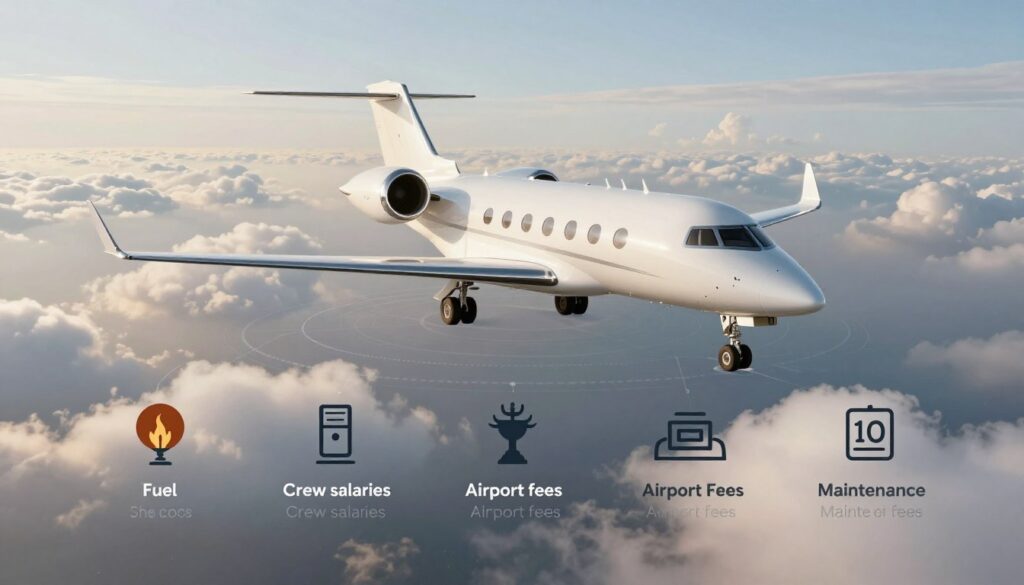

Billable Flight Time is your main cost. It’s the aircraft’s hourly rate, charged from start to finish. It covers the jet’s cost, maintenance, and insurance. Quotes are based on estimated hours.
The Fuel Surcharge is a variable fee tied to jet fuel prices. Operators adjust this often to manage price changes. It’s separate from the hourly rate to keep base pricing stable.
Crew Fees cover the salaries and expenses of your pilots and cabin attendant. They ensure your safety and service. Their fee is often included in the hourly quote or listed separately.
Landing, Handling, and Incidental Fees are paid to airports. Every landing costs money. Handling covers services like baggage handling and ramp access. Incidentals include in-flight catering, ground transport, or de-icing in cold weather.
Lastly, the Federal Excise Tax (FET) is a mandatory 7.5% tax on charter fares in the U.S. It’s a federal tax on air travel and can’t be negotiated.
By understanding each item, you can review any quote confidently. You’ll see where your money goes when chartering a private jet. This knowledge makes a high price clear and shows it’s an investment in your time, comfort, and privacy.
Understanding the Core Pricing Model: It’s More Than Hourly
The private jet cost per hour you see first is just the start. It’s the base, but the real cost comes from other important factors. Knowing these can make you a smarter charter client.
The Flight Hour Charge: Your Primary Metric
When talking about hourly rates, they mean billable flight time. This isn’t just the time the plane is flying. It also includes any extra fees for moving the plane around and adjustments for daily minimums.
For example, if the jet needs to move from its base to pick you up, that counts. The same goes for moving back after dropping you off.
Most charters have a daily minimum of two hours. This rule can affect short trips a lot.
- A 45-minute hop might be billed as the full 2-hour minimum.
- A 90-minute flight would also be rounded up to 2 hours.
- Only trips over the minimum are charged for actual flight time.
This is why a $5,000 private jet cost per hour can turn into $10,000 for a short flight. You’re paying for the plane and crew to be ready, not just for flying.
Leg-Based vs. Trip-Based Quotes: Know What You’re Getting
How your journey is quoted matters a lot. Charter companies usually give estimates in two ways.
Leg-Based Quotes cover one part of your trip. For example, New York to Miami is one leg. But, there’s a hidden cost if the plane needs to move after, known as an “empty leg.”
Trip-Based Quotes cover more. They often include round trips or one overnight stay. This package usually includes:
- The flight to your destination.
- A rest period for the crew (often overnight).
- The flight back home.
Which one is better for you? It depends on your travel plans.
Trip-based pricing is good for round trips. Leg-based quotes are better for complex itineraries.
Always ask which type of quote you’re getting. A simple question—”Is this quote for the whole trip or per leg?”—helps you compare and budget correctly.
The Private Jet Charter Average Cost: A Category-by-Category Breakdown
Understanding private jet costs means looking at different types of planes. It’s like comparing cars. You wouldn’t compare a sedan to an SUV without knowing their uses. The same goes for private jets.
Each type of plane has its own size, range, and features. They also have different average hourly rates. This helps you find the right plane for your needs and budget.

The table below shows the current market prices. These are ballpark figures for the base flight hour charge. This is the main cost of your luxury jet charter. Your final price will include extra fees we talked about earlier.
| Aircraft Category | Ballpark Hourly Rate | Primary Use & Key Traits |
|---|---|---|
| Turboprop | $2,000 – $3,500 | Short regional hops; efficient and cost-effective for shorter distances. |
| Very Light Jet (VLJ) | $3,000 – $4,500 | Entry-level jet travel for 2-4 passengers; ideal for quick point-to-point trips. |
| Light Jet | $4,000 – $6,500 | The versatile workhorse; balances range, cabin space, and operating cost for common routes. |
| Midsize Jet | $6,500 – $9,000 | Cross-country comfort; stand-up cabin, enclosed lavatory, and transcontinental range. |
| Super Midsize Jet | $8,500 – $12,000 | Transcontinental luxury; high-speed, spacious cabins with premium amenities for longer flights. |
| Heavy / Long-Range Jet | $10,000 – $15,000+ | Global travel in ultimate luxury; intercontinental range, separate living areas, and full-service galleys. |
As you move up in categories, you get more than just a bigger cabin. You get faster speeds, longer ranges, better technology, and more comfort. The higher cost reflects these benefits.
A turboprop is great for small airports. A light jet is good for short business trips. For long trips, a midsize jet’s cabin is like a mobile office.
For a long, luxurious flight, like from New York to London, you need a heavy jet. Your needs—how many passengers, how far, and what comfort level—determine the right category.
Choosing the right aircraft category is the single most important step in controlling your private flight expenses. It sets the baseline for everything that follows.
This overview is your starting point. Next, we’ll dive into each category. You’ll learn about popular models, their features, and when they’re best used. This knowledge helps you talk to charter providers and get the best deal for your trip.
Very Light Jets (VLJs): The Entry Point
Private jets don’t always mean big cabins. VLJs show that luxury can be small. They’re a great way to start with private flying. They offer affordable private jet rental prices for short trips.
VLJs are built for speed and efficiency. They can carry 4 to 5 people comfortably. This makes them ideal for small groups or family outings.
They can land at smaller airports. This means you can get closer to your destination. It saves a lot of time on the ground.

Average Hourly Cost Range
VLJs are known for being budget-friendly. Hourly rates start at $1,500 and go up to $2,250. The exact cost depends on the model, season, and trip details.
The Embraer Phenom 100 is a common choice. Its cost covers the flight hour. It’s the cheapest option for short flights.
“Very Light Jets have made private flying more accessible. They offer a balance of performance and affordable costs,” says an industry expert.
Keep in mind, this rate is just for the flight. You’ll also need to pay for landing and handling. But for trips under three hours, it’s very competitive.
Popular Models and Their Niche
In the VLJ market, two models stand out: the Embraer Phenom 100 and the Cessna Citation Mustang. Each has its own role.
The Phenom 100 is known for its comfort and tech. The Mustang is praised for its reliability and lower costs. Both are great for trips within 1,000 nautical miles.
They’re perfect for short trips. Think of a day trip for a business meeting or a weekend at the beach.
They’re not for long-distance flights. Their strength is in making regional travel convenient. Here are the key specs for these popular VLJs:
| Model | Typical Passenger Capacity | Max Range (Nautical Miles) | Avg. Hourly Charter Cost | Best Use Case |
|---|---|---|---|---|
| Embraer Phenom 100 | 4-5 | 1,178 | $1,800 – $2,250 | Short business trips, family weekends |
| Cessna Citation Mustang | 4 | 1,150 | $1,500 – $2,000 | Quick executive shuttle, regional routes |
Choosing a VLJ means you value efficiency and cost over size. You get fast travel and quick boarding. It’s a great choice for those new to charter flights.
VLJs offer the main benefits of private flying: control, privacy, and saving time. They’re the most affordable option in the jet category. It’s a smart choice for those wanting to try private flying.
Light Jets: The Workhorse of Charter
Many people think of light jets when they imagine private jets. They are known for their great balance of performance, comfort, and cost. Light jets are the main workhorses in the charter world. They handle most common routes very efficiently.
They offer more space and range than very light jets. This makes them a favorite for business teams and families. They are a big step up from flying commercial without being too expensive.
Average Hourly Cost Range
When looking at private jet hire prices, light jets are a good middle option. The average hourly cost to charter a light jet is between $2,200 and $4,250.
The cost varies mainly because of the model. An older Hawker 400XP might cost around $2,200 to $3,000 per hour. A newer or larger light jet, like a Citation XLS, can cost $3,000 to $4,250.
Seasonal demand and how far in advance you book also affect the price. Booking early for off-peak times can save you money.

Popular Models and Capabilities
This category includes reliable, well-known aircraft. The Cessna Citation CJ2 and CJ3 series are very popular for their efficiency. The Hawker 400XP and 800 series are known for their comfortable, stand-up cabins.
The cabin in a light jet is spacious. You can often walk around without bending. They usually seat 6 to 8 people in a club layout, perfect for talking.
Range is a big plus. Most light jets can fly nonstop between 1,200 to 1,800 miles. This covers key routes like New York to Miami, Los Angeles to Denver, or Chicago to Las Vegas in one trip.
This makes light jets ideal for small corporate teams needing to visit multiple cities in a day. Families also prefer them for quick, direct vacations. They avoid crowded airports and strict airline schedules.
| Model | Avg. Hourly Charter Rate | Max Range (NM) | Passenger Capacity | Best For |
|---|---|---|---|---|
| Cessna Citation CJ2 | $2,500 – $3,400 | 1,550 | 6-7 | Short hops & efficient day trips |
| Hawker 400XP | $2,200 – $3,000 | 1,800 | 7-8 | Value-focused trips needing extra range |
| Cessna Citation XLS | $3,200 – $4,250 | 1,850 | 8-9 | Small groups seeking more cabin space |
| Hawker 800XP | $3,000 – $4,000 | 2,500 | 8-9 | Longer regional flights with a proven cabin |
Light jets offer a range of options within their class. Your choice depends on your group size, distance, and budget. Knowing these private jet hire prices and specs helps you pick the right jet for your trip.
Midsize Jets: The Sweet Spot for Cross-Country Comfort
When you travel across the country, the cabin is your office, lounge, and sanctuary. Light jets can feel cramped after a few hours. Midsize jets offer the perfect mix of space, performance, and value for long trips.
Midsize jets have a stand-up cabin, an enclosed lavatory, and sometimes a small divan. These features make long flights productive or relaxing. For executives or families, the extra space is a big plus.
Average Hourly Cost Range
Midsize jets cost more, but the comfort is worth it. The average hourly charter rate is between $3,000 and $4,500.
Prices vary. An older Learjet 60 might start at $2,800 per hour. A newer Cessna Citation XLS can cost $3,500 to $4,500. The price depends on the jet’s age, interior, and demand.
This price difference gets you more cabin space and can fly non-stop for up to five hours. This covers most transcontinental routes, like Los Angeles to New York, without stopping for fuel.

Popular Models and Their Advantages
Several famous aircraft make up the midsize segment. Each offers unique benefits that meet different needs while providing comfort.
The Learjet 60 is sleek and fast. It’s great for those who want to fly quickly. The Cessna Citation Excel/XLS series is known for its wide, comfortable cabin and reliability. It’s often seen as the standard for midsize jets.
The Hawker 800 series has a strong airframe and a quiet cabin. These jets are built for frequent use and are common in charter fleets.
The main benefit of these models is their cabin design for long trips. You can move around, hold meetings, or find privacy. Finding the best private jet charter rates for a midsize aircraft is key for long trips.
| Aircraft Model | Max Range (Nautical Miles) | Key Cabin Feature | Typical Hourly Charter Range |
|---|---|---|---|
| Learjet 60 | ~2,500 NM | Slim, speedy profile; efficient cabin | $2,800 – $3,800 |
| Cessna Citation Excel/XLS | ~2,000 NM | Widest cabin in class; club seating | $3,500 – $4,500 |
| Hawker 800XP | ~2,300 NM | Quiet, robust cabin; often has a divan | $3,400 – $4,200 |
Choosing a midsize jet means you don’t have to sacrifice range for comfort. It’s perfect for business travel or family holidays where space matters. It’s why travelers look for best private jet charter rates in this versatile class.
Super Midsize Jets: Transcontinental Luxury
Super midsize jets are perfect for long trips. They offer more range and luxury than regular midsize planes. These jets are made for long trips and almost international travel.
They have more space, better performance, and comfort. They are a step up from midsize planes but not as big as heavy jets.

Average Hourly Cost Range
These jets cost more because of their advanced features. The hourly charter rate is usually between $3,800 and $6,500.
The cost varies based on several things. Newer jets with the latest tech cost more. The route and needs also affect the price.
So, why pay more? You get:
- Longer range without stops on long flights
- Higher speeds for faster travel
- More comfort and space in the cabin
- Advanced tech for smoother flights
These jets are a good choice if you value time and comfort. They show how private jet charter pricing trends focus on performance and experience.
Popular Models and Standout Features
Several jets stand out in this category. Knowing these models helps you choose the right one.
The Cessna Citation X is the fastest civilian plane. It makes long trips much shorter.
The Challenger 300 (and 350) has a great cabin. It has a flat floor and lots of space for luggage. It’s known for its comfort.
The Gulfstream G280 offers great range and performance. It’s built for long trips and has a cabin for work or rest.
What makes these jets special? They have:
- Dedicated crew areas for privacy
- Higher cruise altitudes for smoother flights
- Advanced entertainment systems for work or fun
- Lavatories with standing room on most models
Super midsize jets make long trips luxurious. The cabin feels like a lounge or office.
Choosing a super midsize jet is smart for long trips. Think New York to Los Angeles or Chicago to London. The extra cost is worth it for comfort and time saved.
Knowing these options helps you understand private jet charter pricing trends. You’ll see why the higher rates are worth it for premium features.
Heavy and Long-Range Jets: The Ultimate in Global Travel
Heavy and ultra-long-range jets are the top of private aviation. They connect any two cities without stopping for fuel. Chartering one means you get a private space that offers comfort and privacy across the globe.
Average Hourly Cost Range
The luxury jet charter cost for these jets is high. It shows their unmatched luxury and ability.
Heavy jets like the Gulfstream G-IV are more affordable. Their hourly rates are between $5,000 and $8,000.
Ultra-long-range jets cost more, reflecting their advanced features. Their rates are from $8,500 to $12,000 or more.
This cost includes more than just flying. It includes a cabin crew, gourmet meals, and the latest avionics for a safe journey.

Iconic Models: From Gulfstream to Bombardier
These jets are known for setting the standard in private aviation.
Gulfstream G650ER: Known as the “gold standard,” it can fly over 7,500 miles non-stop. Its cabin has large windows and a spacious layout with separate areas.
Bombardier Global 7500: It offers range and comfort, connecting cities like New York and Hong Kong directly. Its Nuage seat and private bedroom suite are unique features.
Dassault Falcon 8X: It’s known for fuel efficiency and a quiet cabin. Its tri-jet design makes it safe for long flights over water.
Choosing among these jets depends on your route and preferences. Each offers a luxury jet charter cost that’s worth it for a transformative travel experience. You’ll arrive at your destination feeling refreshed.
Key Factors That Swing Your Final Price
Your charter quote can change a lot. Things like timing and operational details can make a big difference. The hourly rate is just a starting point. Your actual bill will depend on the specifics of your trip.
Understanding these factors helps you plan your budget better. It also tells you how much does it cost to charter a private jet for your specific needs. Let’s look at the main things that can change the price.

Positioning Fees (Ferry or Deadhead Legs)
Positioning fees can surprise new charter clients. If the jet isn’t at your departure airport, it must fly there first. You pay for this empty flight.
This fee is like a taxi fare for the jet. It’s based on the flight time and fuel. You’re likely to see it for one-way trips or from less common airports.
As one source says, “Positioning Fees – If the aircraft must ‘reposition’ to your departure airport, costs may rise.” Booking a round trip or choosing a different aircraft can help avoid this fee.
Peak Season, Holidays, and Last-Minute Bookings
Private aviation follows supply and demand. Prices go up when everyone wants to fly, just like hotel rooms during festivals.
High-demand times include major holidays, summer in Europe, and winter ski season. Booking last-minute during these times means paying more.
Knowing private jet charter pricing trends gives you power. Booking early for peak times or traveling during shoulder seasons can save you money.
Landing Fees, Handling, and International Surcharges
These costs are part of your flight. Airports charge for landing, parking, and terminal use, known as Fixed Base Operators (FBOs).
Bigger jets and busier airports cost more. These fees are usually passed on to you. For international trips, there are more fees.
Expect fees for customs, immigration, and overflight permits. These can cost from $500 to $5,000, depending on the route.
When asking how much does it cost to charter a private jet internationally, remember these fees. They’re a big part of the total cost.
The Game Changer: Empty Leg Flights and How to Find Them
The private jet industry’s secret for saving money is called an empty leg flight. It’s a chance to travel privately at a lower cost. For those looking for affordable private jet rental prices, knowing about empty legs is key.
Imagine getting a ride on a taxi that’s already going back to its base. Operators prefer to fill an empty seat than fly with no one. This is good for both the operator and you.
What Exactly is an Empty Leg?
An empty leg, also known as a “deadhead” or “ferry flight,” happens when a jet needs to move. This is after dropping off its main clients. The jet then flies back to its next destination or home base.
Instead of flying empty, charter companies offer these trips at a discount. The flight’s schedule and route depend on the original booking. You’re getting a ride on a flight that was going to happen.
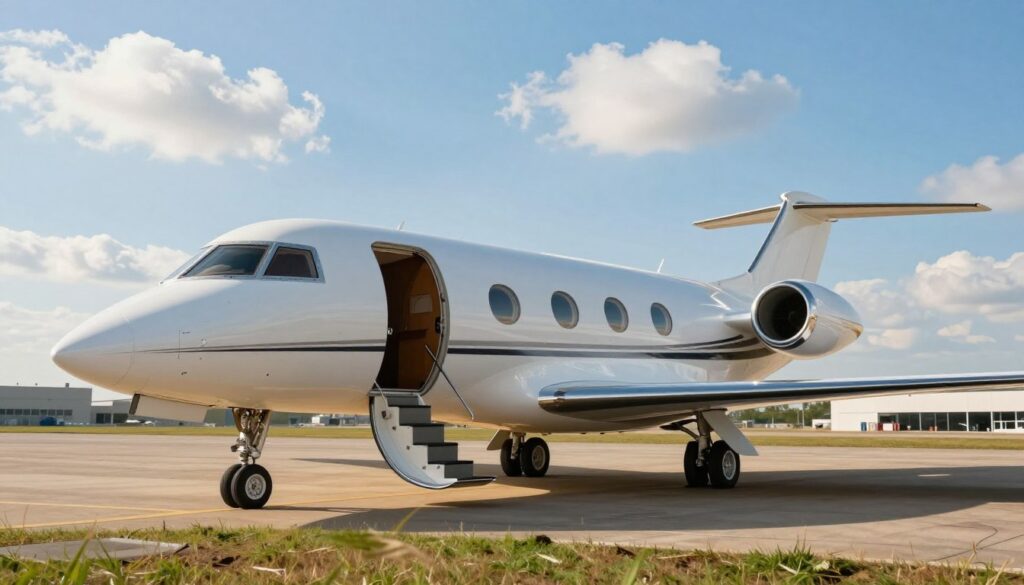
For example, a jet might take a group from New York to Aspen for skiing. Then, it needs to return to New York. The Aspen to New York leg becomes an empty leg. You can book this segment at a lower cost.
Potential Savings and the Trade-Offs
The big draw is the savings. You can get 50% to 75% off the usual price. This makes private jet travel more affordable for certain routes.
But, there are trade-offs to consider:
- Fixed Schedule: You must travel on the exact date, time, and route. No changes allowed.
- Last-Minute Changes: The flight depends on the main charter not changing plans. If they do, your flight might get canceled with little notice.
- One-Way Only: You’re booking just one leg. You’ll need to find another way back or hope for another empty leg.
- Limited Availability: Routes and dates are unpredictable. You need to be flexible with your travel plans.
This option is great for spontaneous travelers or those with flexible schedules. It’s not ideal for trips where timing is critical. Knowing the pros and cons helps decide if empty legs fit your travel style.
To find these deals, work with a charter broker or sign up for alerts from operators. They have the info needed to match you with these opportunities. With patience and flexibility, you can enjoy private jet travel at affordable private jet rental prices.
Membership Models vs. On-Demand Charter: Pricing Structures Compared
Private aviation offers two main financial paths: membership models and on-demand charter. Your choice affects your costs, commitment, and travel experience. It’s key to understand each pricing structure to find the best fit for your flying habits and budget.

First, think about your travel pattern. Do you fly often with set routes? Or do your trips change a lot in timing and destination? Your answer will help you choose the right financial model.
Jet Cards and Membership Programs
Jet cards are a middle ground between owning a jet and chartering. You buy a set number of flight hours, usually starting at 25 hours, at a fixed rate. This rate stays the same for a year.
Membership programs work like jet cards but might include an annual fee. They give you access to a fleet of jets at set rates. The main benefits are price certainty and guaranteed availability.
Here’s how these programs price their services:
- Fixed Hourly Rates: You pay a set price per flight hour, no matter the market.
- Guaranteed Availability: Programs promise a jet within 4-10 hours.
- One-Way Pricing: Many jet cards charge only for the hours you fly, not for empty legs.
- Additional Benefits: You might get waived membership fees for bigger hour purchases or access to higher aircraft.
This model is great for those who fly 25-50 hours a year. It offers predictable costs and avoids last-minute price hikes. If you prefer consistent costs and don’t like surprises, a jet card is a good choice.
Pure On-Demand Charter
Pure on-demand charter is the traditional, pay-as-you-go option. You book and pay for each trip separately with no long-term commitment. This model offers maximum flexibility but has different financial considerations.
With on-demand charter, you get a price for each trip. This price includes all variables like flight hours, positioning fees, landing charges, and seasonal premiums. The price reflects the current market.
The advantages of this approach are significant:
- Zero Commitment: You only pay for the flights you take, with no upfront cost.
- Maximum Flexibility: You can choose different aircraft for different trips without being tied to one category.
- Market Opportunities: You can find empty leg flights and last-minute deals.
- Simplified Accounting: Each trip is a separate transaction, making expense tracking easy.
This model is best for irregular flyers or those with unpredictable travel patterns. If you fly less than 20 hours a year or your destinations change a lot, on-demand charter is likely better. You have full control over each trip without being tied to a program.
To see the main differences between these approaches, here’s a detailed comparison:
| Feature | Jet Cards & Membership Programs | Pure On-Demand Charter |
|---|---|---|
| Pricing Model | Pre-paid hourly blocks or annual fee + set rates | Pay-per-trip based on current market rates |
| Financial Commitment | High upfront payment or annual commitment | No long-term commitment; pay as you go |
| Price Certainty | Fixed rates for contract duration | Variable based on demand, season, and route |
| Availability Guarantee | Typically included (e.g., 4-10 hour notice) | No guarantee; subject to aircraft availability |
| Best For | Frequent flyers (25+ hours/year) with predictable patterns | Irregular flyers or those with highly variable needs |
| Flexibility | Limited to contracted aircraft categories | Complete freedom to choose different aircraft per trip |
Finding the best private jet charter rates depends on matching the pricing structure to your flying habits. Regular business travelers benefit from jet card predictability. Leisure travelers exploring different destinations prefer on-demand flexibility.
Your search for competitive private jet hire prices should include quotes from both types of providers. Compare the all-in cost of a jet card program against projected on-demand costs for your expected travel. Remember, the lowest hourly rate doesn’t always mean the best value when considering availability guarantees and repositioning costs.
Putting It All Together: Sample Trip Cost Comparisons
Let’s look at real trip costs with side-by-side comparisons. Seeing actual numbers for routes you might fly makes the theory real.
We’ll create two examples. These estimates mix hourly rates with fixed fees. They show the cost difference between aircraft classes clearly.

New York to Miami: VLJ vs. Light Jet
This route is 1,100 miles long. It’s great for comparing entry-level and light jets.
A Very Light Jet (VLJ) like a Cessna Citation Mustang is perfect here. With an average hourly rate of $3,500, the 3-hour flight costs about $10,500.
Then, add common costs:
- Federal Excise Tax (FET): 7.5% of the base ($788)
- Landing and handling fees at both airports: ~$1,200
- Overnight crew fee (if applicable): $500
The total for a VLJ charter is around $13,000. It’s a budget-friendly option for private travel.
Choosing a Light Jet like a Cessna Citation CJ3 changes things. The hourly rate is about $5,500. The base flight charge is near $16,500.
Adding the same fees (FET, landing, handling) makes the Light Jet total about $20,000. You get more space, a bigger baggage area, and faster speed for $7,000 more.
This private jet charter cost comparison shows the value. Pick the VLJ for a tight budget. The Light Jet offers more comfort for a longer trip.
Los Angeles to New York: Midsize vs. Super Midsize
Traveling across the country is different. This 2,500-mile journey takes over 5 hours. Comfort and performance matter a lot.
A Midsize jet, like a Learjet 60, is a good choice. With an average hourly rate of $7,500, the 5.5-hour flight costs about $41,250.
Adding higher landing fees and international surcharges, the total for a Midsize jet is $48,000 to $55,000.
Going to a Super Midsize like a Gulfstream G280 is a big step up. The hourly rate is $9,500. The flight time might be shorter, but the base charge is higher.
With all fees, the total for a Super Midsize charter is $65,000 to $75,000.
The extra cost buys you more space, a divan for resting, and faster speeds. You also get better amenities for luxury.
This isn’t just about price. It’s about value over distance. For a five-hour flight, the extra comfort of a Super Midsize might be worth it.
Use these examples as a guide. Your final quote will depend on dates, operator, and aircraft availability. But now, you see how pricing works.
Current Trends Impacting Private Jet Charter Pricing
Your final charter quote is influenced by many factors. These include current trends and global events. Knowing these trends helps you understand costs and find better deals.
Several private jet charter pricing trends are currently affecting the market. These range from fuel costs to new technologies and business models. Staying updated can help you find affordable private jet rental prices.

Fuel Price Volatility
Jet fuel is a big expense for operators. When fuel prices go up, you often see a fuel surcharge. This is added to your bill.
As noted, “Fuel surcharges… may be applied when fuel prices rise.” These charges depend on the aircraft, distance, and fuel prices.
World events, supply chain issues, and economic changes can cause fuel price swings. This means your flight cost can change from month to month. It’s a direct link between global events and your flight cost.
New Aircraft Technology and Fleet Composition
Aviation technology is always improving. Newer aircraft are more fuel-efficient. This can lower operating costs and charter rates over time.
Modern jets like the Pilatus PC-24 or the Embraer Praetor series use less fuel. Operators with these jets may offer more stable pricing.
The mix of jets available for charter is also changing. More super midsize jets are entering the market. This competition can lead to better private jet charter pricing trends for you.
The Rise of “Per-Seat” Charter and Other Innovations
“Per-seat” or shared charter is a new trend. It lets you book a single seat on a private jet, like a first-class ticket. But you get private terminal access.
This model is a game-changer for accessibility. It offers a premium experience at a lower cost. It’s a great way to find affordable private jet rental prices.
Digital booking platforms are another innovation. They make it easy to compare options and get real-time quotes. This transparency empowers you as a buyer. It helps you find fair prices.
These innovations are making private air travel more accessible. They offer new, flexible options that didn’t exist before.
Your Action Plan: How to Find the Best Private Jet Charter Rates
Finding the best private jet charter rates is not just luck. It’s about knowing what to do. We’ve given you the tools to find great deals.
Start by getting detailed quotes. Don’t just look at hourly rates. A good quote breaks down costs into flight hours, positioning fees, landing fees, and international charges. Ask for a total from at least three operators.
Comparing these quotes can save you money. Look at what’s included in each quote. Check if catering or ground transport is included. This helps you find the best deals.
Always ask about fees. A simple question can reveal hidden costs. Ask if the price is final and if they can explain each charge. A good broker will be open about costs.
Look for empty leg flights. Tell your broker you’re open to these deals. Sign up for alerts from charter marketplaces. These deals can save you 50-75% but mean fixed schedules.
Match your booking model to your flying habits. If you fly less than 25 hours a year, on-demand charter is flexible and cost-effective. For more frequent flyers, jet cards offer certainty and availability. Think about your needs before booking.
By following this plan, you become a smart charter customer. You get clear quotes, compare costs, and find great deals. This approach leads to the best value and a great flying experience.
| Action Step | Key Question to Ask | Primary Goal | Potential Outcome |
|---|---|---|---|
| Request Detailed Quotes | “Can you provide a full line-item breakdown, not just an hourly rate?” | Obtain transparent, all-inclusive pricing for accurate comparison. | Identify the operator with the best true value, not just the lowest headline rate. |
| Compare & Question Fees | “Is this the final price, and are there any other possible charges?” | Eliminate hidden costs and understand every part of your quote. | Avoid post-flight bill surprises and build trust with a transparent provider. |
| Explore Empty Legs | “Do you have any empty leg flights that match my flexible travel dates?” | Access significant discounts by utilizing aircraft needing to reposition. | Secure affordable private jet rental prices, often at a fraction of the standard cost. |
| Choose Your Model | “Based on my projected flight hours, which model—on-demand or membership—offers better value?” | Align your payment structure with your actual usage to optimize long-term cost. | Maximize benefits, whether it’s pay-as-you-go flexibility or membership perks and fixed rates. |
Conclusion
Understanding the private jet charter average cost is key to making smart travel choices. Keep in mind, these prices are just estimates. Your final cost will depend on the plane, when you fly, and where you’re going.
You’ve seen the range from small Very Light Jets to big, luxurious planes like the Bombardier Global. You now know what affects your price, from fuel to empty leg flights.
This knowledge helps you talk better with brokers. Ask about extra fees, compare different jet card options, and ask about seasonal prices. A good broker wants you to be well-informed.
Choosing to fly private is a smart move for saving time and enjoying comfort. With a clear grasp of the average cost and what affects it, you’re ready for your next trip.
FAQ
What is the average cost to charter a private jet?
What factors determine the final price of a private jet charter?
How is the “billable flight hour” calculated?
What’s the difference between a leg-based and a trip-based quote?
Which type of private jet is the most affordable to charter?
What can I expect when chartering a Light Jet?
Why would I choose a Midsize Jet over a Light Jet?
What are “empty leg” flights and how much can I save?
What are the pros and cons of a Jet Card versus on-demand charter?
How do fuel prices affect private jet charter pricing?
What are “per-seat” charters and are they a good deal?
What should I do to find the best private jet charter rates?
