
Did you know that smart travelers can pay less for a whole private jet than a group would for first-class seats? The idea that only the super-rich can afford this is a myth. Now, more people can enjoy this luxury.
Luxury, comfort, and efficiency don’t have to break the bank. The key is in how you book. This guide will show you the way.
We’ll share expert tips, from the basics to advanced negotiation. Our advice is friendly and empowering. You can get great value without giving up on the experience.
Get set to explore a world where flying private is smart and affordable. Let’s start your journey to big savings.
Key Takeaways
- Private aviation is financially accessible with the right approach.
- Being flexible with timing is your most powerful tool for saving money on private jet charters.
- Empty leg flights can provide discounts of 40% or more.
- The aircraft category and size directly impact the final price.
- A knowledgeable broker can find deals you won’t see online.
- Jet cards and membership programs offer cost predictability.
- All-inclusive pricing models prevent surprise fees.
1. Rethinking Luxury: Private Jets Are More Accessible Than You Think
Getting on a private jet doesn’t need to cost a lot. With smart planning, it can be a great choice for both work and fun. The old idea of owning a jet is not the only way to fly private.
Today, the market focuses on flexible charter services. This change means more people can fly private. It’s now about being efficient, private, and getting good value.

Dispelling the Myth of Exclusive Opulence
The classic view of private flying is about owning a jet. This costs a lot upfront and then a lot every month. It makes flying private seem only for the very rich. But, for many, it’s not true.
On-demand chartering changes this. You only pay for the flight you take. This makes flying private more affordable. The cost difference is huge, as shown below.
| Aspect | Aircraft Ownership | On-Demand Charter |
|---|---|---|
| Initial Investment | Millions in capital purchase | Zero. You book per trip. |
| Ongoing Fixed Costs | High (crew salaries, hangar, insurance, maintenance) | None. All costs are bundled into your charter rate. |
| Flexibility | Limited to one aircraft type/model. | Access to a global fleet suited for each specific trip. |
| Best For | Corporations or individuals with >400 flight hours/year. | Travelers seeking efficiency, privacy, and value for specific trips. |
This table shows why chartering is a smart choice for flying private. It avoids the big costs of owning a jet. Your costs are just for the trip you’re on.
How Strategic Booking Transforms a Luxury into a Smart Choice
Knowing chartering is the way is just the start. The next step is to find great deals. With the right tips, you can save a lot on flights.
Booking a private jet is like booking a luxury hotel. You can find deals or special rates. This is how you save money, not just because you’re rich.
This guide will teach you how to save money on private flights. You’ll learn about flexibility, timing, choosing the right plane, and new booking ways. This makes flying private a real option for everyone.
Starting to travel smarter and more affordably is easy. Just change your thinking. The sky is more open than you think.
2. Understanding What Drives the Price of a Charter
The cost of a private jet charter is not random. It’s made up of specific, known expenses. Knowing these costs helps you negotiate better. This knowledge is your financial guide.
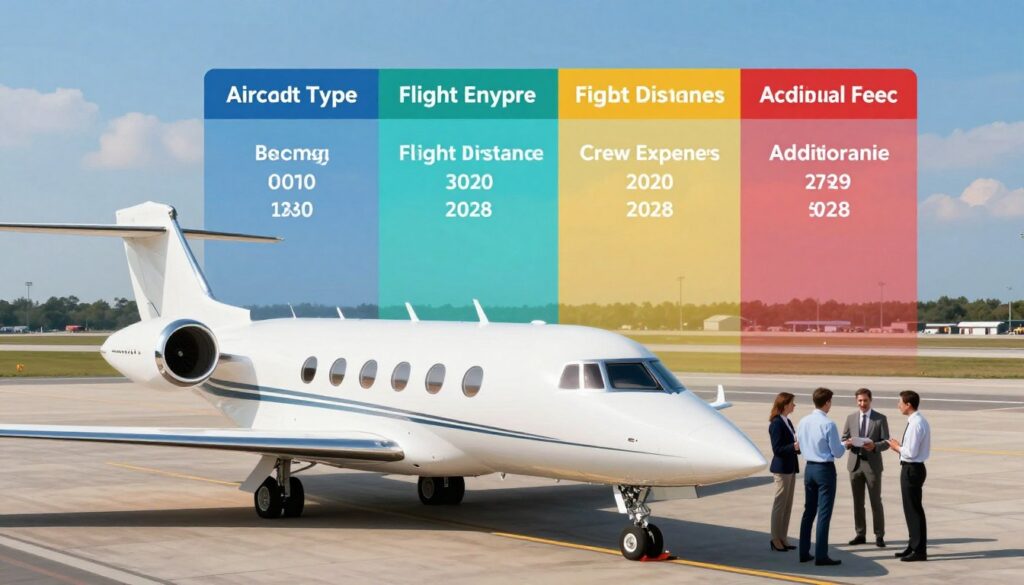
The Anatomy of an Hourly Rate
An hourly rate shows the cost to fly an aircraft for one hour. It includes both immediate and long-term costs.
Direct Costs: Fuel, Crew Salaries, and Landing Fees
These costs are directly related to your flight. They can change based on distance and location.
- Fuel: The biggest variable. Prices change with the market and flight length.
- Crew Salaries: Paid for duty time, including your trip.
- Landing and Handling Fees: Fees for using airport facilities.
Indirect Costs: Maintenance Reserves and Hull Insurance
These costs are behind the scenes. They ensure safety and compliance in the hourly rate.
Operators save for maintenance and insurance in every flight hour. Maintenance reserve covers inspections and repairs. Hull insurance protects the aircraft from damage. Think of these as the jet’s safety net.
Fixed Costs vs. Variable Costs: Identifying Negotiable Elements
Expenses can be fixed or variable. Fixed costs like hangar fees are spread over all flights. Variable costs change with your trip.
Here’s a clear breakdown:
| Cost Type | Examples | Typical Negotiability |
|---|---|---|
| Fixed Costs | Hull Insurance, Hangar Fees, Base Crew Salaries | Low. These are part of the operator’s business model. |
| Variable Costs | Fuel, Landing Fees, Catering, De-icing | Moderate to High. Can change with your trip and broker’s efforts. |
Your power is in the variable costs. For example, choosing a secondary airport can lower landing fees. Being flexible with your schedule can also save money. This is how smart booking leads to discounts.
Knowing the difference between fixed and variable costs is key. It shows what parts of the private jet charter price can be changed. Now, you can book more wisely.
3. How to Book a Private Jet Charter Cheap: The Foundational Principles
Getting a good deal on a private jet starts with a choice. Will you plan carefully or be quick to seize opportunities? Knowing these two mindsets can save you a lot. This section explains the key principles for affordable luxury travel.
Embracing Flexibility in Dates, Times, and Airports
Being flexible is your best asset. Sticking to a strict schedule can lead to high costs. The most effective tips for booking cheap private jet charters involve being adaptable.
Here are areas where flexibility can save you money:
- Travel Dates: Changing your travel dates by a day or two can avoid high prices or find empty-leg flights.
- Departure Times: Flights early in the morning or late at night might be cheaper because they’re less busy.
- Airport Choice: Flying into or out of smaller airports instead of big hubs can save on landing fees and services.
Don’t be vague about what you need. Clearly state how many passengers and what size cabin you require. Then, let your broker find the best deal for you. This approach helps you find deals others miss.

The Planner’s Advantage vs. The Opportunist’s Edge
Your booking strategy greatly affects your savings. Two main approaches consistently offer value.
The Planner’s Advantage: This traveler books well in advance. They secure the best rates before prices go up. This is great for important events like weddings or big business meetings. It ensures a good jet and budget certainty.
The Opportunist’s Edge: This traveler takes advantage of last-minute deals and empty-leg flights. These are cheaper because the jet needs to move. This method is for those who like spontaneity or flexible business trips. It requires quick thinking and a good broker.
So, are you a planner or an opportunist? The smartest flyers use both strategies. Plan ahead when necessary, but also be ready for last-minute deals. This mix is key to smart private aviation.
4. Your First Major Decision: Booking Timeline Strategies
To book a private jet at a low cost, you need to choose between booking early or at the last minute. Your choice affects your savings. Booking early means you know what you’re getting and when. Booking late can lead to big savings but requires flexibility.

Think of your booking timeline as a spectrum. On one end, you have the meticulous planner. On the other, the agile opportunist. The best strategy often involves understanding and being ready to use both.
Planning Far Ahead for Guaranteed Savings
If your dates are firm and your peace of mind is priceless, planning ahead is your best bet. Booking early removes uncertainty. You secure the exact aircraft you want and lock in a rate before seasonal demand pushes prices up. This is the classic way to ensure value.
Locking in Rates and Aircraft Availability 60+ Days Out
For peak travel times or popular events, aim to book at least two months ahead. Operators release schedules and set initial pricing well in advance. By committing early, you get first pick of aircraft and avoid the premium charged for last-minute requests. You effectively freeze the cost, protecting yourself from future price surges. This is essential for holiday weekends, major sports events, or summer travel to exclusive destinations.
Capitalizing on Last-Minute and Empty Leg Opportunities
For the flexible traveler, incredible deals appear close to departure. This includes both traditional last-minute charters and the legendary “empty leg” flights. These opportunities can slash costs by 50% or more, but they require a different mindset and toolset.
What Are “Empty Legs” and Why They Are Discounted
An empty leg, or deadhead flight, happens when an aircraft needs to reposition after dropping off clients or to pick up its next scheduled charter. Flying empty costs the operator money. So, they sell these one-way segments at a steep discount—sometimes up to 75% off the standard charter rate—to recoup some costs.
It’s a win-win. You get an ultra-affordable private flight, and the operator covers a portion of a trip they had to make. This is one of the most powerful ways to book a private jet at a low cost. The trade-off is that you must align with the plane’s predetermined route, schedule, and direction.
Setting Up Custom Alerts with Multiple Brokers
You don’t need to constantly search for these deals manually. The key is to let technology do the work for you.
- Use Specialized Apps and Platforms: Several online aggregators are dedicated to listing empty leg flights and last-minute deals in real-time.
- Build Broker Relationships: Register with several reputable charter brokers. Tell them your preferred routes, dates, and flexibility. They will add you to their alert systems for matching opportunities.
- Define Your Flexibility: The more flexible you are with dates and airports (considering nearby regional airports), the more alerts you’ll receive and the better deals you’ll find.
| Strategy | Best For | Lead Time | Savings Potentia | Key Action |
|---|---|---|---|---|
| Advance Booking | Fixed dates, peak seasons, large groups, guaranteed specific aircraft | 60+ days before departure | 10-25% off peak rates | Secure contract and deposit early |
| Opportunistic Booking (Empty Legs/Last-Minute) | Flexible solo travelers or small groups, spontaneous trips, open-ended dates | 14 days to 48 hours before departure | 40-75% off standard rates | Set up multiple broker alerts and be ready to book instantly |
| Hybrid Approach | Most savvy travelers | Continuous | Maximizes all opportunities | Plan key trips ahead, fill discretionary travel with alert-driven deals |
Your timeline decision isn’t permanent. You can plan one major trip a year in advance while keeping alerts active for impulsive weekend getaways. By understanding these two core strategies, you take control of the calendar and unlock the best prices the market can offer.
5. Selecting the Most Cost-Effective Aircraft for Your Trip
Choosing the right aircraft can make your private jet travel affordable. It’s all about matching the jet to your needs. Avoiding unnecessary costs is key.
Smart selection is the cornerstone of cost-effective private jet charter reservations.
Match the Jet to the Mission: Avoiding Overkill
Using a semi-truck for local errands is silly. The same goes for jets. Your needs define the right jet.
Choosing the right jet saves on fuel, crew costs, and unused space. It’s about using the right tool for the job.

VLJs are great for short trips under 1,000 miles. They have a small cabin for 4-5 people.
For trips like New York to Chicago, VLJs are a good choice. They offer a private experience without the high cost of bigger jets.
Light Jets: The Sweet Spot for Most Travelers
Light jets are perfect for most trips in the US. They have a cabin for 6-7 people and a range of 1,500-2,000 miles.
They offer a private lavatory, more baggage space, and can fly non-stop between cities. They’re a great balance of comfort, range, and value.
Midsize Jets: When Distance Demands Comfort
For long trips, like New York to Los Angeles, midsize jets are needed. They have a stand-up cabin, a dedicated galley, and can fly over 2,500 miles.
The extra space and amenities are worth the higher cost. They make long flights more comfortable and productive.
| Aircraft Category | Typical Range | Passenger Capacity | Sample Hourly Rate* |
|---|---|---|---|
| Very Light Jet (VLJ) | Up to 1,000 nm | 4-5 | $2,000 – $3,000 |
| Light Jet | 1,500 – 2,000 nm | 6-7 | $3,500 – $5,000 |
| Midsize Jet | 2,500 – 3,000 nm | 7-9 | $5,500 – $7,500 |
| Super-Midsize Jet | 3,000+ nm | 8-10 | $7,500 – $9,500 |
| Turboprop | Up to 1,500 nm | 6-8 | $1,500 – $2,500 |
*Rates are illustrative and vary by operator, location, and demand.
New vs. Pre-Owned: The Age and Cost Correlation
Choosing between a new and a pre-owned jet is common. New jets have the latest tech and warranties. But they cost more.
A pre-owned jet, well-maintained, offers similar performance and safety at a lower price. It might have slight wear but saves money.
For those watching their budget, a pre-owned light or midsize jet is often the best choice. It offers comfort at a cost-effective price.
6. Exploring Alternative Models: Jet Cards and Membership Programs
Jet cards and loyalty memberships offer a new way to fly private. They turn unpredictable costs into fixed expenses. This is great for those who fly often.

Jet Cards Decoded: Pre-Paid Blocks of Hours
A jet card is like a flying phone plan. You buy a set number of hours at a fixed rate. This rate stays the same for a year.
The big plus is knowing exactly what each flight costs. This protects you from price hikes during busy times. Most cards also promise you can book with just 10 hours’ notice.
It’s perfect for those who fly 50 to 100 hours a year. It makes planning flights easy and stress-free.
When a Fixed-Rate Jet Card Beats Dynamic Pricing
Dynamic pricing means costs change with demand. A fixed-rate jet card is better when prices go up. This happens during holidays or big events.
It’s also better for short trips. On-demand charters often charge for the minimum time, even if you fly less. A jet card only charges for the time you use, saving you money.
The table below shows the main differences to help you choose.
| Feature | Jet Card (Pre-Paid) | On-Demand Charter |
|---|---|---|
| Price Model | Fixed hourly rate, locked in. | Dynamic pricing based on demand and route. |
| Cost Certainty | High. Your rate is set in the contract. | Low. Quotes can change daily. |
| Availability | Often guaranteed with short notice. | Subject to aircraft and crew availability. |
| Best For | Predictable, frequent travel (50+ hrs/yr). | Occasional, spontaneous trips. |
| Upfront Cost | Significant pre-payment required. | Pay per trip, no large deposit. |
Operator Loyalty Programs: Unlocking Member-Only Deals
Many charter operators have their own loyalty clubs. These clubs offer special benefits to encourage you to fly with them more.
Members get discounts on flights and other perks. You might get free flights on empty legs or book ahead of others. You also get to fly on older planes that are cheaper.
For example, members might get 10% off all flights. Or, they might have access to a special fleet with lower rates. This makes flying private more affordable by building a relationship with one provider.
To get the most from these programs, find out which operators fly your most common routes. Then, ask about joining their clubs. The savings from being a member can be big, making it worth it to fly with one provider more often.
7. Optimizing Your Itinerary: The Round-Trip vs. One-Way Equation
Choosing between a one-way or round-trip flight is a big decision when chartering a private jet. It’s not just about convenience. It affects your cost through unseen operational details.
Thinking about your travel plan can save you money. You can cut down on “deadhead” costs. These savings make your charter more affordable.
The Hidden Cost of Repositioning on One-Way Charters
Booking a one-way charter means the aircraft must return to its base or go to its next destination. This empty return is called a repositioning or ferry flight. You usually pay for this leg, even if you’re not on board.
Many online ads for empty leg flights are for one-way trips. You need to book the return separately. This repositioning fee can increase your cost by 30% to 70%. It makes a simple trip very expensive.

Operators include this cost in your quote because the plane earns no money on its empty return. Your one-way charter pays for two flights: your trip and the plane’s return. Knowing this helps you book smarter.
Designing Cost-Effective Multi-Stop or Round-Trip Routes
A round-trip itinerary often saves you money. The aircraft waits for you at your destination and then takes you back. This way, you only pay for the hours you use.
For complex travel plans, consider a multi-stop route. Combine several destinations into one trip. The aircraft moves from point A to B to C without returning empty.
This is great for business trips with many meetings or leisure travel to several cities. You create a logical sequence that uses the aircraft efficiently. Operators often offer better rates for these efficient routes.
Being flexible with your schedule helps with these optimized itineraries. Be open to changing the order of your stops. Sometimes, a small change can save a lot of money.
| Itinerary Type | Typical Cost Impact | Best For | Planning Tip |
|---|---|---|---|
| One-Way Charter | Highest (adds repositioning fee) | Single destination trips with no return | Search for matching empty leg flights |
| Round-Trip Charter | Most cost-effective | Return to origin within days | Keep return date flexible for best rates |
| Multi-Stop Route | Variable (can be very efficient) | Business circuits or multi-city tours | Design logical geographical progression |
Always talk about your full travel needs with your broker. They can help plan an itinerary that cuts down on empty flying. This teamwork leads to better prices and a smoother trip.
Remember, the size of the aircraft is important in these calculations. A smaller jet might be perfect for a multi-stop route with short distances. Choosing the right jet for your mission is key, even when planning your itinerary.
8. Slashing Costs Through Sharing: Group Charters and Seat Splitting
Sharing a private jet with others can make flying affordable. It’s not about the plane, but who you fly with. This way, you can enjoy luxury travel without breaking the bank.

Organizing a Private Group Charter with Defined Costs
Traveling with friends, family, or colleagues can save you money. You pay for the whole plane and split the cost among everyone. This makes flying private more affordable.
It’s important to talk about the budget and plans early. A charter broker can give you a fixed price for your trip. This price is what your group will pay together.
Here’s a clear example of how the math works for a common route:
| Group Size | Total Charter Cost | Cost Per Person | Savings vs. Solo Charter |
|---|---|---|---|
| 1 (Solo) | $15,000 | $15,000 | Base Price |
| 4 | $15,000 | $3,750 | 75% less |
| 6 | $15,000 | $2,500 | 83% less |
| 8 | $15,000 | $1,875 | 87.5% less |
As you can see, the cost per person drops significantly. You get a private, direct flight for less than flying alone. It’s a great way to save money when traveling with a group.
Utilizing Verified Seat-Sharing Services for Solo Travelers
If you’re flying alone, seat-sharing services are a good option. These platforms let you book a seat on a plane already chartered by others.
It’s like carpooling in the sky. Sometimes, planes have empty seats or groups have a few extra spots. These are sold individually to save money.
Always choose safe and reliable services. Look for platforms that check the operator and passengers. They should offer clear contracts and secure payment options.
Seat sharing makes private flying more accessible. It turns unused seats into affordable options, opening up luxury travel to more people.
For solo travelers or couples, seat sharing is a smart choice. You get the benefits of private travel without the high cost. It’s a cost-effective way to fly.
Exploring group charters or seat-sharing services can unlock great value. They make private jet travel more affordable and accessible for everyone.
9. Navigating Seasonal and Event-Based Price Surges
Private jet prices change like the seasons, with high and low times. The cost of flying changes with the calendar. When everyone wants to fly, prices go up. But when it’s quiet, you can get a better deal.

Peak Periods You Must Plan For (or Avoid)
Some times of the year cost more to fly. This is when everyone is traveling, like holidays and big events. Your best move is to plan ahead or travel at a different time.
Major Holidays, Sports Finals, and Industry Conferences
The big three demand-drivers are holidays, sports finals, and conferences. Holidays like Christmas and Thanksgiving are the absolute peak. Events like the Super Bowl and major conferences can make prices double or triple.
If you must travel during these times, book many months in advance. This way, you can secure a good price. Or, try traveling a few days earlier or later to save a lot.
Identifying “Value Seasons” in Your Preferred Regions
The flip side of high prices is the value season. These are times when it’s not as busy but the weather is great. For example, the Caribbean is cheaper in late spring and fall. Europe is more affordable in May or September, avoiding the summer rush.
To find these deals, research your destination. Look for times after holidays, before the busy season, or during mild weather. This is when you can get luxury travel at a lower cost.
| Period Type | Typical Timing | Example Events & Destinations | Your Best Strategy |
|---|---|---|---|
| Major Peak | Late Dec – Early Jan, Major Holidays | Christmas, New Year’s, Thanksgiving | Book 6+ months ahead or avoid entirely |
| Event-Driven Peak | Dates of specific major events | Super Bowl, Cannes Festival, CES | Secure aircraft as soon as event is announced |
| Shoulder Season (Value) | Spring & Fall months | Caribbean in May, Europe in September | Perfect for planning; great rates & availability |
| Off-Season (High Value) | Low-tourist periods | Alpine regions in late spring, some tropical locales during rainy season | Maximize savings; ideal for flexible travelers |
By understanding the calendar, you can plan better. Knowing when to fly is as important as how to book for the best deal.
10. The Art of Negotiation: Getting the Best Deal from Your Broker
Your broker has given you a quote, but it’s just the beginning. Think of your broker as a partner, not just a seller. This mindset is key to saving money on private jet charters. A good broker will find ways to fit your budget if you ask nicely.
Negotiation isn’t about getting discounts. It’s about working together to find a fair price. You need to know your stuff to make this work.
Key Leverage Points in a Charter Quote
Every quote has different parts. The main cost is the aircraft’s hourly rate. But, other costs can be talked down.
Look for ways to save by flying during off-peak times or using less popular airports. Being flexible with aircraft models also helps.
Focus on the parts of the quote that can be changed. These are your best chances to save.

This fee is for moving the plane to your airport. It’s a big cost, but can be lowered.
Check if there’s an empty leg flight from your airport. Suggest nearby airports for cheaper costs. A smart broker can find a plane already near you, saving you money.
Discussing Catering and Ground Transportation Inclusions
These details add up. Instead of a standard catering, talk about what you really need. A simple request can cut costs.
Also, ask if ground transport can be included in the quote. Operators might have deals with car services. Presenting these requests as part of a streamlined service package makes them more appealing.
Building a Relationship for Repeat Customer Discounts
The best way to save isn’t just one trick. It’s about being a loyal customer. A broker who knows you can offer better deals.
As a regular, you get special deals and early access to empty legs. Brokers want to keep you happy with the best prices. This makes every trip more affordable.
Start by being reliable and open with your broker. Pay on time and give honest feedback. This builds trust and leads to better deals over time.
With these tips, you’re ready to review your quote carefully. This leads us to our next step.
11. Scrutinizing the Quote: A Checklist to Avoid Hidden Fees
Before you sign, carefully review your charter agreement. This is your best defense against unexpected costs. The initial rate is just the start. You need to check every detail for hidden fees that can increase your bill.
Think of the quote as a map. Your task is to find any hidden costs. This careful check can turn a good deal into a great one.
Line-by-Line Analysis of a Standard Charter Agreement
Never assume anything is included unless it’s written down. A standard charter agreement lists costs in categories. You should know what each one means.
Look closely at the sections on crew expenses, landing fees, and ground services. These are where surprises often hide.
Common Add-Ons: De-icing, WiFi, In-Flight Phone Use
Many services are optional extras. This includes special catering, premium WiFi, and in-flight phone use. De-icing is a must in cold weather but comes at a cost.
Ground transport to and from the airport is another common charge. If you want a luxury car service, make sure to ask the price upfront. Don’t let it surprise you later.
Overnight Crew Fees and International Surcharges
For trips lasting more than a day, crew may need to stay overnight. You’ll pay for their hotel and meals. These overnight crew fees can be hundreds of dollars per night.
International flights add more complexity. You might face handling fees at foreign airports, customs charges, and international surcharges for navigation. Each country has its own rules and costs.
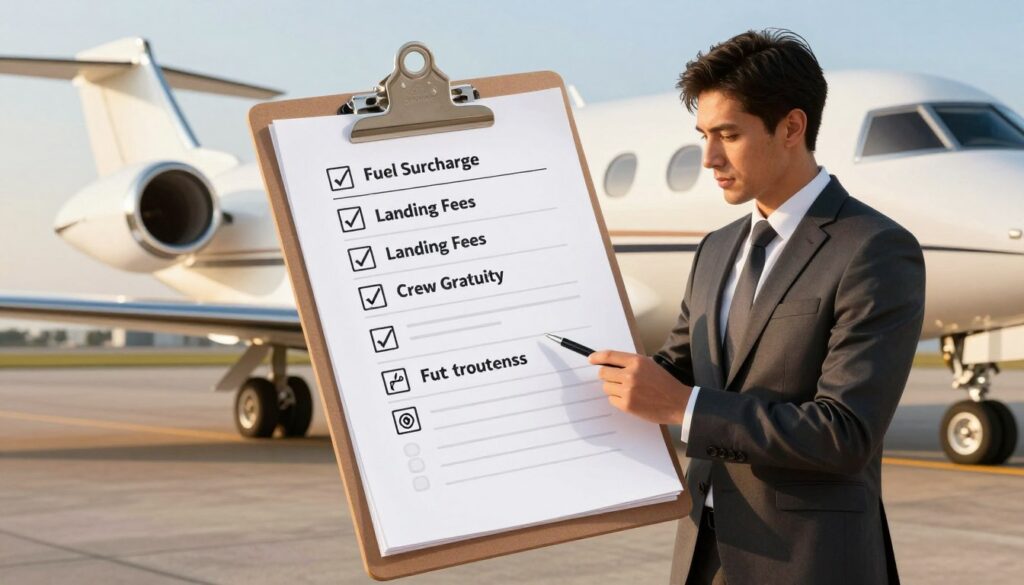
To help you visualize, here is a breakdown of common extra charges you should question:
| Fee Category | Typical Cost Range | When It Applies | Negotiation Tip |
|---|---|---|---|
| De-icing Service | $500 – $2,000+ | Cold weather operations | Ask if it’s included in winter quotes or priced separately. |
| Premium Satellite WiFi | $100 – $500 per flight | On-demand for high-speed internet | Clarify if basic WiFi is free; upgrade only if needed. |
| International Handling Surcharge | $200 – $1,000 per leg | Flights outside the operator’s home country | Request a detailed breakdown from the local handling agent. |
| Crew Overnight Expenses | $300 – $800 per night | Trips exceeding crew duty day limits | Propose a per-diem cap during negotiations. |
| Gourmet Catering | $50 – $150 per person | Specific menu requests beyond standard | Review standard catering menus first; they are often ample. |
Securing an “All-Inclusive” or Bundled Price Guarantee
The best way to avoid extra fees is to ask for a bundled price. An all-inclusive price guarantee covers all costs for your trip. This includes fuel, crew, landing fees, standard catering, and ground handling.
Ask for this during negotiations. Say, “Can you provide a final, all-inclusive quote with no hidden fees?” This shifts the cost forecasting to the operator.
Be aware that all-inclusive deals might exclude some costs like de-icing or last-minute changes. Get these exceptions in writing. A clear charter agreement with a bundled price lets you travel with peace of mind, knowing the cost is fixed.
Your last step is to compare the all-inclusive total with the itemized quote. This confirms you’re getting real value, not just surprises.
12. Harnessing Digital Tools: Comparison Platforms and Real-Time Booking
Forget the old days of hidden costs. Now, finding private jet charter deals and discounts is easy online. With comparison engines and apps, you get clear prices and availability instantly.
These tools save you time by showing you many options at once. Just enter your trip details and get quotes from different operators. This way, you can choose based on clear costs.
Top Online Platforms for Instant, Transparent Quotes
Several websites and apps have changed how we book. They connect you with safe, certified operators. Here are some top names:
- Jettly: Known for its easy-to-use interface and wide aircraft selection.
- Victor: Offers a service like a personal concierge, focusing on clear prices and matching guarantees.
- PrivateFly: A leader in online booking, with a huge inventory and tools for comparing jets.
- XO Jet: Offers charter and jet card programs, with a platform that highlights empty leg flights.
These services make you an active shopper. You can quickly compare quotes for the same trip and aircraft.
How AI and Dynamic Pricing Can Work in Your Favor
The tech behind these platforms is powerful. It uses data to change prices like airline tickets. This means prices can go up or down.
The trick is to find the best deals when prices are low. This happens when demand is low or an aircraft needs to move. It’s like finding an empty leg deal online.
Using Price Tracking Tools for Specific Routes
Many platforms offer alert services. Set up a watch for your route, like New York to Miami. You’ll get notified when prices drop or an empty leg is available.
This is great for flexible travelers. It turns finding discounts into an automated process. You get to enjoy the savings without the effort.
By using these digital tools, you take charge of booking. You get clear prices and can find real value. It’s like having a personal agent for savings.
13. Conclusion: Taking Off with Confidence and Savings
You now have a clear plan to make private jet travel a smart choice for your next trip. The strategies outlined make this luxury service more accessible.
Remember the key principles. Being flexible with your travel dates and airports can save you a lot. Choosing the right aircraft for your needs also helps avoid extra costs. Use tools like JetFinder or Air Charter Service to find the best deals.
Think about using a Jet Card from companies like Flexjet or NetJets for easier budgeting. Building a good relationship with a broker can also help you get a better deal on your charter.
This knowledge is your guide. Use it to book a private jet charter that offers a great experience without breaking the bank. Your journey to efficient, personalized travel starts now.
