
Did you know that the global market for private aviation has seen charter volumes double since pre-2020 levels? This remarkable shift has transformed the way travelers view luxury options in 2025. Today, it’s not just about prestige; it’s about practical benefits like cost per seat and time saved.
As travelers navigate demanding schedules and urgent business needs, the choice between a chartered aircraft and premium airline seats becomes crucial. Understanding the factors that influence this decision is essential for making informed travel choices.
This guide will explore the evolving landscape of luxury travel, focusing on how the conversation has shifted from pure status to practical outcomes. You will discover insights into why more travelers are considering charter options, especially for group itineraries and business trips.
By the end of this article, you’ll be equipped with the knowledge to evaluate both options effectively, ensuring you choose what best meets your travel needs.
Key Takeaways
- Explore a detailed breakdown of luxury travel options in 2025.
- Understand the shift from prestige to practical outcomes.
- Learn how the private aviation market has become more accessible.
- Examine real-time comparisons of cost, time efficiency, and comfort.
- Discover why corporate travel teams are increasingly opting for charters.
- Gain insights on how group size impacts travel economics.
Introduction to Your Private Jet vs First Class Cost Comparison
The luxury travel landscape has evolved significantly, prompting many to question the value of chartering a private aircraft versus flying in premium airline seats. This guide aims to provide a thorough analysis of both options, focusing on essential factors such as cost, time, comfort, flexibility, privacy, and airport access.
Understanding the full picture is crucial. The decision between a chartered aircraft and premium seats involves more than just ticket prices. Hidden factors like time savings, privacy, and scheduling control can dramatically affect your travel experience.
Here’s what you will discover:
- How your priorities influence the choice between a chartered aircraft and premium airline travel.
- Why private aviation is now appealing to a broader audience, including families and investment groups.
- The relevance of this comparison in today’s travel landscape, especially with the increase in charter volumes.
- How first-class services are adapting to compete with private options, particularly on shorter routes.
This guide is designed for high-net-worth individuals, corporate executives, families, and entrepreneurs. It helps you make informed travel decisions based on real numbers, not just marketing claims.
By the end of this section, you will have a clearer understanding of which option makes sense for your specific travel scenario. You’ll be ready to weigh the benefits of chartering a private aircraft against the luxurious experience of flying first class.
| Factor | Private Jet | First Class |
|---|---|---|
| Cost per Person | Varies by route and aircraft | Typically fixed, varies by airline |
| Time Efficiency | Less time spent at airports | Standard check-in and boarding |
| Comfort | Customizable amenities | Luxury seating and service |
| Privacy | Exclusive cabin access | Shared space with other passengers |
| Flexibility | On-demand scheduling | Fixed flight schedules |

Understanding Your Travel Needs and Priorities
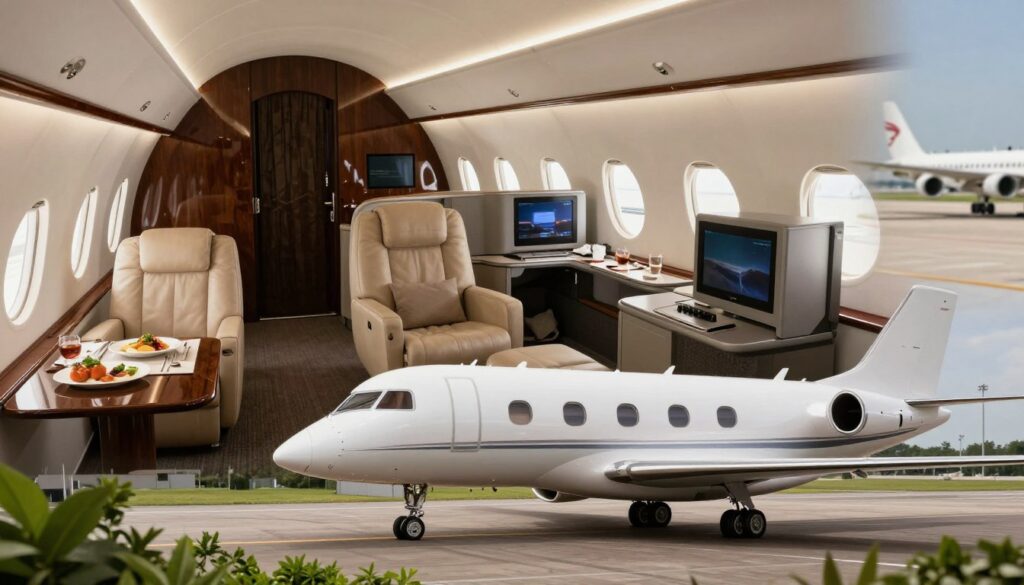
In 2025, travelers are rethinking their approach to luxury travel, especially when choosing between chartered flights and premium airline options. The decision-making process is more than just a choice of prestige; it revolves around practical benefits like cost per seat, time saved, and personalized convenience.
You must first identify what you value most in your travel experience. Is it minimizing cost, maximizing time efficiency, enjoying superior comfort, or ensuring complete privacy for confidential discussions? Your priorities will directly shape whether a chartered aircraft or premium airline ticket delivers better value for your specific situation and travel goals.
Group size plays a significant role in this decision. As your party grows from solo travelers to groups of four or more, private aviation becomes increasingly competitive. The type of trip you are taking also matters immensely. A business day trip requiring multiple city visits demands different solutions than a leisurely long-haul vacation.
Consider whether your travel involves confidential meetings. Discussing sensitive documents in a shared cabin could pose risks to your business. Additionally, your destination is crucial. Private jets can access over 5,000 airports in the United States, while commercial airlines serve approximately 500.
Time often holds more value than ticket cost for business travelers and executives. The time savings of private aviation can be a critical factor in your decision. This section helps you evaluate whether you prioritize schedule flexibility—choosing your exact departure time—or if you can work within fixed airline timetables.
Lastly, think about your need for personalized convenience. Bringing pets, oversized luggage, or specialist equipment can tip the scales toward chartering a private aircraft. This assessment of your travel needs and priorities serves as the foundation for every comparison that follows in this guide.
| Factor | Private Aviation | Premium Airline |
|---|---|---|
| Access to Airports | 5,000+ airports | Approx. 500 airports |
| Privacy | Exclusive cabin access | Shared space |
| Time Savings | Less time at airports | Standard check-in and boarding |
| Comfort | Customizable amenities | Luxury seating |
| Flexibility | On-demand scheduling | Fixed schedules |
Detailed Cost Analysis: Private Jet vs First Class Cost Comparison
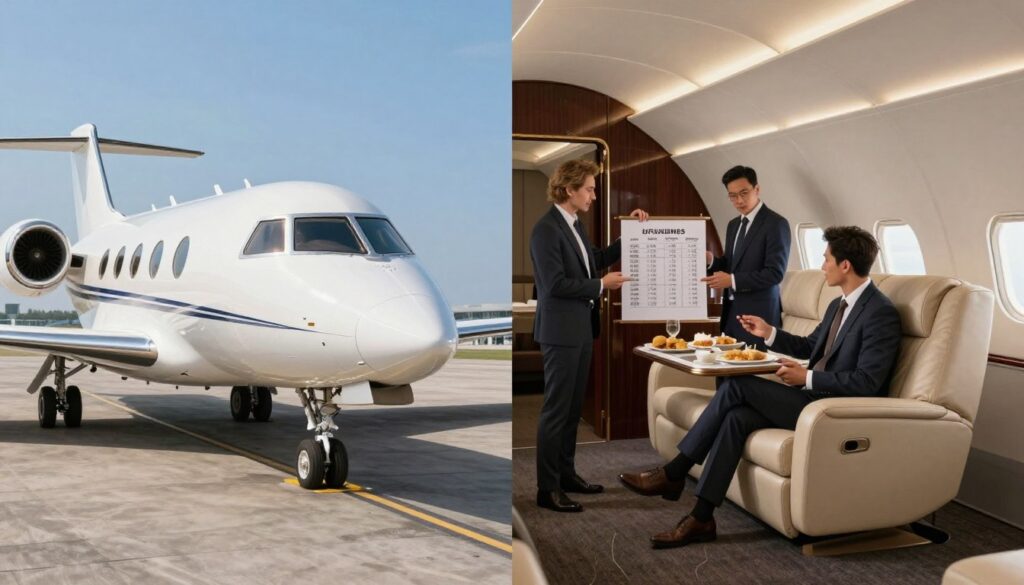
Navigating the costs associated with luxury travel can help you make informed decisions about your next trip. In this section, we will break down the pricing for chartering an aircraft and flying in premium airline seats. Understanding these costs is essential for determining which option best suits your needs.
Private Jet Charter Pricing Explained
Chartering a private aircraft can vary significantly based on several factors. Typically, rates range from $2,000 to $18,000 per flight hour, depending on the type of aircraft and the route. For example, premium long-range jets, like Gulfstreams, can exceed $30,000 per hour. This range offers flexibility for travelers, especially those seeking customized experiences.
First Class Ticket Pricing Range
On the other hand, first class tickets are generally more affordable for solo travelers. Prices can range from $400 to $6,000 for domestic flights. For international journeys, expect costs between $5,000 and $20,000 per person, depending on the airline and season. For instance, a round-trip ticket from London to New York may cost between $6,500 and $15,000.
Cost Scenarios by Route and Passenger Count
To illustrate the differences in costs, consider the following scenarios:
| Flight Type | First Class Cost (Per Person) | Private Jet Cost (Total) | Break-Even Passenger Count |
|---|---|---|---|
| 3-Hour Domestic | $1,200 | $10,000 | 12 |
| 6-Hour Transcontinental | $2,400 | $22,000 | 11 |
| 10-Hour International | $5,000 | $45,000 | 9 |
From this analysis, you can see that the break-even passenger count—where chartering becomes competitive—ranges from 9 to 12 passengers depending on the route length. For instance, a light jet carrying six passengers from London to Geneva at $11,000 totals about $1,800 per person. In contrast, first class tickets on the same route cost between $4,000 and $6,500 per person.
Ultimately, for solo travelers and couples, first class is often the more economical choice. However, for groups of four or more, especially on shorter to medium routes, chartering an aircraft starts to close the gap significantly.
Time Savings and Airport Access Advantages
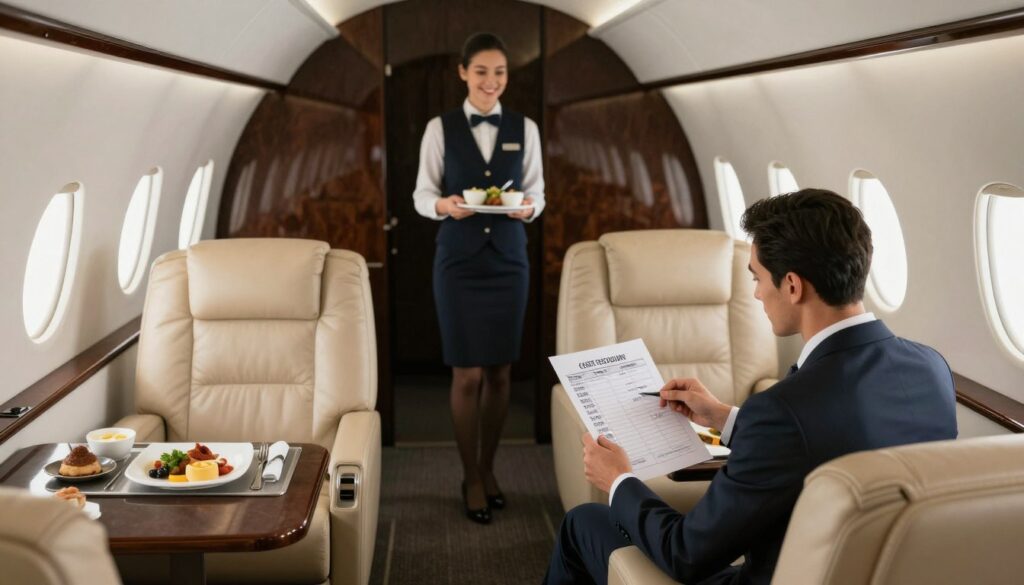
Travelers today face a critical choice when considering the efficiency of their journeys. The difference in airport access and time savings between chartered flights and commercial airlines can be profound. Understanding these advantages can help you make a more informed decision about your travel options.
Comparing Airport Reach: Private Jets vs Commercial Flights
One of the most significant advantages of chartering a plane is the sheer number of airports you can access. While commercial airlines operate through approximately 500 major airports in the United States, private aircraft can reach over 5,000 airports. This extended access allows travelers to land closer to their final destinations, reducing ground travel time significantly.
With private jets, you can avoid the crowds and long lines that often accompany commercial flights. Your journey begins within minutes of arriving at a private terminal, allowing for a more streamlined travel experience.
Time Saved at Check-In, Security, and Boarding
The time savings associated with flying privately are remarkable. For example, check-in for first-class passengers typically takes 30 to 60 minutes, while private jet travelers can complete this process in just 10 minutes. Security clearance is also expedited, with private flyers taking about 5 minutes compared to 20 to 30 minutes for those in first class.
Boarding is another area where private jets shine. It takes only 5 minutes to board a private aircraft, while first-class passengers may spend up to 20 minutes at the gate. Furthermore, private travel eliminates layovers, saving you an additional 1 to 2 hours that commercial flyers must endure.
Impact of Time Efficiency on Business and Leisure Travel
Overall, the total time saved per trip can range from 1.5 to 3.5 hours. This difference is particularly significant for business travelers, where a two-hour flight can translate to a door-to-door time of roughly three hours with a private jet, compared to five to six hours for commercial first-class travel.
Access to smaller regional airports closer to your final destination further enhances this efficiency. This capability opens up routes that first-class flights simply cannot support, making private aviation an attractive option for those who value their time above all else.

Comfort, Privacy, and Onboard Experience
Understanding the onboard experience is essential for making the right choice in luxury travel. The comfort and privacy offered by various air travel options can significantly impact your journey. Whether you choose a chartered aircraft or premium airline seats, each offers unique benefits.
Private Jet Amenities and Personalization
Private aviation stands out by providing a cabin fully dedicated to your group. You enjoy complete privacy and can adjust the cabin configuration to suit your needs. This flexibility allows you to discuss confidential matters without interruptions.
Business leaders often hold meetings, review documents, or simply relax in a quiet environment. Cabin crews cater to your individual preferences, offering custom meals, drinks, and entertainment options. Moreover, private jets allow you to carry valuable or oversized items that commercial airlines may restrict. Whether it’s a rare painting, sensitive equipment, or sporting gear, private charters provide flexible storage and direct handling by the flight crew.
First Class Luxury Features and Limitations
On the other hand, first class offers well-established luxury through curated amenities. Airlines provide private suites, gourmet dining, spa services, and in-flight bars. While first class delivers a high-end experience, it cannot match the exclusivity and scheduling control of a private aircraft.
Modern first class suites are impressive. Airlines like Emirates, Singapore Airlines, and Etihad have invested heavily in enclosed suites with lie-flat beds, personal minibars, and shower facilities. On long-haul flights, first class is indeed a luxurious experience. However, you still share the cabin with other passengers and remain bound to airline policies and service routines.
Privacy and Productivity Differences In-Flight
The privacy difference is stark. On a private jet, you can hold confidential business meetings, review sensitive documents, and take calls without concern about who is nearby. This level of privacy can enhance productivity, especially for corporate users. Chartering a jet allows executives to hold strategy sessions in flight rather than wasting hours in airport processes.
This section helps you weigh whether the personalized, private experience of a jet justifies the cost premium over the well-established but shared luxury of first class cabins.
| Factor | Private Jet | First Class |
|---|---|---|
| Cabin Privacy | Exclusive to your group | Shared with other passengers |
| Customization | Fully tailored amenities | Standardized options |
| Control over Environment | You choose temperature, lighting, and music | Fixed settings |
| Productivity | Meetings and work can be conducted in privacy | Limited by shared space |
| Carrying Capacity | Flexible for oversized items | Restrictions apply |
Flexibility and Control Over Your Schedule
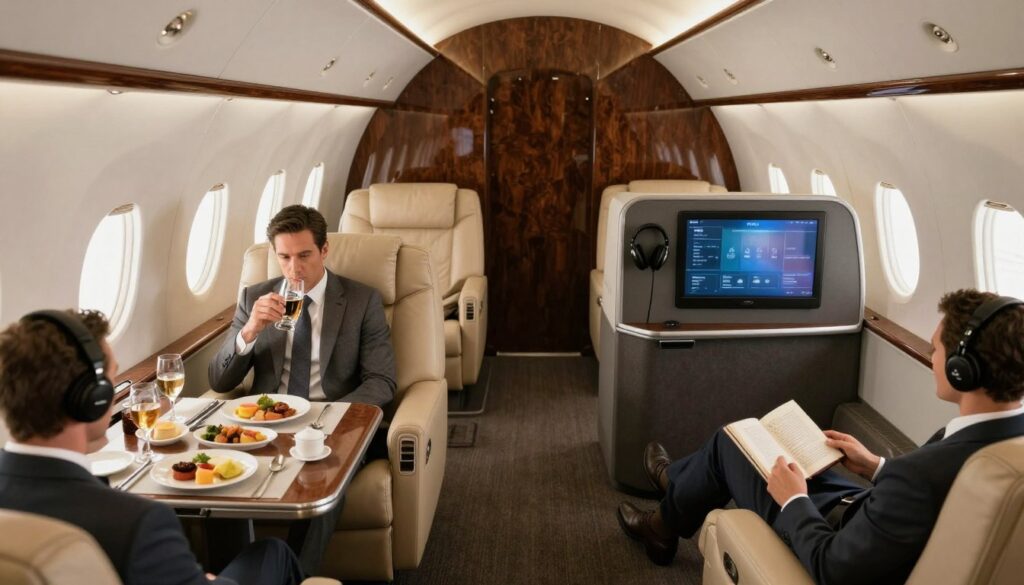
When it comes to luxury travel, the flexibility of your schedule can make all the difference. This is where chartering an aircraft truly shines. With a private flight, you dictate the timing, route, and even the stops along the way. You can choose your departure time down to the minute, ensuring your trip aligns perfectly with your agenda.
Scheduling Freedom with Private Jets
Chartering a flight offers unmatched scheduling freedom. You can select direct routes with no connections or layovers. This means less time spent in transit and more time focused on what matters. Itinerary modifications can often be made within hours of departure, giving you the ability to adapt to last-minute changes in your plans.
Limitations of Airline Schedules for First Class Travelers
In contrast, first class travelers face limitations. While they enjoy priority boarding and lounge access, they are still bound by the airline’s published schedule. If your meeting runs late and you miss your flight, the next available seat may not be until the following day. This can lead to unnecessary delays and stress.
Benefits of Last-Minute and Multi-Leg Travel Options
The benefits of private aviation extend to last-minute bookings and multi-leg travel. You can arrange a charter with as little as a few hours’ notice, making it ideal for urgent business opportunities or personal emergencies. Multi-leg itineraries become seamless, as the aircraft follows you from city to city without the need to rebook or navigate connections at each stop.
Ultimately, the time advantage compounds dramatically on multi-city trips. If you need to visit three cities in two days, commercial flights require you to work around airline timetables. However, a private jet follows your agenda, making what seems impossible a reality.
Additionally, private jets can access thousands more airports than commercial airlines. This includes smaller regional facilities that can bring you closer to your final destination, saving valuable ground transfer time.
This flexibility and control over your schedule often becomes the deciding factor for business travelers who cannot afford to lose hours to airline schedules and airport processes.
| Feature | Private Charter | First Class |
|---|---|---|
| Departure Time | You choose it | Set by the airline |
| Route Options | Direct, no layovers | Dependent on airline routes |
| Itinerary Changes | Flexible, often within hours | Limited rebooking options |
| Last-Minute Booking | Available with short notice | Restricted by schedule |
| Multi-Leg Travel | Seamless transitions | Requires rebooking |
Safety and Operational Oversight Considerations
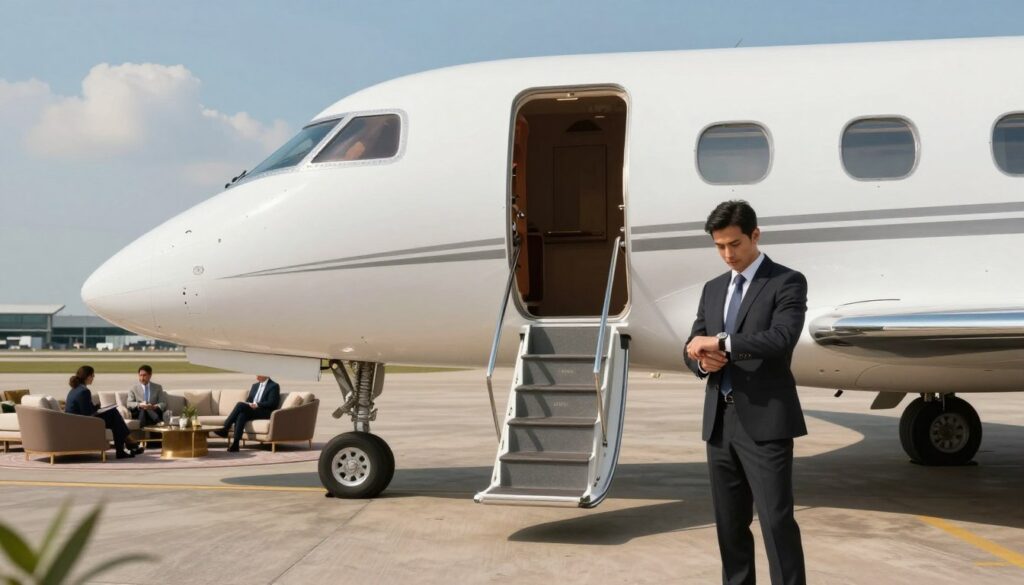
Safety is a crucial aspect to consider when choosing between different travel options. Both commercial airlines and chartered flights operate under strict regulatory oversight. Authorities like the FAA enforce safety protocols that ensure a high standard of care across the board.
Charter operators hold Air Operator Certificates (AOCs) and must comply with equivalent regulatory standards. This means that reputable operators are subject to the same rigorous checks as commercial airlines. Broker partners typically verify operator credentials, insurance, and crew qualifications before proposing an aircraft.
It’s important to note that there is generally no meaningful safety difference between these two modes of travel when reputable operators are used. The perception that private jets are automatically safer is misleading. Safety depends entirely on who operates the flight.
Some charter providers do not own or maintain their fleet. Instead, they may broker flights on third-party aircraft with minimal oversight. This can lead to varying safety standards. In contrast, FlyUSA operates a fully owned fleet maintained by in-house technicians. Our pilots fly exclusively within our system, ensuring consistent safety standards.
This full operational control allows us to avoid last-minute aircraft substitutions. It ensures that every flight meets strict safety protocols. Safety truly depends on the operator, not merely the category of travel.
Commercial airlines benefit from well-established regulatory oversight with standardized safety protocols. However, private aviation safety can vary significantly depending on whether the provider fully controls its aircraft, maintenance, and crew.
The crew factor is essential. Operators whose pilots fly exclusively within their system build deep consistency and trust in both equipment and personnel. Mechanical delays and disruptions are minimized when operators manage maintenance entirely in-house rather than relying on third-party service providers.
This section empowers you to ask the right questions about safety and operational control when evaluating charter options for your travel needs.

Group Travel and Cost Efficiency Dynamics
When it comes to group travel, understanding the cost dynamics can significantly impact your travel decisions. The economics shift notably as you add more passengers. Unlike airlines, which charge per seat, a chartered aircraft charges per aircraft. This difference can lead to substantial savings for larger groups.
When Private Jet Charter Becomes Cost-Competitive
The pivotal moment for choosing a charter often occurs when your group reaches four or more passengers on short to medium routes. As you add travelers, the per-person cost of chartering decreases. This makes it a viable option for groups seeking both privacy and efficiency.
Examples of Cost-Per-Person Reductions with Group Size
Here are some examples to illustrate the cost benefits:
- For 2 travelers: First Class totals $10,000; Private Jet totals $150,000 ($75,000 per person).
- For 4 travelers: First Class totals $20,000; Private Jet remains $150,000 ($37,500 per person).
- For 6 travelers: First Class totals $30,000; Private Jet stays at $150,000 ($25,000 per person).
- For 10 travelers: First Class costs $50,000; Private Jet still at $150,000 ($15,000 per person).
As shown, the cost per person drops significantly as group size increases. For example, a light jet carrying six passengers from London to Geneva at $11,000 totals about $1,800 per person. In contrast, first class tickets on the same route can range from $4,000 to $6,500 each.
Combining Private and First Class Strategically
There are also strategic ways to optimize your travel budget. For predictable long-haul routes, first class may be more economical. However, for multi-city business trips, chartering can provide greater flexibility and privacy. This combination allows you to maximize value while ensuring comfort and efficiency.
In a real-world scenario, a team of eight executives flying across the country for a confidential board meeting might find that booking eight first-class seats totals nearly $16,000. In contrast, a mid-size jet charter may cost around $20,000. When the per-passenger cost narrows, the added privacy, time efficiency, and flexibility of a charter make the investment more appealing.
Additionally, shared charter models and membership programs offer flexible options for smaller groups who desire a private experience without needing to charter the entire aircraft. This analysis helps you determine exactly when the economics shift in favor of chartering for your specific party size and itinerary.

Strategies to Maximize Value in Private Aviation
Maximizing value in luxury travel requires strategic planning and smart choices. By understanding the available options, you can enhance your travel experience without overspending. Here are some effective strategies to consider:
Using Empty-Leg Flights to Lower Costs
One of the most effective methods involves booking empty-leg flights. These one-way trips return aircraft to their base or reposition them for their next client. Since the aircraft must fly regardless, operators offer substantial discounts to fill those seats.
Empty leg flights are repositioning flights offered at reduced rates, typically 30% to 75% below standard charter pricing. If an empty leg aligns with your route and dates, you can access private jet travel at a cost that is competitive with, or even below, first class.
The trade-off is schedule inflexibility and cancellation risk. However, for adaptable travelers, empty legs bridge the gap between the two worlds.
Group Sharing and Membership Programs
Another way to preserve value involves group sharing. When a team, family, or client delegation splits the cost, the price per passenger becomes far more competitive. For instance, a $22,000 charter on a Phenom 300 for a cross-country trip turns into just $2,750 per person with eight travelers.
Frequent flyers often explore membership and fractional programs. These allow clients to pre-purchase flight hours or own a share of a jet, which locks in rates, removes last-minute booking fees, and guarantees availability across select fleets.
Many of these programs include concierge support and access to multiple aircraft types, giving you flexibility to choose the right jet for each specific mission profile.
Customizing Your Trip with Fleet and Service Options
With companies like Gold Aviation, clients can request personalized quotes tailored to their route, group size, and flight goals. The company offers fleet flexibility, including light jets like the Phenom 300 and midsize jets such as the Praetor 500 and 600, which suit a wide range of mission profiles.
This value-maximizing approach ensures you get the most out of private aviation without overspending. By combining strategies—using empty legs when available, sharing costs with groups, and leveraging membership programs for guaranteed availability—you can make luxury travel accessible for a wider range of needs and budgets.
| Strategy | Description | Potential Savings |
|---|---|---|
| Empty-Leg Flights | Repositioning flights offered at reduced rates. | 30% to 75% off standard pricing. |
| Group Sharing | Splitting costs among travelers. | Significant reduction in per-person costs. |
| Membership Programs | Pre-purchase flight hours or own a share of a jet. | Locks in rates and removes booking fees. |

Conclusion: Making the Best Choice for Your Next Trip
Choosing between chartering an aircraft and flying in premium seats is more than just a financial decision. It involves understanding your unique travel needs and priorities. For group travel, executive missions, or remote destinations, chartered flights offer superior control, privacy, and time savings.
As you evaluate your next trip, consider these core factors:
- Group Size: For solo travelers, premium seats may provide better value. But for groups of four or more, private options become increasingly appealing.
- Destination: Long-haul routes may favor premium seating, while short trips benefit from the flexibility of chartered flights.
- Schedule Control: If your itinerary is time-sensitive, private aviation can eliminate delays and missed connections.
By assessing the full picture—cost per passenger, time saved, and airport access—you can make a confident choice that aligns with your priorities. You are now equipped to explore personalized quotes from operators like Gold Aviation or FlyUSA, ensuring your travel experience meets your specific needs.