
Did you know that light jets can cost between $4,000 and $6,000 per hour, while ultra-long-range options can soar beyond $15,000 per hour? This surprising fact highlights the complexity behind the pricing of private air travel.
In this guide, you will discover the factors that contribute to the high costs associated with private air travel. From the size of the aircraft to the duration of your flight, many elements play a role in determining the final price. Understanding these variables can empower you to make informed choices.
Moreover, you’ll learn practical strategies to save on costs without sacrificing the luxury experience you deserve. Whether it’s exploring options like empty leg flights or considering alternative airports, this article aims to equip you with the knowledge to navigate the world of private aviation confidently.
Introduction: Exploring the Appeal and Costs of Private Jet Charter
Have you ever considered the true allure of stepping onto a private aircraft? The world of private aviation offers an experience unlike any other. Many are drawn to this mode of travel not just for its prestige but for the incredible convenience and flexibility it provides.
The most pressing question often revolves around the cost. How much does it really take to rent a private jet? The answer varies significantly based on factors like aircraft type, flight distance, and airport choice. For many, the real value lies in the time saved by avoiding crowded commercial terminals, gaining control over schedules, and enjoying privacy during transit.
- When you board a private jet, you gain complete control over your schedule and environment, setting it apart from even the best first-class commercial experience.
- This mode of travel allows you to depart when you choose, from airports that are closer to home, bypassing long security lines and frustrating layovers.
- The appeal goes beyond luxury; it’s about reclaiming your time. Whether you’re an executive maximizing productivity or a family enjoying vacation moments, private aviation enhances your experience.
- Understanding the cost versus value equation is crucial. The price reflects more than just a seat; it’s an investment in privacy, efficiency, and peace of mind.
- First-time charterers often focus on hourly rates, but the true value emerges when considering door-to-door convenience and direct routing to smaller regional airports.
- When sharing the cost of a light jet among several passengers, the per-person expense can rival first-class commercial tickets while providing a superior experience.
This introduction sets the stage for addressing your most pressing questions about the costs associated with private aviation. We will explore the various factors influencing pricing, ensuring you are well-informed and prepared to navigate this exclusive world.
| Factor | Impact on Cost |
|---|---|
| Aircraft Type | Different aircraft have varying operating costs, affecting the overall price. |
| Flight Distance | Longer flights typically incur higher costs due to fuel and crew expenses. |
| Airport Fees | Landing and handling fees can vary significantly between airports. |
| Service Level | Luxury services like catering and in-flight entertainment can increase costs. |


Understanding Why Private Jet Charter Is Expensive
Delving into the reasons behind the high costs of private air travel can shed light on what you’re investing in. Several key factors contribute to the overall pricing, making it essential to understand each element. Let’s explore how aircraft size, flight duration, airport fees, and additional operational costs influence your charter expenses.
Aircraft Size and Category Impact on Pricing
The size and category of the aircraft you choose sets the foundation for your entire charter cost. Light jets, such as the HondaJet, start around $4,000 per hour. In contrast, ultra-long-range jets can exceed $15,000 per hour for their unmatched range and cabin comfort. When you book a light jet for a quick regional hop with four to seven passengers, you’re looking at a much more accessible price point than a heavy jet designed for transcontinental journeys.
Flight Duration and Distance Effects
Flight duration plays a counterintuitive role in pricing. Shorter flights often cost more per mile due to fixed expenses like crew positioning and landing fees. Operators must cover these costs regardless of how brief your trip is. You’ll find that longer journeys, while carrying a higher overall cost, actually deliver better efficiency when you measure the value against time saved and the convenience of direct routing to your destination.
Airport and Handling Fees Explained
Airport and handling fees can add thousands to your charter cost. High-density hubs like JFK or Miami International charge landing fees that can top $1,000 per flight. In contrast, smaller regional airports charge significantly less. Fixed-base operators also charge ramp and handling fees ranging from $100 to $500 per visit, which can sometimes be waived if minimum fuel purchase requirements are met during your stop.
Additional Operational and Seasonal Costs
Additional operational costs stack up quickly. Crew overnight accommodations can run between $200 to $600 per crew member per night. Deicing services range from $1,500 to $15,000 depending on aircraft size, and fuel surcharges can add $300 or more per hour when market prices surge. Seasonal demand during peak travel periods, such as holidays or major events, drives charter costs higher as aircraft availability tightens.
Understanding these factors helps you see that the cost of a private jet charter isn’t arbitrary. It reflects real operational expenses, safety standards, and the personalized service that makes private aviation unique.

How Private Jet Charter Pricing Works
Understanding the pricing mechanics of private aviation can help you navigate costs more effectively. The pricing structure for private air travel involves various factors, primarily focusing on hourly rates and what they encompass. Knowing how these elements interact will empower you to make informed decisions.
Hourly Rates and Billable Flight Hours
When you see an hourly rate for a private jet, remember that this amount isn’t solely for the time spent in the air. Billable flight hours typically include not just the flight time but also taxiing, repositioning, and any minimum daily requirements enforced by the operator.
Most operators set a daily minimum of 1.5 to 2 hours. This means that even if your journey lasts just 45 minutes, you will still be billed for the minimum threshold. This policy helps cover the operator’s fixed costs.
The hourly rate can vary widely based on the aircraft category:
- Very light jets: $2,000 to $5,000 per hour
- Midsize jets: $4,000 to $12,000 per hour
- Large jets: $8,000 to $14,000+ per hour
- Ultra-long-range jets: $12,000 to $23,000+ per hour
Fixed vs Variable Costs
Costs can be categorized into fixed and variable. Fixed costs include crew salaries, insurance, and maintenance, which are included in your rate regardless of how much you fly. In contrast, variable costs, such as fuel, catering, and landing fees, can fluctuate based on your specific trip details.
Understanding these differences allows you to ask the right questions when comparing quotes from various charter providers. A transparent operator will provide a breakdown of your quote, detailing where your money goes, from the base hourly rate to fuel surcharges and airport fees.
Market Demand and Peak Scheduling Influence
Market demand significantly affects what you will pay for a private jet flight. Booking during peak periods, such as holidays or major events, can lead to increased rates. During these times, aircraft availability shrinks, allowing operators to command premium pricing.
Pricing isn’t static; it responds to real-time supply and demand dynamics. This is why flexible scheduling can be one of your most powerful tools for securing better rates.
In summary, private jet charter pricing follows a logical structure. Once you grasp how billable hours and market influences work, you can make smarter booking decisions that align with your budget.
| Aircraft Category | Hourly Rate Range |
|---|---|
| Very Light Jets | $2,000 – $5,000 |
| Midsize Jets | $4,000 – $12,000 |
| Large Jets | $8,000 – $14,000+ |
| Ultra-Long-Range Jets | $12,000 – $23,000+ |

Common Hidden and Additional Fees to Watch Out For
It’s easy to overlook the various fees that can inflate your private jet bill, but being informed can save you money. Many travelers are surprised by how quickly additional costs can accumulate. Understanding these hidden fees empowers you to ask the right questions and seek transparent quotes.
Catering, Wi-Fi, and In-Flight Services
In-flight catering can range from $230 to over $2,000 per leg. The cost varies based on your meal choices. Whether you want simple snacks or a gourmet dining experience prepared by a private chef, these charges can add up quickly.
Wi-Fi access is another service that can catch travelers off guard. Charges typically range from $2 to $9 per megabyte. On international flights, these rates can be even higher, so it’s wise to check the costs beforehand.
Crew Overnight Accommodation and Training
When your crew needs to stay overnight, you’ll cover their accommodation and meals. The per diem for crew members usually runs between $200 and $600 per night. This cost can accumulate quickly, especially on multi-day trips requiring multiple pilots and a flight attendant.
Airport Taxes, Fuel Surcharges, and Deicing
Airport taxes and government fees can add significant costs to your flight. For instance, a 7.5% Federal Excise Tax applies to all domestic U.S. flights. Additionally, segment fees of $4.50 per passenger per leg can add up.
Fuel surcharges often kick in during market price surges, starting around $300 per hour. This means your quote could change between booking and departure if fuel prices fluctuate.
During winter, deicing costs can range from $1,500 for a light aircraft to a staggering $15,000 for larger jets. Hangar fees, which can be $500 to $1,500 per day, may also apply when protecting aircraft from ice and snow.
For international trips, additional charges for permits and customs can range from $500 to over $5,000, depending on your destination. Cleaning fees start at $250 as well.
The best defense against hidden fees is working with a reputable operator. A credible provider will offer clear quotes that cover all expenses upfront. If a quote seems suspiciously low, it may exclude essential costs like crew positioning or fuel levies that you’ll need to pay later.

Charter vs. Ownership: Making the Right Choice for Your Needs
When deciding between chartering and ownership, it’s crucial to weigh the benefits and drawbacks of each option. Both paths offer unique advantages, but they come with different financial and practical implications.
Chartering provides flexibility without long-term commitments. You pay only when you fly, avoiding asset depreciation and minimizing overhead costs. This can be particularly appealing for those who travel less frequently.
On the other hand, ownership requires a significant upfront investment and ongoing expenses. Annual costs typically exceed $1 million, depending on the size and usage of the aircraft. For those flying under 200 hours annually, chartering or a jet card program may offer far better value.
Cost Comparisons and Break-Even Points
The break-even point where ownership starts making financial sense usually falls between 300 to 400 flight hours per year. Below that threshold, chartering or exploring jet card options is often more economical.
When you own a private jet, you must consider crew salaries, which range from $300,000 to $400,000 annually for a mid-size aircraft. Additionally, maintenance costs can consume 5% to 10% of the aircraft’s value each year, and fuel accounts for 25% to 35% of total operating costs.
Flexibility, Control, and Responsibilities
Chartering allows you to choose the right aircraft for your trip. Whether you need a light jet for a regional journey or a larger aircraft for international travel, flexibility is a significant advantage.
Ownership offers unmatched control over your schedule and the ability to customize your aircraft. However, this control comes with the responsibility of managing maintenance, crew logistics, and compliance with regulations.
Ultimately, your choice depends on how often you fly, the level of control you desire, and whether you prefer to focus on enjoying the experience rather than managing the logistics of aircraft ownership.
Fractional ownership can be a middle ground, allowing you to purchase a share of an aircraft. This option spreads acquisition costs across multiple owners while still providing many perks of full ownership with less financial exposure.

The Influence of Jet Type on Charter Costs
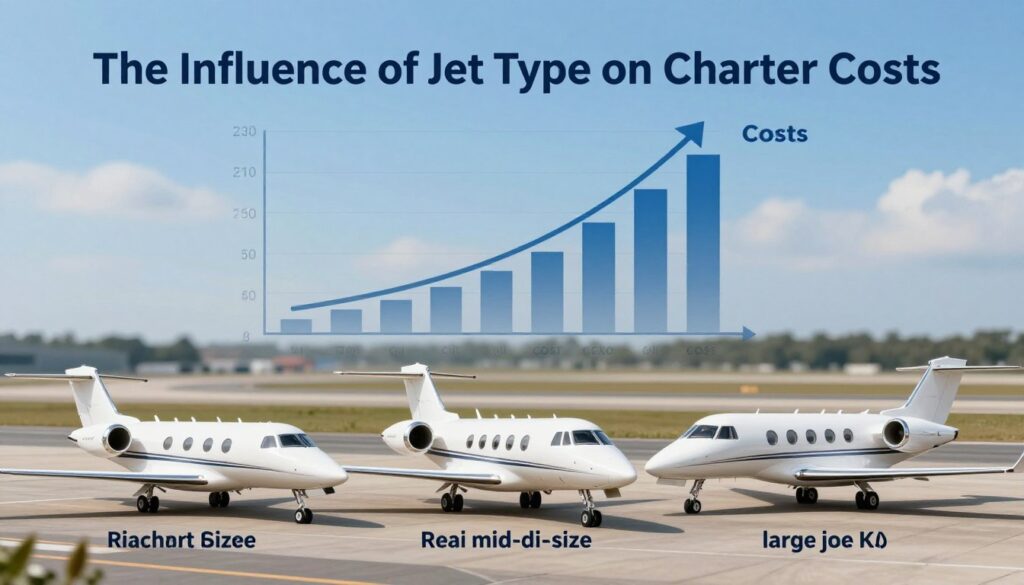
Choosing the right aircraft type can significantly impact your charter experience and costs. The category of jet you select determines everything from passenger capacity to flight range and, importantly, the price you will pay per hour.
Light Jets: Features and Cost Range
Light jets, such as the HondaJet, are ideal for quick regional trips. They typically seat six to seven passengers and have a range of two to three hours. At a cost of $4,000 to $6,000 per hour, they provide an accessible entry point into the world of private aviation.
For even shorter hops, very light jets can be a budget-friendly option, costing between $2,000 and $5,000 per hour. These jets are perfect for two to four passengers traveling between nearby cities, like New York to Boston or Los Angeles to Palm Springs.
Midsize and Heavy Jets: Benefits and Price Considerations
Midsize jets offer enhanced comfort with cabins accommodating seven to nine passengers. They provide a range of up to five hours, making them suitable for coast-to-coast flights. Pricing for these jets typically falls between $6,000 and $8,000 per hour, ideal for journeys like Chicago to Miami without needing a fuel stop.
Heavy jets represent a significant upgrade in both capability and cost. Their hourly rates range from $8,000 to $14,000 or more, offering spacious stand-up cabins and full galleys, perfect for crossing continents or oceans with ease.
Ultra-Long-Range Jets and VIP Airliners
At the top of the charter market are ultra-long-range jets like the Bombardier Global 7500 and Gulfstream G650ER. These luxurious aircraft command prices between $12,000 and $23,000 per hour, delivering intercontinental range and dedicated living spaces. They can connect city pairs like New York to Tokyo nonstop, providing an unparalleled travel experience.
VIP airliners, converted from Boeing and Airbus aircraft, represent the pinnacle of luxury. These flying mansions come equipped with master bedrooms, full bathrooms resembling boutique hotel spas, conference rooms, and even gyms, making them the ultimate choice for those seeking the best in private aviation.
When selecting a jet type, consider your mission. A light jet suits a quick business meeting, while a midsize jet is great for family vacations. Heavy jets are ideal for transatlantic travel, and ultra-long-range aircraft should be your choice when only the best will do. Understanding these categories helps you avoid overpaying for capabilities you don’t need while ensuring you never find yourself in an aircraft too small for your intended journey.
The Role of Flight Distance and Duration in Pricing
The distance and duration of your flight can greatly influence the overall cost of your travel. Many travelers are surprised to learn that shorter flights don’t always equate to lower prices. In fact, the economics of aviation often work in the opposite direction.
For instance, you might assume that a short 30-minute flight would cost less than a three-hour journey. However, fixed expenses like crew positioning and landing fees make short flights more expensive per mile. Here are some reasons why:
- The greatest fuel burn occurs during takeoff and climb, meaning a short hop uses more fuel relative to the time spent cruising.
- Every takeoff and landing advances the aircraft’s maintenance schedule, bringing it closer to costly inspections. Operators pass these costs along through short leg fees.
- Daily minimum flight hour requirements, typically 1.5 to 2 hours, mean even a quick 20-minute trip gets billed at the minimum, raising the per-mile cost.
On the other hand, longer flights can offer better value. They spread fixed costs—like crew salaries and insurance—over more miles and hours. This often results in greater efficiency, despite a higher total price tag.
For example, a two-hour private jet flight can range from around $8,000 for a turboprop to approximately $37,000 for an ultra-long-range jet. This illustrates how both distance and aircraft type interact to determine your final cost.
When planning a trip with multiple stops, consider consolidating into fewer, longer legs. This strategy could reduce your total charter cost compared to several short hops that trigger minimums and additional landing fees.
Generally, flights in the two- to four-hour range offer the best balance of cost per mile and overall value for most travelers. Understanding this dynamic helps you plan smarter itineraries that maximize the value of every dollar spent on private aviation.
How to Save on Private Jet Charter Without Compromising Luxury
Unlocking savings on private air travel can make this luxurious experience more accessible than you might think. There are several smart approaches to save on private aviation while still enjoying the high-end service you deserve. Let’s explore some practical strategies that can help you enjoy the benefits of flying private without breaking the bank.
Utilizing Empty Leg Flights
Empty leg flights are the private aviation world’s best-kept secret. When a jet needs to reposition for its next charter, operators offer these one-way flights at discounts of up to 50% off standard rates. This option lets you fly private for a fraction of the usual cost if your schedule has some flexibility.
You can monitor empty leg availability through charter brokers or dedicated apps. While you’ll need to adapt to the aircraft’s repositioning schedule, the savings can be substantial enough to make spontaneous luxury travel surprisingly affordable.
Sharing Costs with Fellow Travelers
Sharing the cost of a private jet charter with fellow travelers transforms the economics entirely. When you split a light jet’s hourly rate among six or seven passengers, the per-person cost can drop to levels comparable with first-class commercial tickets. This arrangement delivers a far superior experience while making private aviation more affordable.
Jet Card Programs and Membership Benefits
Jet card programs offer a brilliant middle ground between on-demand charter and ownership. These programs let you pre-purchase flight hours at fixed hourly rates with guaranteed availability, even during peak travel periods when standard charter prices surge.
With a jet card, you lock in predictable pricing that shields you from market fluctuations, fuel surcharges, and seasonal demand spikes. This predictability makes it easier to budget for your private aviation needs throughout the year.
Membership programs provide access to a curated fleet of aircraft for an annual fee. These programs combine the flexibility of charter with the consistency and reliability that frequent flyers value most. Typically, they include additional benefits like guaranteed upgrade options, dedicated account managers, and streamlined booking processes that save you time and hassle on every trip.
The key to maximizing savings without compromising luxury is matching the right strategy to your travel patterns. Whether you choose empty legs for flexible one-way trips, cost-sharing for group travel, or jet cards for frequent flights, you can enjoy the privacy, comfort, and convenience of private aviation while keeping your costs well within a reasonable budget.

Practical Tips to Reduce Your Charter Costs
You can enjoy the luxury of private aviation without overspending by implementing a few key strategies. Here are some straightforward tips to help you cut down on your charter expenses while still enjoying a premium experience.
Choosing Smaller or More Efficient Aircraft
One of the simplest ways to trim your charter costs is by selecting the smallest aircraft that comfortably meets your needs. If you’re flying with just two or three colleagues, a very light jet at $2,000 to $5,000 per hour makes far more financial sense than a midsize jet at double the rate.
Honestly assess your passenger count, luggage requirements, and range needs before booking. Upsizing to an aircraft with empty seats means you’re paying for capacity you never use.
Selecting Alternative Airports to Minimize Fees
Alternative airports can dramatically slash your total charter cost. Flying into a regional executive airport instead of a major hub like JFK or Miami International can save you thousands in landing fees alone while often getting you closer to your final destination.
Regional airports typically charge landing fees between $100 and $500 compared to the $1,000-plus fees at high-density airports. Handling charges at smaller FBOs tend to be lower as well. You’ll also enjoy faster turnaround times and less congestion at alternative airports, which means less time taxiing and waiting on the ground—a convenience bonus that complements the cost savings.
Booking Off-Peak and Flexible Scheduling
Booking during off-peak periods is one of the most effective ways to avoid the premium pricing that comes with peak demand scheduling during holidays, major events, and popular travel seasons. Maintaining flexibility with your departure times and dates gives charter operators more options to match you with aircraft that are already positioned near your location, minimizing expensive repositioning fees that can add 30% to 100% to your bill.
When you work with a charter broker, ask specifically about aircraft based at or near your departure airport. Choosing an operator with a local fleet can eliminate or drastically reduce positioning costs.
These practical adjustments don’t compromise your luxury experience; they simply make smarter use of the private aviation ecosystem to deliver the same comfort and convenience at a more palatable price point.

Dispelling Common Misconceptions About Private Jet Pricing
Many people assume that flying on a private aircraft comes with a hefty price tag, but this isn’t always the case. The reality is that when you share the costs among multiple passengers, the per-person rates can be quite comparable to first-class commercial tickets. Understanding this can reshape your perspective on private aviation.
The true value of flying privately extends far beyond the price tag. Here are some key points to consider:
- Cost Efficiency: You’ve probably heard that private jets are only for billionaires and celebrities. However, when you break down the per-person cost of a light jet shared among six passengers, it can actually compete with first-class commercial tickets on the same route.
- Affordable Luxury: The sticker shock of seeing a $15,000 charter quote fades when you realize that for a group of six, that’s $2,500 per person—comparable to what you’d pay for a last-minute first-class seat with none of the flexibility or privacy.
- Different Pricing Model: Private jets aren’t always outrageously expensive because the pricing model is fundamentally different from commercial aviation. You’re renting the entire aircraft, and the more people you bring, the more economical the per-person math becomes.
- Time Savings: The full value of private aviation extends far beyond the price tag. You save hours by avoiding crowded terminals, security lines, and layovers, arriving at smaller airports often closer to your actual destination.
- Control Over Schedule: You gain complete control over your schedule, departing when you want rather than when an airline dictates. This can mean the difference between making it home for your child’s bedtime or spending an unplanned night in a hotel.
- Privacy and Security: Privacy in a secure, discreet environment allows you to have confidential business discussions, relax with family without public scrutiny, or simply enjoy the journey in peace.
- Productivity During Transit: For business travelers, the ability to transform transit time into productive work time—with Wi-Fi, conference tables, and no eavesdropping concerns—can justify the cost through increased efficiency alone.
- Economical Group Travel: In certain scenarios, like group travel to destinations with limited commercial service or last-minute trips when only full-fare first-class seats remain, a private jet charter can actually be the more economical option.
Once you understand the full spectrum of value that private aviation delivers, the question shifts from “Can I afford this?” to “Can I afford not to consider this for the right trips?” Embracing this perspective can open up a world of possibilities for your travel needs.

Conclusion
As we conclude, it’s essential to recognize the balance between cost and value in private air travel. You’ve now explored the various factors that contribute to the costs of private jet services, from aircraft size to hidden fees. Understanding these elements equips you to navigate this world with confidence.
Smart strategies like utilizing empty leg flights and sharing costs can significantly reduce your expenses while still providing a luxurious experience. Choosing the right aircraft type and considering alternative airports also plays a crucial role in optimizing your travel budget.
Remember, private aviation offers more than just a price tag; it’s about reclaiming your time and enjoying unparalleled privacy. By partnering with reputable providers, you ensure a seamless journey that prioritizes safety and service.
Now, as you consider your next trip, approach it with informed choices. With the insights you’ve gained, you can balance luxury with smart financial decisions, making private jet travel an accessible option for your future adventures.